
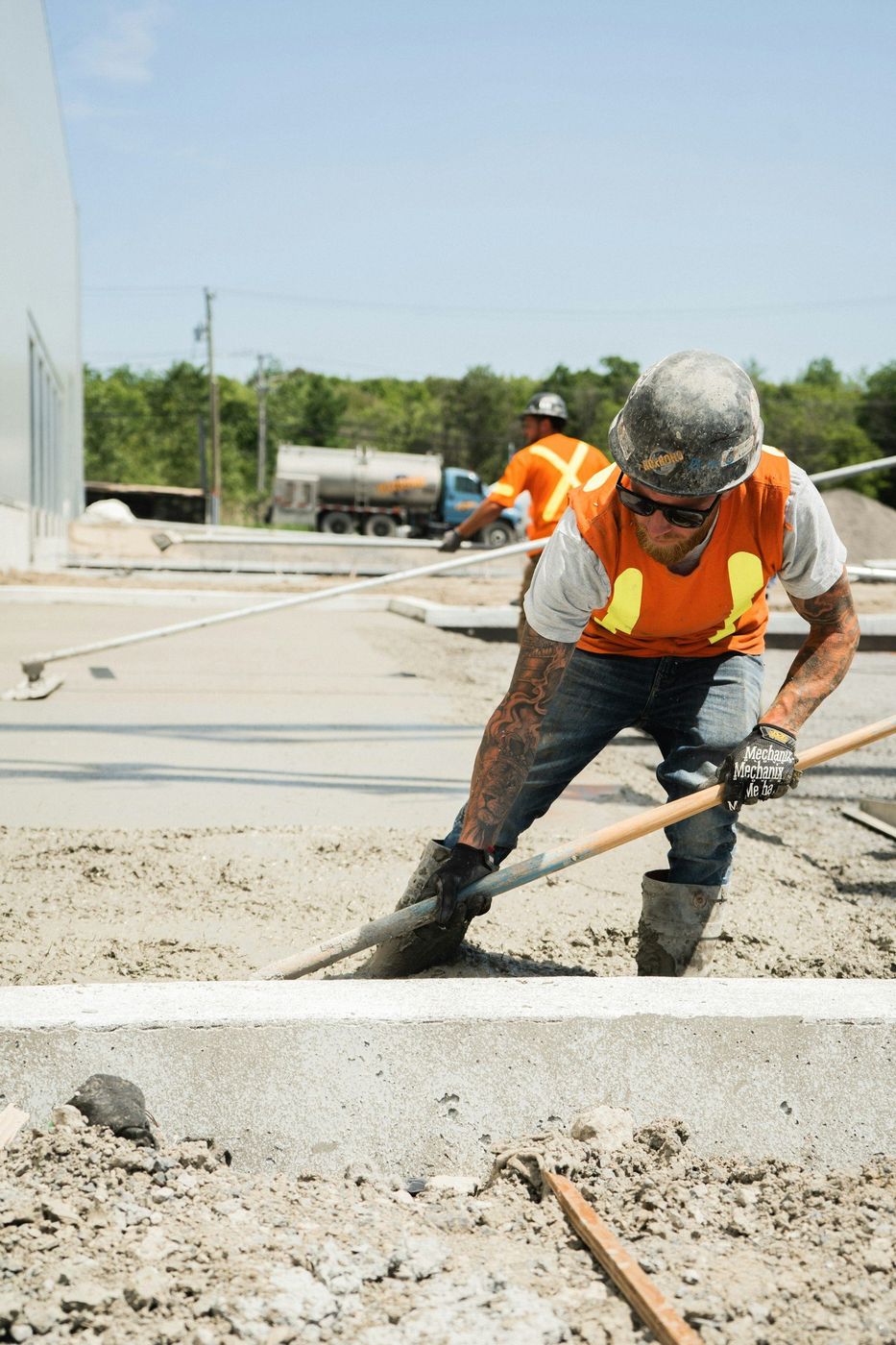
An engineered shell shaped to your lot, not a molded shape your lot has to accept.
Choosing a pool is really three decisions stacked on top of each other. What the shell is made of. How the shell gets placed. And whether the lot you own makes any of it practical. On a rural Larkspur property those questions answer each other, because a molded fiberglass shell has to arrive on a truck, get lifted by a crane, and reach a hole that may sit a few hundred feet from the road behind a stand of pines.
Concrete goes in as a material and becomes a structure on site. That's the fundamental advantage here, and it's why nearly every pool we build on these lots is a formed and reinforced shell rather than something delivered whole. It also means engineering matters more, and we have a structural engineer in house rather than a phone number for one.
| Consideration | Shotcrete, pneumatically placed | Cast in place against forms |
|---|---|---|
| How it goes in | Sprayed at high velocity against one-sided forms and the steel cage | Placed into two-sided forms and vibrated, like a wall |
| Free-form shapes | Its main advantage. Curves, benches, and beach entries are straightforward | Every curve costs formwork, which is where the budget goes |
| Excavation as formwork | The hole itself becomes the back form, which suits stable soil | Needs full forms, so it tolerates loose or caving ground better |
| Access requirements | A rig plus hose to the work, which reaches spots a truck cannot | Ready-mix has to get close, or you're pumping anyway |
| Where it shines on these lots | Sloped and treed sites where the shape follows the grade | Straight-sided lap pools and shells tied into a retaining structure |
| Finish sequence | Shell is rough by nature and gets carved and cut back to line | Forms leave a truer face, with more prep before they go up |
We'll walk the site, look at slope, access, and where the spoil goes, and give you a straight read before you spend a dollar on design.
Here's our honest position. If you want a rectangle in flat open ground next to a wide driveway, a factory shell can be a reasonable buy and we'll say so. That describes almost nothing in Larkspur. What we actually see is sloped ground, trees you don't want to lose, a long private drive, and homeowners who want the pool to sit into the grade rather than perch on it. Every one of those pushes toward concrete.
The second argument is time. A properly engineered and cured shell is a structure that outlives the finish on it, and when the plaster wears out in a couple of decades you re-plaster rather than replace. You can also change your mind later: add a spa, extend a bench, cut in steps. None of that is available with a molded shape.
The third is soil. A shell designed by an engineer for your specific slope, with hydrostatic relief built in, is not the same product as one designed for a generic backyard. On a benched hillside lot that difference is the whole ballgame.
Start the design in winter. That's the real advice. Engineering, layout, and trade coordination all happen fine while the ground is frozen, and it puts you in position to dig the week conditions allow rather than three months after you decided you wanted a pool. Excavation and shell work want the long stretch from late spring into early fall.
Shell curing is the piece homeowners underestimate. Fresh shotcrete gets watered down repeatedly over its first week, and up here dry air and thin-atmosphere sun pull moisture out fast, so the curing regimen is not a formality anybody gets to skip. After that the shell keeps gaining strength for about a month before plaster goes on. Rushing that sequence is how you get a shell that crazes and a finish that fails early.
We won't spray a shell into a frozen excavation, and we watch the summer storm pattern closely, since a hard afternoon downpour into an open hole means pumping it out and reworking the subgrade. Building a pool here is a season-long project. Anyone promising you a swim by the Fourth of July after a May start is selling optimism.
Still unsure about something?
Call the crew at (303) 569-4046 and we will talk it through.

Get a free, no-obligation estimate from a crew that knows Colorado soil, Colorado weather, and how to finish concrete that lasts.
Accessibility
Adjust the site to fit how you read and browse. Your choices are saved on this device.