
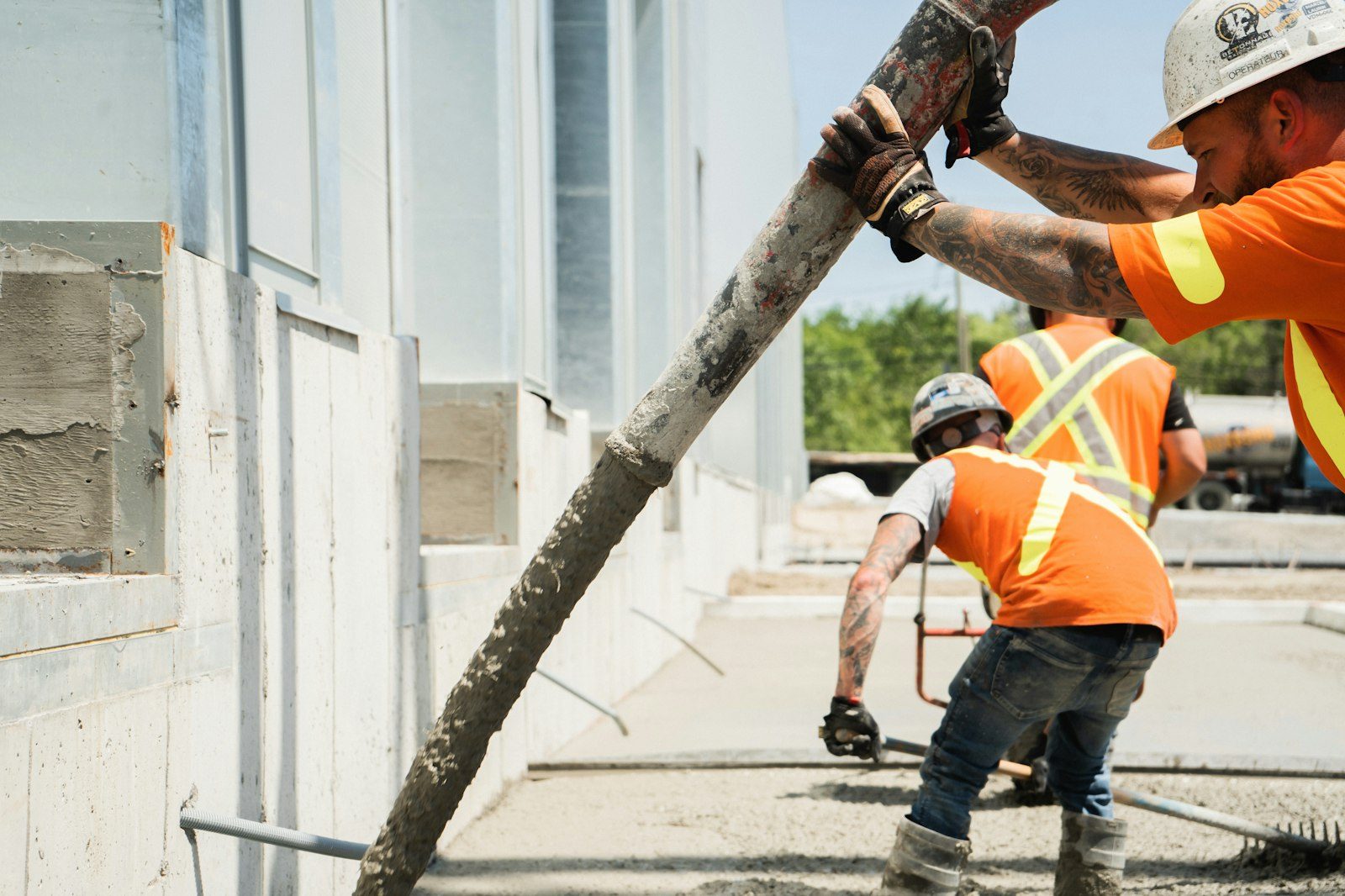
Forms, steel, one truck, and no second chances. Here's how a flight comes together from first light to the last trowel pass.
A set of steps is the least forgiving thing we build. Flatwork leaves room to fix a bad reading; a flight does not. Riser heights lock in when the forms get screwed together, the concrete arrives all at once, and it goes in bottom up while the bottom is still soft enough to work. Everything that makes a good flight good happens before the mixer shows up.
So we walk homeowners through the day in advance. People expect us to pull in with a truck and start pouring. The truck is the shortest part of the job, and by the time it backs in the outcome is mostly decided. Here's what actually happens, in order, on an entry rebuild anywhere from Perry Park to Bear Dance.
Work starts with a tape and a level, not a shovel. We measure from the finished walk up to the landing or door threshold, and that single number divides into the riser count. Thirty-five inches? Five risers at seven each, clean. Thirty-three? Five at six and five eighths works; four at eight and a quarter does not, because that's past what code allows. This arithmetic separates a flight that feels right underfoot from one that trips people, and it happens on paper before anything gets built.
Then footings. On a hillside lot with an unheated entry we go below frost depth, deeper here than most metro work. The old flight comes out first and we look hard at what's under it, since the usual reason an entry pulls away from a house is that the original steps sat on backfill that kept settling. Forms get built on site from lumber and bent stock for any radius, braced hard, because wet concrete pushes with real force and a form that bows an inch hands you a riser an inch off. Steel is tied on chairs so it stays in the section.
Crew arrives early, before the sun clears the trees, and the first hour is checking. Every riser measured again. Diagonals on the landing. Braces snugged. Forms oiled so they release clean. Anchor sleeves go in wherever a handrail post lands, since setting them now beats drilling finished concrete later.
The truck backs in and the pour runs bottom to top. Concrete fills the lowest riser first and gets consolidated so no voids hide behind the form face, then we work upward while each step below is still plastic. There's a rhythm. Place, consolidate, screed the tread, move up. Rush it and the bottom sets before the top is placed, leaving a cold joint you'll see forever.
Finishing follows the concrete up the flight, and timing is everything. Too early seals water in. Too late and the tread won't work. Treads get floated, edged, and given a light broom across the direction of travel, because a slick polished tread at 6,720 feet is an ice rink from November on. Nosings are tooled by hand. Forms come off the next morning and curing cover goes on. Most residential flights are a single day.
| Height from walk to landing | Risers | Rise each | What it means for the build |
|---|---|---|---|
| 21 inches | 3 | 7 inches even | Under the handrail threshold. Simplest flight there is. |
| 28 inches | 4 | 7 inches even | Handrail required. Anchors set during the pour. |
| 33 inches | 5 | 6 5/8 inches | Slightly shallow risers. Comfortable, and the flight stays short. |
| 38 1/2 inches | 5 | 7 3/4 inches | Right at the code maximum. Tread depth matters more than usual. |
| 45 inches or more | 6 plus | 7 1/2 inches or less | Long flight. A mid landing usually makes better sense, drawn before anything is formed. |
Tape tread to tread on every step. Any two off by more than three eighths of an inch is why people stumble. Send the numbers and we'll tell you what a fix takes.
Steps take more abuse than any other concrete on a property. Treads catch snow, hold it in the shade, and run through freezing and thawing far more often than a driveway does. Add a shovel scraped across a nosing and a bag of ice melt every storm and you see why the front edges go first. Air entrainment buys those treads their life, and keeping deicer off a new flight one full winter is the best thing you can do.
Booking-wise, late spring through early fall is the comfortable stretch, and September is ideal because the concrete gets a full cure before hard nights arrive. Cold-weather flights are doable with warmed water, an accelerator free of chloride, and blankets on the treads for days. Footings into frozen ground, no. If your entry is unsafe in December, call anyway. We can usually make it safe for the season and put you first on the spring calendar.
Still unsure about something?
Call the crew at (303) 569-4046 and we will talk it through.

Get a free, no-obligation estimate from a crew that knows Colorado soil, Colorado weather, and how to finish concrete that lasts.
Accessibility
Adjust the site to fit how you read and browse. Your choices are saved on this device.