
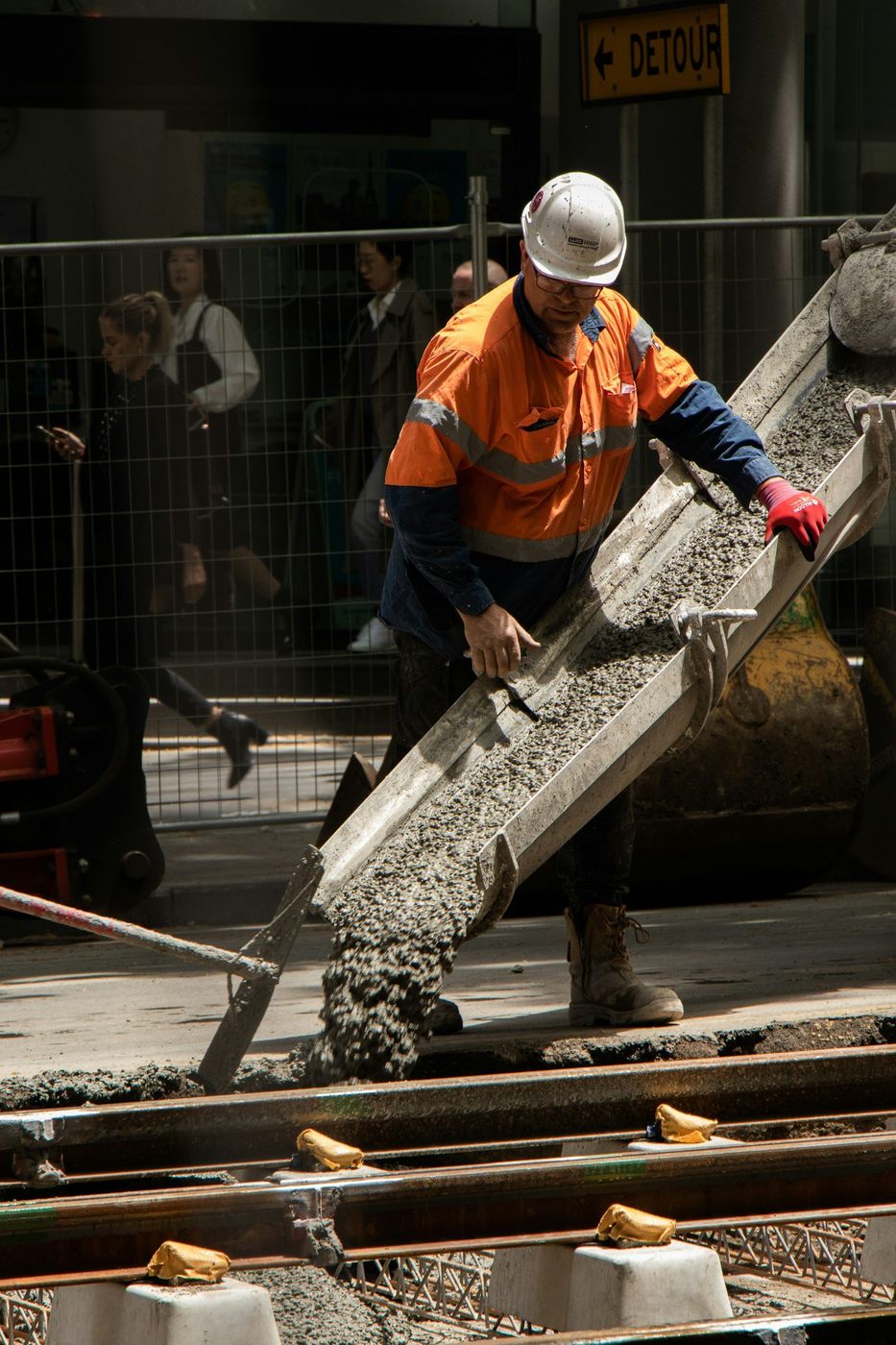
Waterstops in the joints, a full week of wet curing, and walls sized for the ice that shows up every January.
A pond is the rare project where almost all of the money goes into things you'll never look at again. The walls disappear under water. The joints disappear under the walls. What you see afterward is a surface with fish in it, or a sheet of moving water on a rock face, and the quality of everything below that is invisible until the day it isn't.
So the value conversation on a concrete pond is different from the one about a patio. You aren't buying appearance. You're buying watertightness and a structure that shrugs off freezing ground and a foot of ice. Every dollar that goes into waterstop, steel, and curing is a dollar that keeps you from draining the thing in five years to chase a leak.
Leaks almost never come through the middle of a wall. They come through joints, penetrations, and cracks, in that order. Any pond bigger than a small feature gets built in more than one placement, and the seam between yesterday's concrete and today's is the weak line. We set a waterstop into every one of those construction joints so there's a physical barrier interrupting the path water would take.
Penetrations are the second offender. Every drain, return, bottom outlet, and conduit is a hole through your waterproof structure, and each one needs a proper collar or seal cast in, not caulked afterward. We coordinate those locations with whoever is doing your pumps and filtration before the forms go up, because moving a pipe after the pour means coring through a wall you paid to make watertight.
Third is shrinkage cracking, and the answer there is curing. Steel on both faces limits crack width, but keeping the concrete wet while it gains strength is what keeps cracks from forming in the first place.
Bring us the concept and we'll price the structure, walk the access route, and flag anything about the site that changes the design.
| Approach | What you're paying for | Where it falls short |
|---|---|---|
| Structural concrete, sealed | A permanent shell you can shape, step, and build waterfalls into | Highest up-front cost and the least forgiving of poor workmanship |
| Concrete shell with a liner inside | Structure plus a second line of defense against seepage | Liner has a service life and eventually needs replacing |
| Liner over compacted earth | Lowest cost by a wide margin, quick to build | Vulnerable to rocks, roots, hooves, and wildlife, and hard to shape |
| Concrete with a cementitious coating | Watertightness improved without a liner, and it stays repairable | Coating wants inspection and periodic renewal |
| Shotcrete over a steel cage | Free-form shapes and boulder work that formwork can't match easily | Needs a skilled nozzle operator and careful curing to be watertight |
| Precast basin set in place | Fast, predictable, and simple for a small feature | Fixed shape and size, and it has to reach the site on a truck |
People ask why we spend a week hosing down walls that are going underwater anyway. It's because a pond that dries out while it cures shrinks, and a wall that shrinks cracks, and a crack in a pond is not a cosmetic problem. Up here with the wind and the sun, curing takes more attention than the pour did.What the crew sees on site
Size matters less than depth and shape. A wide shallow basin is straightforward. A deep pond with vertical walls, benches for planting, and a waterfall structure at one end is several projects stitched together, and the formwork and steel scale with the complexity, not the surface area. Excavation is the other big lever, and on Larkspur ground that means rock, roots, and where the spoil goes. Hauling material down a long private drive costs real money.
Access shapes the whole estimate. If ready-mix can reach the forms, you're in good shape. If we're pumping over a slope or through trees, that's a line item. Plumbing complexity, whether you want a bottom drain, and how much of the surrounding stonework we're setting all add up. We break it out so you can see which pieces you could phase.
Build in the warm half of the year. Late spring through September gives room for the pour, the full curing period, and a fill-and-test before the weather turns. We watch the afternoon storms in midsummer, since rain into open forms is a setback. Frozen ground stops excavation and stops the pour, so a late-fall start usually becomes a spring project. And check your HOA before you draw anything.
Still unsure about something?
Call the crew at (303) 569-4046 and we will talk it through.
Get a free, no-obligation estimate from a crew that knows Colorado soil, Colorado weather, and how to finish concrete that lasts.
Accessibility
Adjust the site to fit how you read and browse. Your choices are saved on this device.