
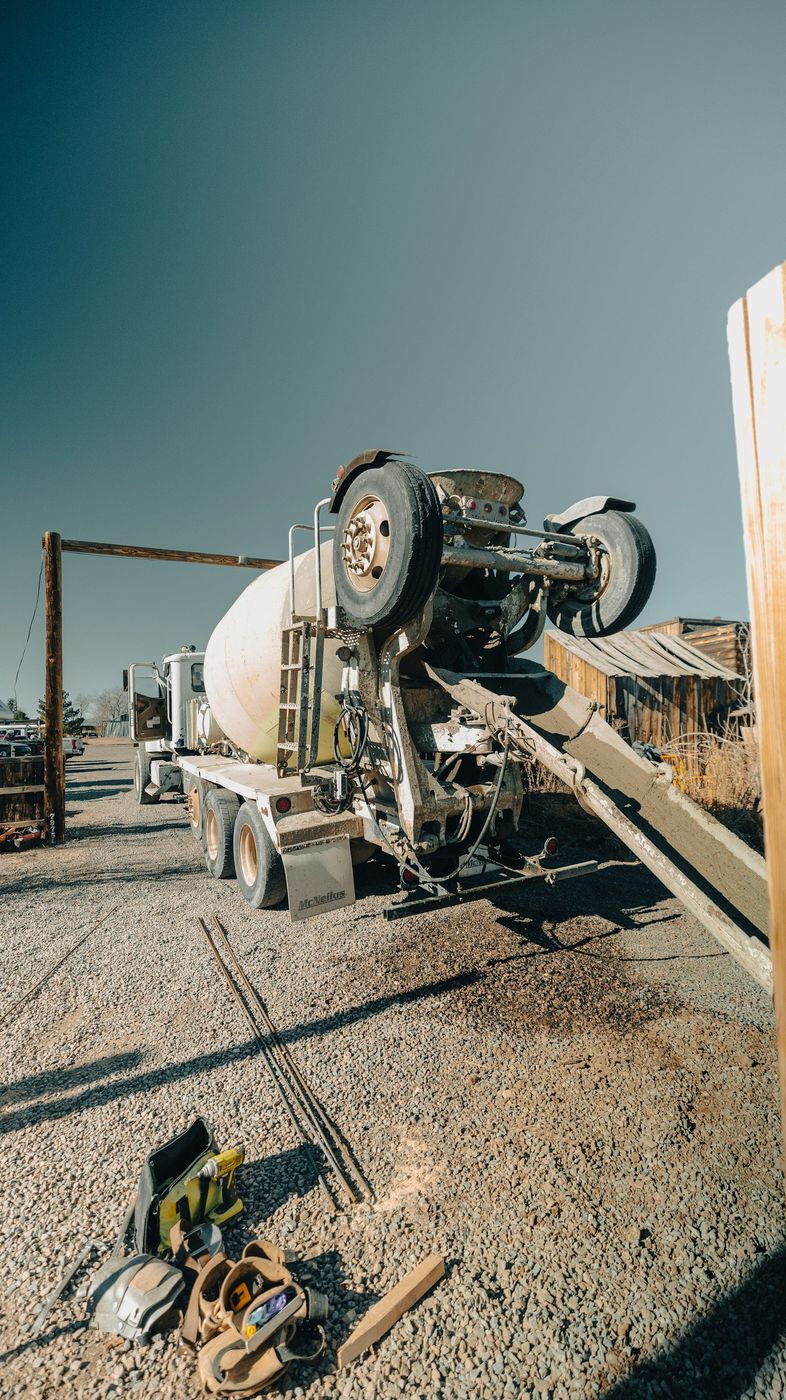
Some of this money stays with the building forever. Some of it leaves on a truck with the crane. Worth knowing which is which.
Tilt-up prices oddly compared to other construction. A big share of the money goes in before a single wall exists, spent on a floor slab you were buying regardless. Another share gets bought by the hour on one particular morning. And a real chunk of what shows up on the invoice is temporary: braces that get rented, bond breaker that gets scrubbed off, inserts that end up patched over and forgotten.
So the useful question isn't what a panel costs. It's which dollars stay with the building and which ones drive away behind the crane. That's how we lay out a tilt-up estimate for owners here, whether the project is an infill parcel near Belmar or a pad cut into ground out toward the west side of Lakewood.
A tilt-up shell closes in fast. Panels get cast flat while footings and underground work are still going, they stand up over a morning or two, and suddenly you have walls, a roof to attach to, and a building other trades can work inside. Every week that arrives earlier is a week of financing, general conditions, and lost occupancy you didn't pay for.
That's the real value case, and nobody puts it on the bid sheet. Compare it honestly, though. On a small building with a lot of corners, setup cost gets spread over too little wall and the method stops paying. Long, tall, repetitive walls are where the arithmetic turns friendly.
Room is the first thing we price. Panels cast on the floor slab, so a building with a small footprint and a lot of wall runs out of casting surface, and the answer becomes stack casting or a temporary bed outside the footprint. Both work. Both cost. Tight infill parcels also squeeze the crane, and where the crane can set up decides how many picks it can reach without walking, which turns straight into hours.
Then the ground. On the flats, the pad is mostly a compaction and moisture story. Cut into the rise below Green Mountain and you're buying rock excavation and a level bed on ground that didn't offer one, plus drainage that keeps water from arriving under the slab your panels sit on. None of it is exotic. It just belongs in the estimate rather than in week three.
| What you're buying | How you pay for it | What's left after the crane leaves |
|---|---|---|
| The casting slab | Once, early, before any wall exists | Your finished floor, so most of it was never a wall cost |
| Bond breaker and edge forms | Per casting cycle, reused where the panels repeat | Nothing physical. It bought you clean, separated panels |
| Steel, embeds, and blockouts | Once, cast in permanently | Everything. This is where later changes get expensive |
| Lifting inserts and rigging design | Once, engineered for your specific panels | Patched holes and a set of drawings worth keeping |
| Crane and operator | By the hour on one or two days | Nothing, which is why the prep week matters so much |
| Bracing | Rented by the week until the roof ties everything together | Nothing, though a slow roof schedule quietly extends the bill |
| Joint sealant | Once now, again every several years | A maintenance line item for as long as you own the building |
Send the footprint and the wall heights. We'll tell you where the crossover is and whether your site can even host a casting bed. (303) 569-4046.
Casting happens most of the year. Cold weather panels get warm mix water, non-chloride accelerators, and blankets, and they take longer to reach lift strength, which stretches the schedule rather than ruining the work. Hot, dry, breezy afternoons at this elevation pull water out of a panel face fast, so we cure hard and finish early in the day.
Crane day answers to wind, and wind doesn't negotiate. A panel is a big flat sail hanging off a hook, and past a certain gust speed the pick stops. That's why we build slack into the erection window rather than booking a crane for one unmovable morning. Spring afternoons are the least cooperative here. Early mornings, and fall generally, are the most.
The owners who get burned aren't the ones who paid too much for concrete. They're the ones who saved a little on the casting bed, or asked the crane to sit somewhere it couldn't reach from, and then paid for the extra day at crane rates.From the crew lead on these jobs
Still unsure about something?
Call the crew at (303) 569-4046 and we will talk it through.
Get a free, no-obligation estimate from a crew that knows Colorado soil, Colorado weather, and how to finish concrete that lasts.
Accessibility
Adjust the site to fit how you read and browse. Your choices are saved on this device.