
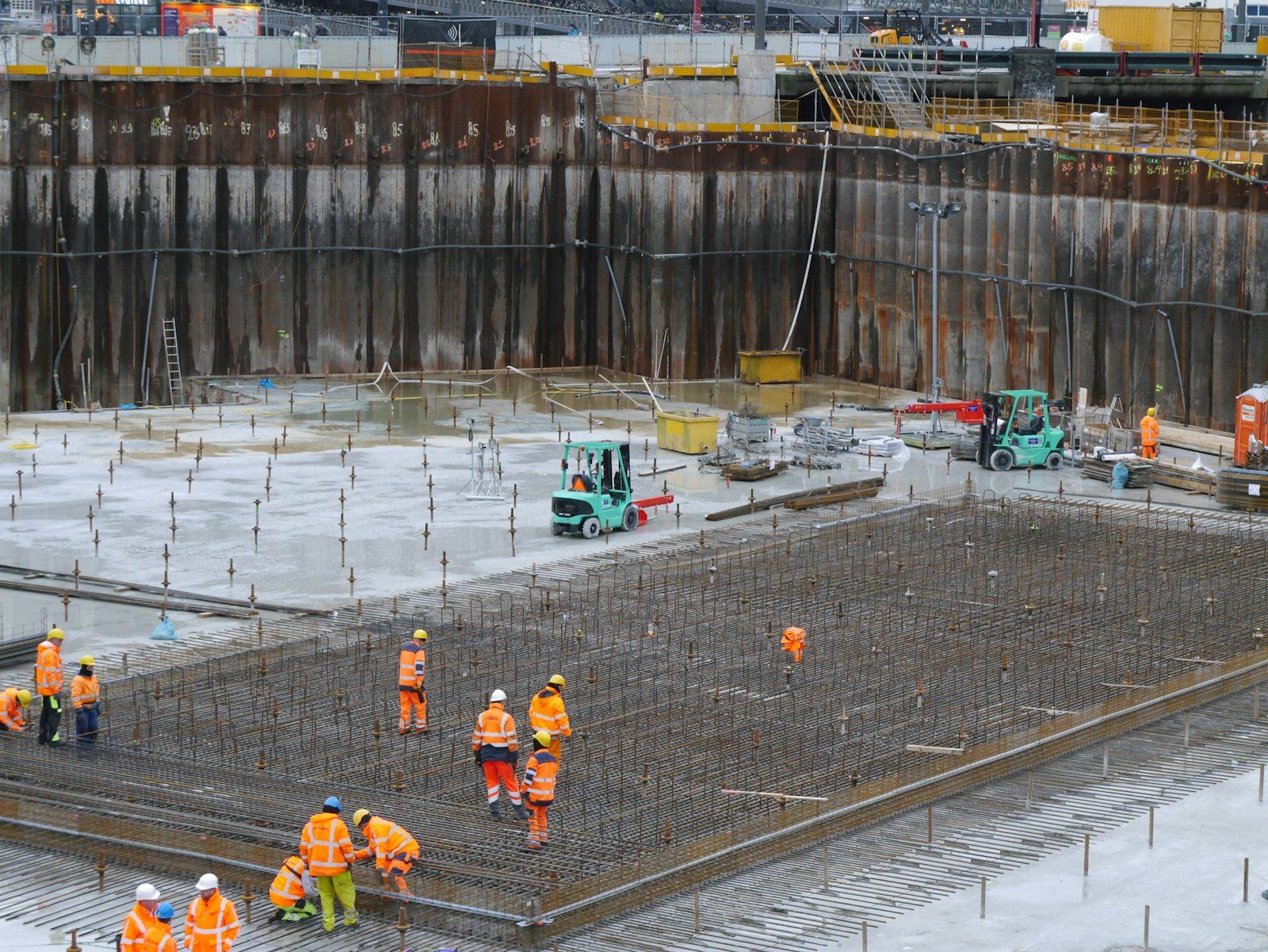
The slopes are the easy part. What holds those slopes still for twenty years is eighteen inches of work nobody photographs.
Above ground, an accessible ramp is simple geometry. A run at a controlled slope, level landings at the ends, a cross slope held tight, a detectable warning panel at the bottom. Any decent crew can form that once. The hard part is building something that still measures the same after twenty Colorado winters, and that has almost nothing to do with the concrete you can see.
We rebuild accessible entrances on commercial and association property across Lakewood, and we do it from the dirt up. Older retail and office frontage near Belmar, clubhouse and mail kiosk approaches in the communities on Green Mountain, buildings out toward Applewood where the original grading was done to a much looser standard. Every one of those failures started underneath. This page is about that part.
Pull the concrete off an entrance that's drifted out of tolerance and the story is almost always visible in the first shovel. Two inches of tired aggregate over native soil. A trench line running under the landing where someone ran conduit and backfilled it loose. Dark, damp material right where the downspout has been dumping for fifteen years. Occasionally nothing under the landing at all, just a void where soil washed out and left the slab bridging air.
None of that is exotic. It's the ordinary result of building an entrance on a schedule. A driveway can settle half an inch and nobody notices. An accessible route can't, because it's defined in fractions of a percent, and half an inch across a landing is the difference between passing and getting written up.
Lakewood makes this more interesting than most places. Up on Green Mountain and the higher ground toward the foothills we hit rock, and the problem is getting a uniform bearing surface out of material that goes from soft to solid in the space of a few feet. Down on the flats near Bear Creek and Belmar, it's clay and moisture, and the problem is keeping water away from ground that reacts to it. Two different jobs, both solved below the slab.
| Layer | Its job | What happens when it's shorted |
|---|---|---|
| Native subgrade | Carry everything above it at a consistent bearing | Soft pockets left in place settle unevenly and tilt a landing |
| Compacted aggregate base | Spread the load and break the water's path upward | A thin, uncompacted base consolidates in the first two winters |
| Drainage away from the route | Get roof and lot water out from under the work | Saturated base loses strength and a landing corner drops |
| Reinforcement on chairs | Hold the slab together as one piece when the ground shifts | Cracks open into steps, and a step in a route is a trip hazard |
| Independent footings for posts | Keep handrails from levering against a moving slab | Rails loosen, and the patching around the base never stays put |
That's a base problem, not a slope problem. Let us dig a test hole at the landing and show you what's down there.
Almost every accessible route we replace was killed by water it was never supposed to receive. A downspout discharging a few feet from the landing. A lot that drains toward the building rather than away. Irrigation soaking the walk edge twice a day all summer. Snow piled on the ramp because it's the closest open spot, then melting straight down into the base.
Add the freeze cycle and it compounds. Our winters don't freeze once and hold. They lock up at night and let go by mid-afternoon, over and over, and each turn of that heaves saturated base and drops it back slightly out of place. A couple hundred cycles a season, and a route that measured perfectly has drifted. That isn't neglect. It's physics working on ground nobody drained.
So the schedule matters. April through October is our window, and early fall is the best of it: mild days, cool nights, and dry enough to compact base properly instead of chasing moisture content. We can build in the cold using hot mix water, blanket coverage, and an admixture with no chloride in it, though a ramp is the one surface everybody has to use and its cure doesn't get shortened. Findings that land in December get a safe temporary transition and a spring pour.
Still unsure about something?
Call the crew at (303) 569-4046 and we will talk it through.

Get a free, no-obligation estimate from a crew that knows Colorado soil, Colorado weather, and how to finish concrete that lasts.
Accessibility
Adjust the site to fit how you read and browse. Your choices are saved on this device.