
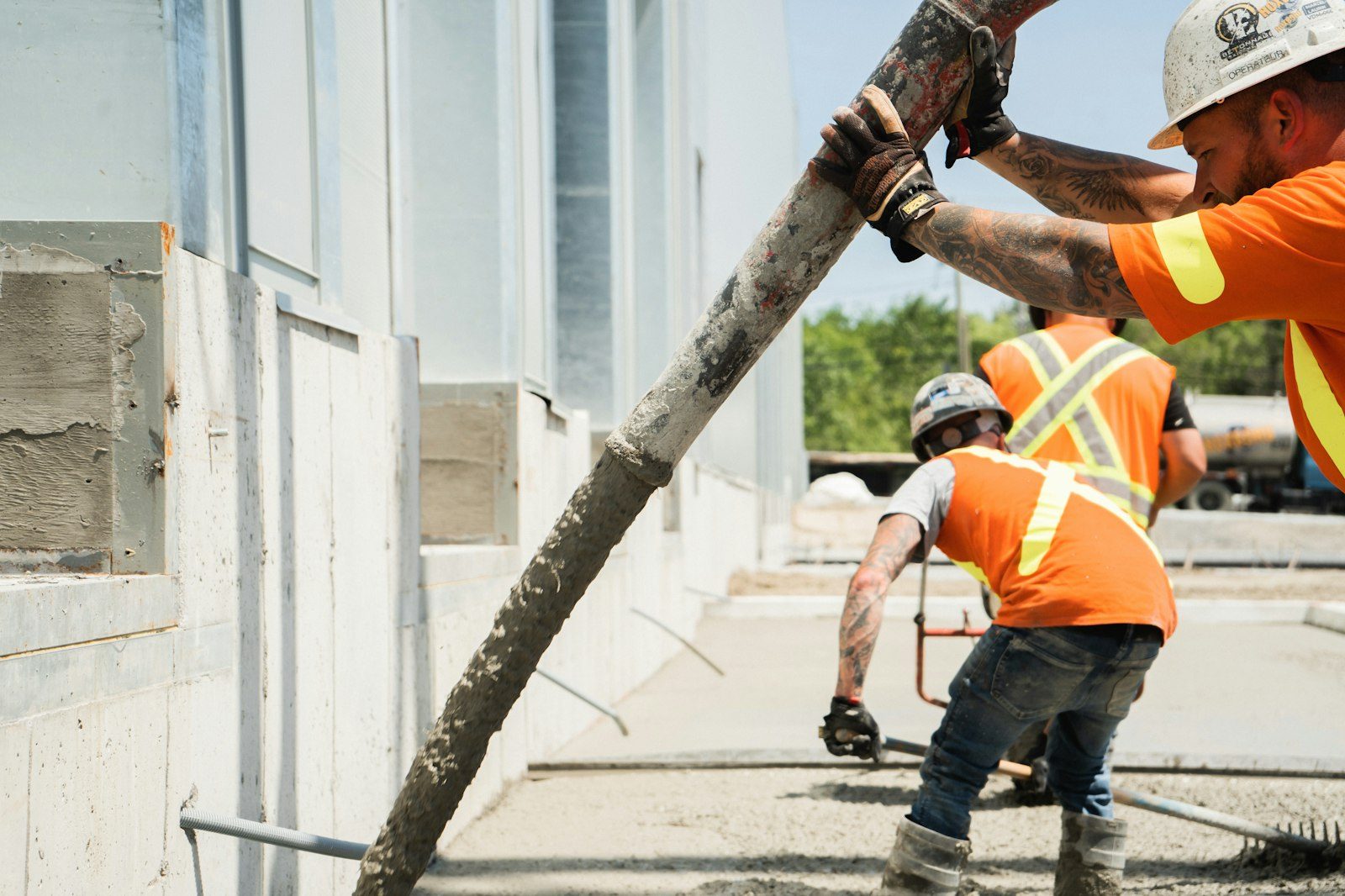
Go outside after the next real storm and take a picture of every puddle. That photo set is most of a curb diagnosis.
Curb is the most visible concrete you own and the least examined. It sits at eye level from the street, it frames every impression a tenant or a buyer forms of the property, and almost nobody walks it on purpose until something obvious breaks off. By then the run has usually been telling you what's wrong for two or three seasons.
We replace and rebuild curb and gutter on commercial and association property throughout Lakewood: retail frontage and drive aisles near Belmar, office and industrial approaches around Applewood, private loop roads through the communities on Green Mountain and out at Solterra, and older interior drives closer to Bear Creek. The symptoms below are the ones you can read from a car window, and they map fairly reliably to what's happening underneath.
Start with the top edge. A curb line that used to be straight and now waves up and down in gentle humps is a settlement story, and the wave tells you the low spots before anyone shoots a single elevation. Cracks straight across a section at regular intervals are just joints doing their job. Cracks at odd angles, or a section rocking under your foot, are not.
Then the face. Curb faces flake and crumble from the bottom up when they've spent winters wet and salted. If you can rub the surface with a shoe and get sand, the paste is gone and the aggregate is exposed, and that section is losing thickness every year. Look also for the tire scars: a rounded, ground-down nose on the curb at a tight radius means trucks have been climbing it since the day the property opened.
Last, look where the curb meets everything else. Gaps behind the curb where landscape or asphalt pulled away. A step at the joint between two sections. A pan separated from the pavement it's supposed to catch water from. Every gap lets water under the run, and water under a run is how the next section starts to move.
Water is the honest inspector. Concrete hides a lot, but standing water forty minutes after a storm has stopped is a measurement, and it's free. Walk your property once during a summer afternoon downpour and once again the next morning, and you'll know more about your curb line than a set of as-built drawings would tell you.
You're looking for where the water stops moving. A shallow pool mid-run means that stretch settled and lost its fall. Water standing at an inlet means the inlet dropped below the pan. Water sheeting across the drive aisle instead of hugging the curb means pan and pavement are no longer at the same elevation. And water sitting behind the curb does the quietest damage of all, soaking the material the curb bears on.
| Where the water sits | What's going on | What we'd do about it |
|---|---|---|
| A pool mid-run, well away from any inlet | That stretch settled and the flowline lost its fall | Remove the affected sections, rebuild the base, repour to a corrected flowline |
| Water backed up right at the inlet | The inlet has dropped below the pan, or the throat is partly blocked | Reset the inlet top and rebuild the pan into it so the transition is smooth |
| Sheeting across the drive aisle instead of following the curb | Pavement and gutter pan are no longer at the same elevation | Replace the pan and detail the tie-in, or grind and overlay the pavement edge |
| Puddle at a driveway or drive-over section | The depressed section settled faster under vehicle loads | Rebuild it at a heavier section with steel, since this is the loaded part of the run |
| Ice slick that returns to the same spot every winter | Water is stopping there in warm hours and freezing overnight | Fix the fall. No amount of chemical solves a low spot, and the chemical is eating the curb. |
Take them the morning after a storm, from the drive aisle. We'll tell you which sections we'd pull and which ones can wait a budget cycle.
Still unsure about something?
Call the crew at (303) 569-4046 and we will talk it through.
Get a free, no-obligation estimate from a crew that knows Colorado soil, Colorado weather, and how to finish concrete that lasts.
Accessibility
Adjust the site to fit how you read and browse. Your choices are saved on this device.