
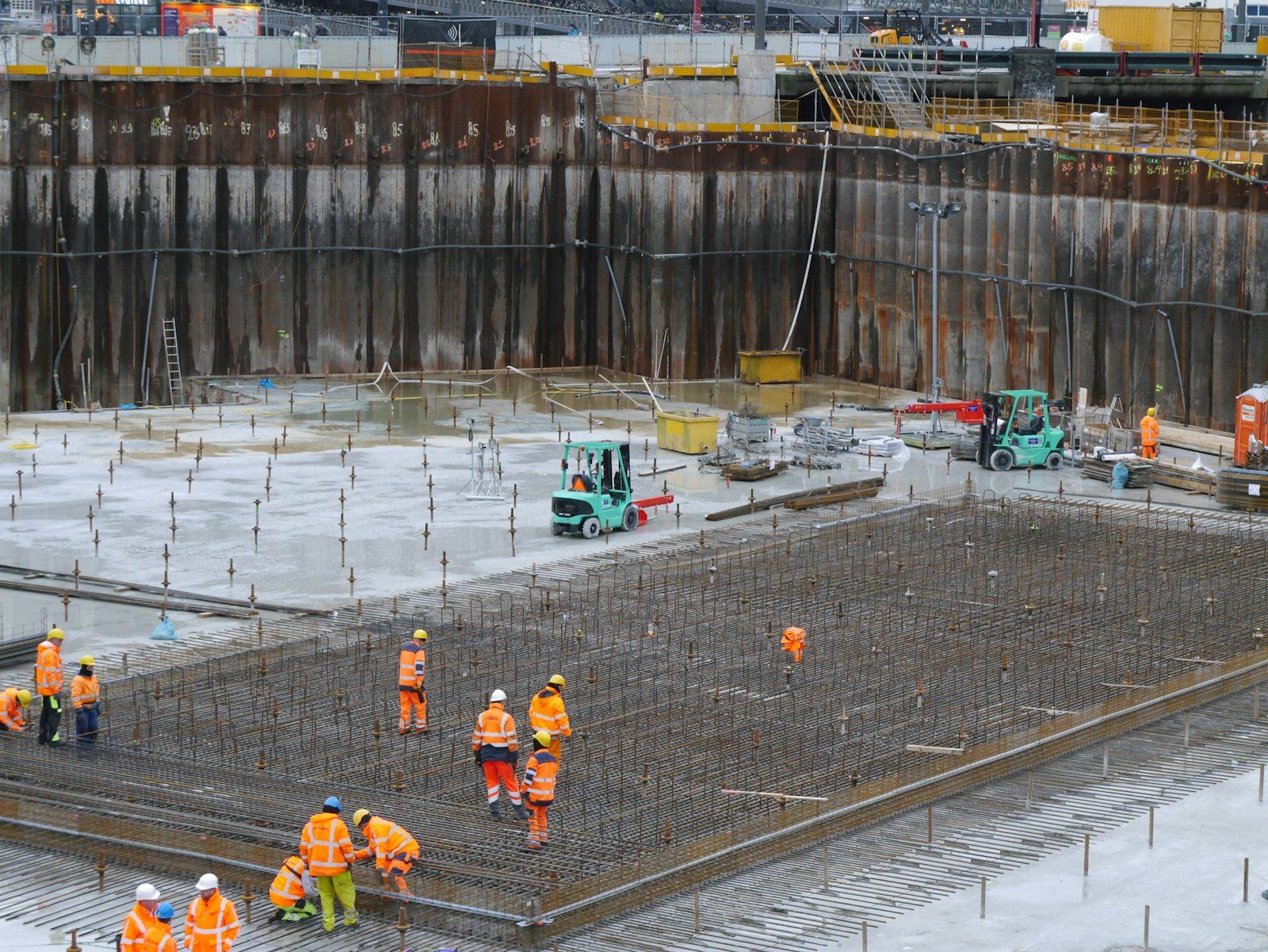
The concrete between your framing and wet ground. Judged every year by one warm week in March.
Late March is when stem walls confess. A warm week lands on a yard still frozen a couple of feet down, snowmelt runs sideways instead of soaking away, and it pools exactly where somebody backfilled loose dirt against the concrete. If that wall got a thin spray of damproofing and the same clay shoved back in that came out of the hole, this is the week you find out about it.
The job a stem wall does is plain enough. Carry the framing. Hold back the soil outside. Keep ground moisture away from wood. Plain doesn't mean forgiving. On this ground, the difference between a wall that stays dry for forty years and one that weeps every spring gets decided in about two hours, on the afternoon the dirt went back against it.
Soil against a wall pushes sideways all the time. Add water and the push gets a lot bigger, because saturated clay behaves like a heavy fluid and it doesn't drain out of its own accord. Then freeze it. Ice takes up more room than the water did, and the wall is the only thing in the way. That cycle repeats through every shoulder season we get, and we get a lot of them at this altitude, where a single February day can run from the teens to the fifties.
You can see the results walking a street. Older homes around Northridge and Westridge show it as efflorescence, that chalky white bloom on the inside face where moisture has been coming through and leaving minerals behind. In Eastridge and Southridge it shows up as a musty finished basement or a bowing spot in a wall that used to be flat. Newer construction in The Hearth and BackCountry usually has better drainage detailing from the start, but a garage stem wall on a walkout lot will still take on water if the downspout above it quits doing its job.
| System | What it really does | Where we specify it |
|---|---|---|
| Spray-applied damproofing | Slows moisture vapor moving through concrete. It will not bridge a crack | Well-drained lots, shallow walls, garages and other unconditioned space |
| Sheet or fluid-applied membrane | Holds back liquid water under pressure and stretches across small cracks | Finished basements, walkout walls, anywhere the report found groundwater |
| Dimple mat or drainage board | Breaks the water's grip on the wall and gives it a straight path down to the pipe | Any buried wall more than a few feet tall holding clay behind it |
| Perimeter drain in washed rock, wrapped in fabric | Collects whatever gets that far and carries it to daylight or a sump | Every wall we bury. There is no version of this we skip |
| Free-draining backfill in the first zone | Keeps swelling soil from pressing on the wall to begin with | Tall walls always, and everywhere else the budget can reach |
We'll dig one test hole and show you exactly what the backfill looks like. Call (303) 569-4046.
Best window for stem wall work runs from late spring through October, and September might be the pick of the litter. Dry ground digs clean, trenches hold their shape, backfill compacts properly instead of turning to paste, and the concrete cures in weather that treats it well. Early spring is the season we push back on when we can, not because the concrete minds but because the ground is saturated and you can't compact wet clay no matter how many passes you make.
Winter work happens anyway, especially when a wall has failed and somebody's house is riding on it. We heat the water, run accelerators without chloride, blanket everything, and keep concrete temperature logged. Excavation is the real cost in cold months, since frozen crust has to be broken and the spoil doesn't want to go anywhere. And we won't backfill against a wall that hasn't reached the strength our engineer calls for, regardless of how badly everyone wants the equipment off the site before the next storm.
The thing that breaks new walls isn't weather, it's a loaded machine driving too close while backfilling. All that surcharge lands on top of green concrete with nothing bracing it. We keep the big iron back and finish the last few feet by hand. Slower afternoon, wall still straight in twenty years.The crew lead's read on it
Still unsure about something?
Call the crew at (303) 569-4046 and we will talk it through.

Get a free, no-obligation estimate from a crew that knows Colorado soil, Colorado weather, and how to finish concrete that lasts.
Accessibility
Adjust the site to fit how you read and browse. Your choices are saved on this device.