
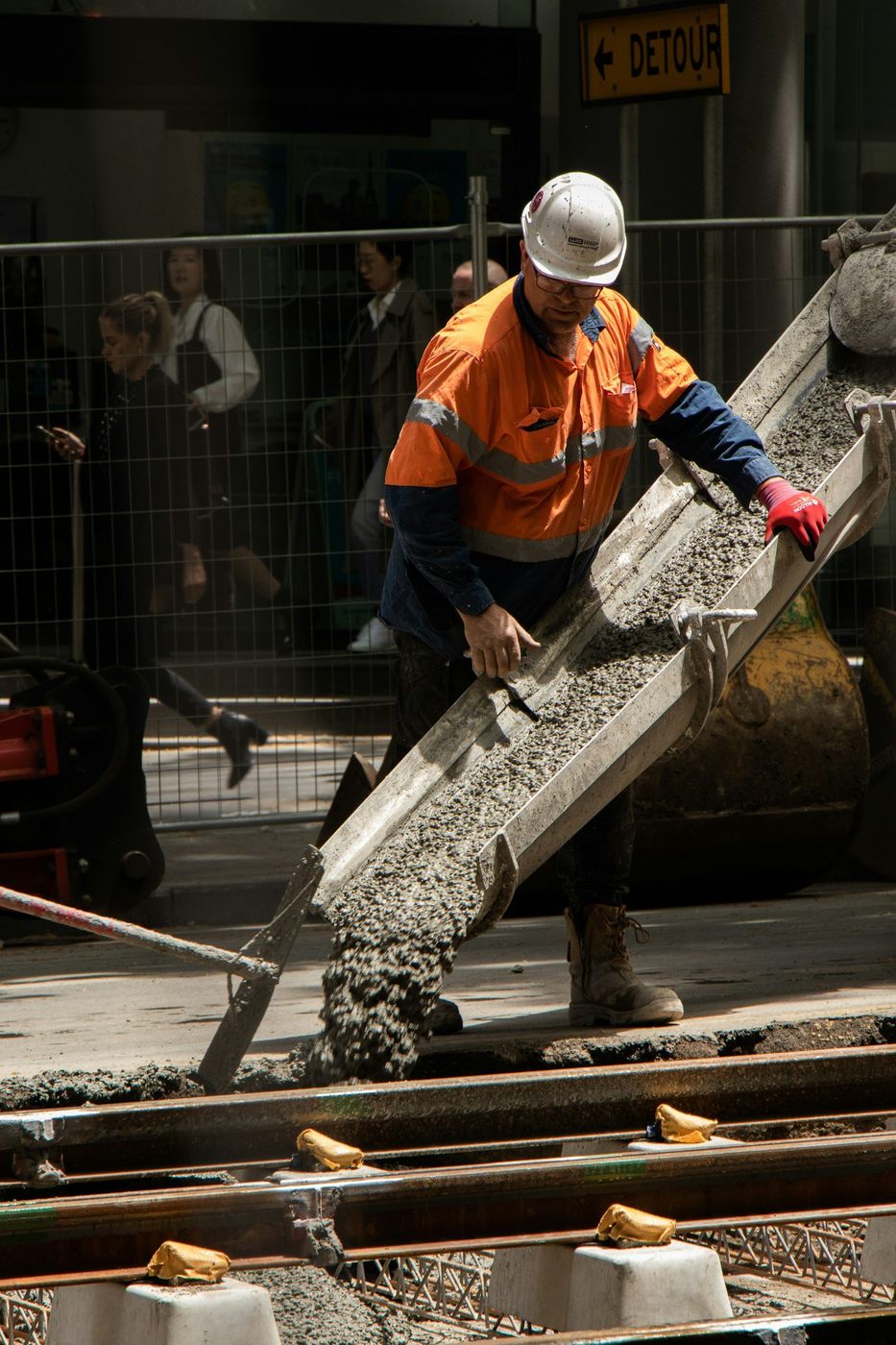
A slab that holds a loaded rig without dishing, on a lot that actually has room for one.
Not every lot in this town can take a rig, and the ones that can rarely advertise it. The homes with usable side-yard room sit where the parcels got generous: BackCountry sites with real distance between the house and the property line, plus the deeper Westridge lots where the fence runs well past the garage. If you own a gate you can swing a fifth wheel through, the hard part is already solved.
What you probably don't own is ground that can hold the thing. The usual plan is grass, or a strip of crusher fines somebody spread a decade ago, and after one wet spring the leveling jacks have punched through and the coach is sitting crooked. A poured pad ends that for good. It's also what separates keeping the rig at home from writing a storage lot a check every month.
Start with a tape and the rig itself. Overall length includes the hitch or the tongue, not just the box, and then you want a few feet past the tail so nobody is stepping off concrete onto mud in a rainstorm. Width is where people undershoot. The slide-outs need clearance, the entry door needs a landing area, and if you plan to sit out there you want a chair to have somewhere flat to go.
Then we look at the path. A pad you can't reach is decoration. We measure the gate opening, watch how tight the swing is coming off the drive, check the tree limbs at rig height, and figure out where the apron transition needs to go so a low-clearance tail doesn't drag every time you pull in. That apron is a real part of the design, not an afterthought, and getting the grade break in the right spot saves your bumper.
Two more items before we price anything. Where roof runoff from the house and the rig ends up, since a pad that traps water under a parked coach all winter will heave. And your setbacks; check your HOA guidelines on parking a recreational vehicle at the residence before we form anything.
| What sits on the pad | Slab thickness | Reinforcement | Length to plan for |
|---|---|---|---|
| Small travel trailer or pop-up | Five inches | Mesh on chairs with fiber in the mix | Box plus tongue plus room to walk behind it |
| Tandem-axle fifth wheel | Six inches | Number four bar on a tight grid | Trailer length plus the truck if it stays hitched |
| Class A motorhome | Six inches, thickened at the jack points | Number four bar, doubled where the jacks land | Full length with a few feet of apron at each end |
| Boat, dump trailer, or a work truck | Five inches | Mesh, bumped to bar on soft ground | Enough that no tire ever touches lawn |
Give us the rig's length, width, and loaded weight and we'll spec the slab around it. Call (303) 569-4046 to set up the site visit.
Here's what a driveway never deals with. Out on the road, that weight rides on tires spread across two or three axles. Sitting in your side yard, four hydraulic jacks take most of it and put it through four squares roughly the size of a dinner plate. That's a point load, and point loads are what dish a thin slab. So we thicken the concrete where the jacks live and put extra steel through that zone, which costs a fraction of what it costs to fix later.
The season that breaks pads here is spring. The rig has been parked since October, the ground under it has been through a winter of freezing and thawing, and then the melt saturates the subgrade right when it's carrying the most weight. Compacted base and a slab that drains are the whole answer. So is a little slope, because a pad that lets water stand under a coach through March is one you'll be arguing with every year.
Scheduling is easy on these because the rig tells you when. Most owners have us pour while it's out on a trip, which is usually somewhere between May and September, and that also happens to be the stretch of the calendar concrete likes best. Fall pours are good too, with a caveat: we want the slab well past its first month before a loaded rig backs onto it for winter storage. Cold-month pours are possible with heated water and blankets, though a big pad is a lot of surface to keep warm.
The jack marks tell you everything. We go look at a gravel parking spot and there are four craters six inches deep where the pads sank, and the owner has been shimming with lumber for years. Concrete under those four points is the entire job.What our crew lead tells homeowners
Still unsure about something?
Call the crew at (303) 569-4046 and we will talk it through.
Get a free, no-obligation estimate from a crew that knows Colorado soil, Colorado weather, and how to finish concrete that lasts.
Accessibility
Adjust the site to fit how you read and browse. Your choices are saved on this device.