
Walks, aprons, and service pads priced off what has to be rebuilt underneath them.
Three bids land on your desk for the same run of walkway and they aren't close. That spread rarely has much to do with the concrete. It comes from what each contractor plans to build under the slab, how much of your property they intend to fence off, and whether they priced one continuous mobilization or four short ones worked around your tenants.
We bid flatwork in Highlands Ranch the way a property manager has to buy it. Line items. Base work spelled out in inches. A phasing map that shows which entrance is closed on which morning. Connector walks between buildings, entry aprons, trash enclosure slabs, transformer and generator pads, stair landings, service alleys. If people or wheels cross it, we pour it.
Concrete is a commodity. Site work isn't. On most flatwork packages here, the yards of mix are one of the smaller lines, and the biggest ones are demolition, hauling, and rebuilding the dirt. A walk poured straight on native soil in the 1990s has been pumping water for thirty years, and that has to get fixed before anything new goes on top of it. The older commercial pockets serving Northridge and Westridge hand us the roughest sub-grade. Out toward BackCountry and The Hearth the concrete is younger, so those bids lean toward grading and joint repair instead of full tear-out.
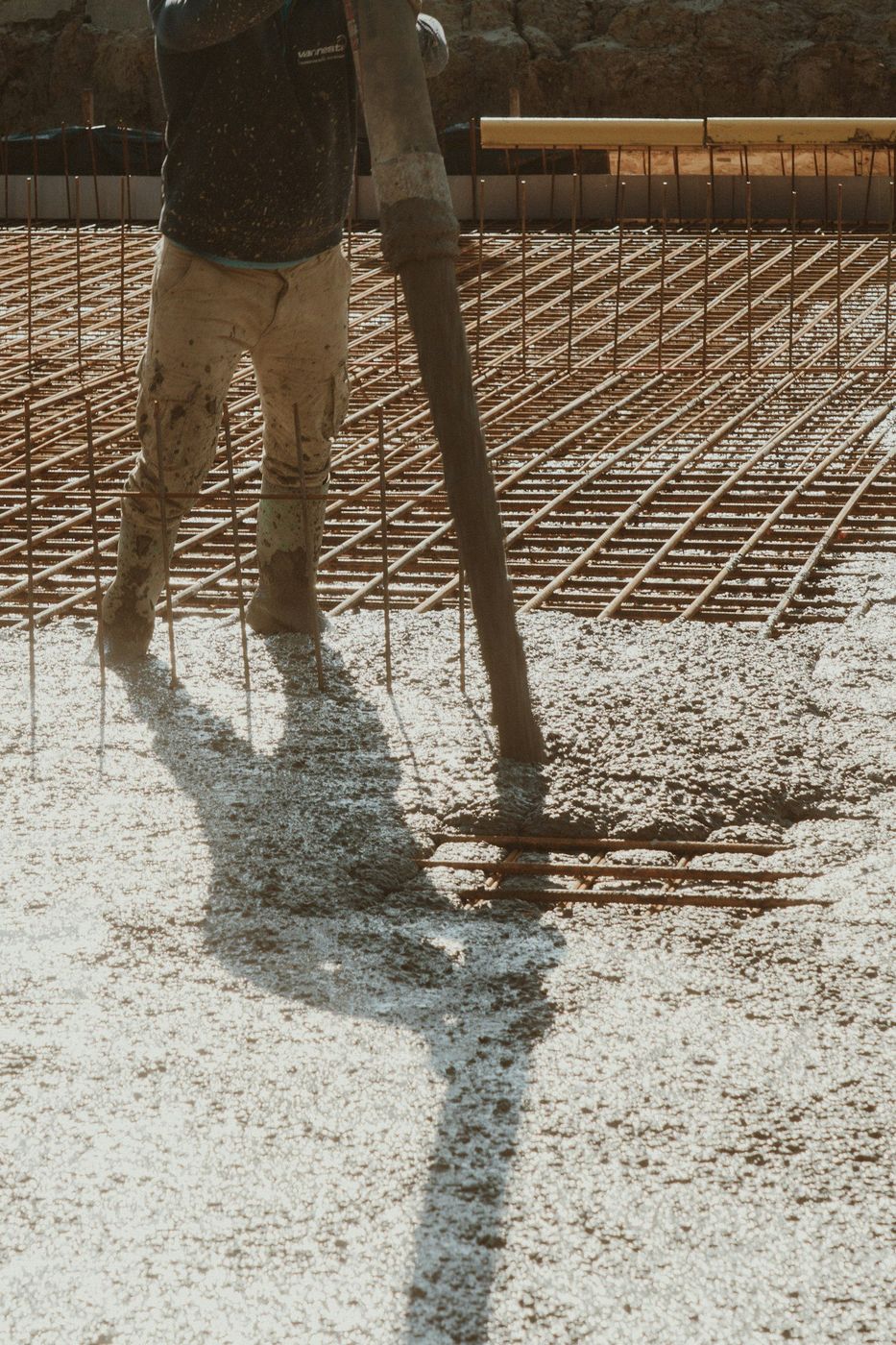
Access prices too. If a truck can chute directly to the forms, you're buying a pour. If we pump over a building or wheel every yard through a four-foot courtyard gate by buggy, you're buying labor hours. Same slab, different job. That's why we walk a property and measure the gates before we quote anything.
The third driver is your calendar. Work we run start to finish in daylight is the cheapest concrete you will ever buy. The same work chopped into six evening windows so a medical tenant never loses their front door costs more, and sometimes that's still the right call.
| Driver | What it looks like on site | Effect on the number |
|---|---|---|
| Base condition | Old walk on native dirt, no gravel, water standing underneath | Adds excavation, imported material, and compaction. Biggest single swing on most bids. |
| Equipment reach | Courtyards, narrow gates, walks tucked behind a building | Chute becomes pump or buggy, and labor hours climb quickly. |
| Demolition volume | Thick old panels, buried footings, abandoned conduit in the way | Saw depth and haul tickets. Recycling the load takes some of it back. |
| Schedule windows | Night placement, weekend closures, every door kept open | Crew premium plus lighting, barricades, and traffic control. |
| Compliance rework | Cross slopes out of tolerance, missing landings, no warning panels | Regrading and new transitions instead of a like-for-like swap. |
| Finish and jointing | Broom on the connectors, something scored or colored at the entry | Modest next to base work. Real once it covers a whole property. |
We'll walk it, flag what has to come out, and hand you a line-item number your owner or board can read without a translator.
Almost none of this work happens on an empty site. There's a delivery at seven, a school run at eight, a lunch rush, and a fire lane that legally can't be blocked. So we build the sequence backward from your busiest hours. Half a walk at a time. Temporary ramping at doors. Cones and signage that direct people instead of confusing them.
Night and weekend placement is routine for us. Nine at night in July is honestly better concrete than one in the afternoon, because the mix isn't fighting a hot slab and a dry wind. Winter flips that completely and we want the warm middle of the day. If other trades are in the mix, say so early. Conduit, irrigation sleeves, dowels, and anything needing an inspector's eyes before it gets buried all sit on our critical path. One missed sleeve turns a finished walk into a saw cut.
April into October is the easy window, and the sharpest managers lock a May start back in February. Fall placements cure beautifully up here: cool nights, warm afternoons, and a month of runway before ice melt comes out of the shed. Summer works fine when we start at daylight and quit ahead of the afternoon thunderheads.
Winter work happens too. Heated water, non-chloride accelerators, blankets over everything, and a flat rule against placing on frozen ground. If a walk turns into a liability in January, we'll grind the trip edge, barricade it, and put you first on the spring calendar.
Still unsure about something?
Call the crew at (303) 569-4046 and we will talk it through.

Get a free, no-obligation estimate from a crew that knows Colorado soil, Colorado weather, and how to finish concrete that lasts.
Accessibility
Adjust the site to fit how you read and browse. Your choices are saved on this device.