
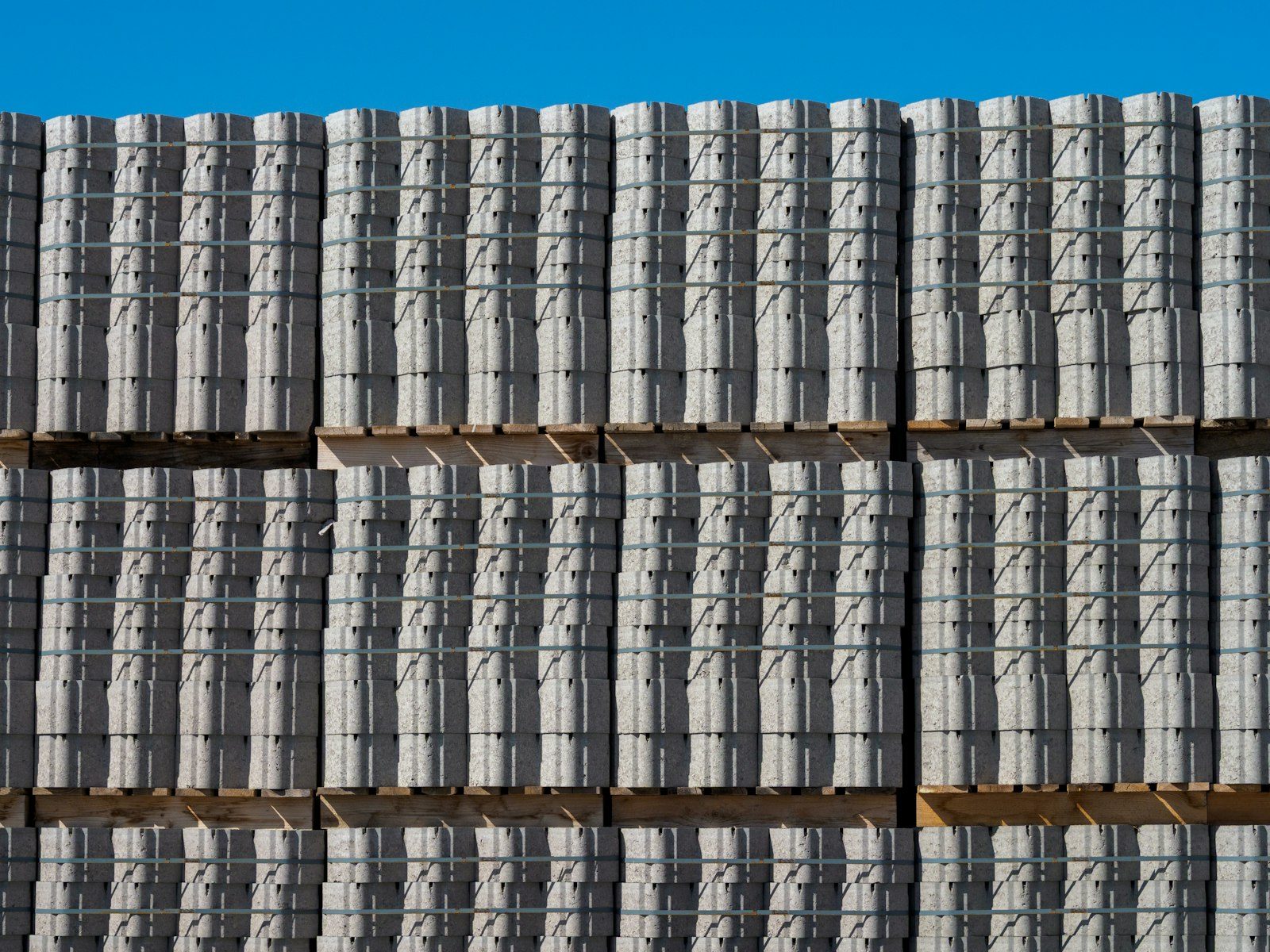
A week after we leave it stops being a project and becomes the thing your mower bumps every Saturday.
A retaining wall quits being a construction project about a week after the crew pulls out. After that it's yard furniture. It's the edge the kids walk along, the thing the mower bumps, the surface a hose drags across, and the spot snow ends up every time somebody clears the walk. All that daily contact is where walls quietly wear out, and none of it appears anywhere on a construction estimate.
We pour walls across town: terracing back yards around Fossil Creek, holding grade behind newer houses in Rigden Farm, replacing tired timbers and leaning block behind older places near Old Town. This page is about the part nobody writes down. What a finished wall asks from you, what it can carry, and what a northern winter does to a structure whose whole job is holding wet dirt in place.
Summer is easy duty. The wall holds dry dirt, water runs through the rock, everybody is happy. Then the ground behind it freezes solid and the whole system goes quiet for a couple of months while pressure builds in whatever moisture got trapped back there. A heavy, soaked spring snow melts into ground still frozen a few feet down, so the water can't sink. It travels sideways and finds the backfill.
That's the week a wall shows what it's made of. Washed rock behind it, a wrapped drain, and an outlet that isn't under a snowbank, and it barely notices. Backfilled with the clay that came out of the hole, it takes the whole load. Salt is the second problem. Deicer on steps beside the wall splashes onto the face and pulls the surface off in flakes. Sand gives the same traction and does nothing to the concrete.
| Time of year | What to look at | What it takes |
|---|---|---|
| Early spring melt | Water leaving through the weeps and the outlet rather than seeping through the face | Dig the outlet clear of snow and mud, pull mulch off the weeps |
| Late spring | Dips and soft spots above the wall, where backfill has settled | Topsoil in the low spots, grade that sheds water away from the wall |
| Summer | Sprinkler heads spraying the wall and drip lines soaking the terrace | Move heads and shorten run times, so you water plants not backfill |
| Storm season | Where runoff crosses the terrace during a hard cell, and whether it's cutting a channel | A shallow swale or a small drain before the channel becomes a rut |
| Fall | Leaves packed into weep holes, debris at the outlet, joints and cap | Ten minutes with a hose and a screwdriver, once, before it freezes |
| Winter | Where snow gets piled and where deicer gets thrown near the wall | Throw snow out into the yard, use sand on nearby steps |
Dirt behind a wall pushes on it, and anything heavy sitting on that dirt pushes harder. Engineers call it surcharge. In a back yard it looks like a hot tub, a shed, a loaded trailer on the bench, or a driveway extension somebody added two summers later. Weight near the top of the slope is what a wall feels most, and the effect is not small.
So tell us early. A wall designed for lawn and a wall designed with a hot tub on the terrace are different walls, and the difference is buried where you'll never see it. Adding that load later isn't automatically a disaster, but somebody should look at the design before the delivery truck shows up.
We'll read the grade, the drainage, and the loads above it, and tell you plainly whether it needs work. Free visit. (303) 569-4046.
Wall work runs best from late spring into fall. The excavation stays open a while, backfill goes in lifts and gets compacted, and both want unfrozen material. October is usually fine. January is a conversation, since frozen backfill bridges instead of compacting and thaws into settlement you'll be topsoiling in the spring.
Once the wall is poured and backfilled, the terrace is usable right away, though we'd hold off on anything heavy for a few weeks. Give the ground above one full wet cycle before laying sod or setting pavers up there. Backfill settles a little no matter how carefully it goes in, and adding soil to a low spot beats lifting a patio that dropped an inch.
Still unsure about something?
Call the crew at (303) 569-4046 and we will talk it through.

Get a free, no-obligation estimate from a crew that knows Colorado soil, Colorado weather, and how to finish concrete that lasts.
Accessibility
Adjust the site to fit how you read and browse. Your choices are saved on this device.