
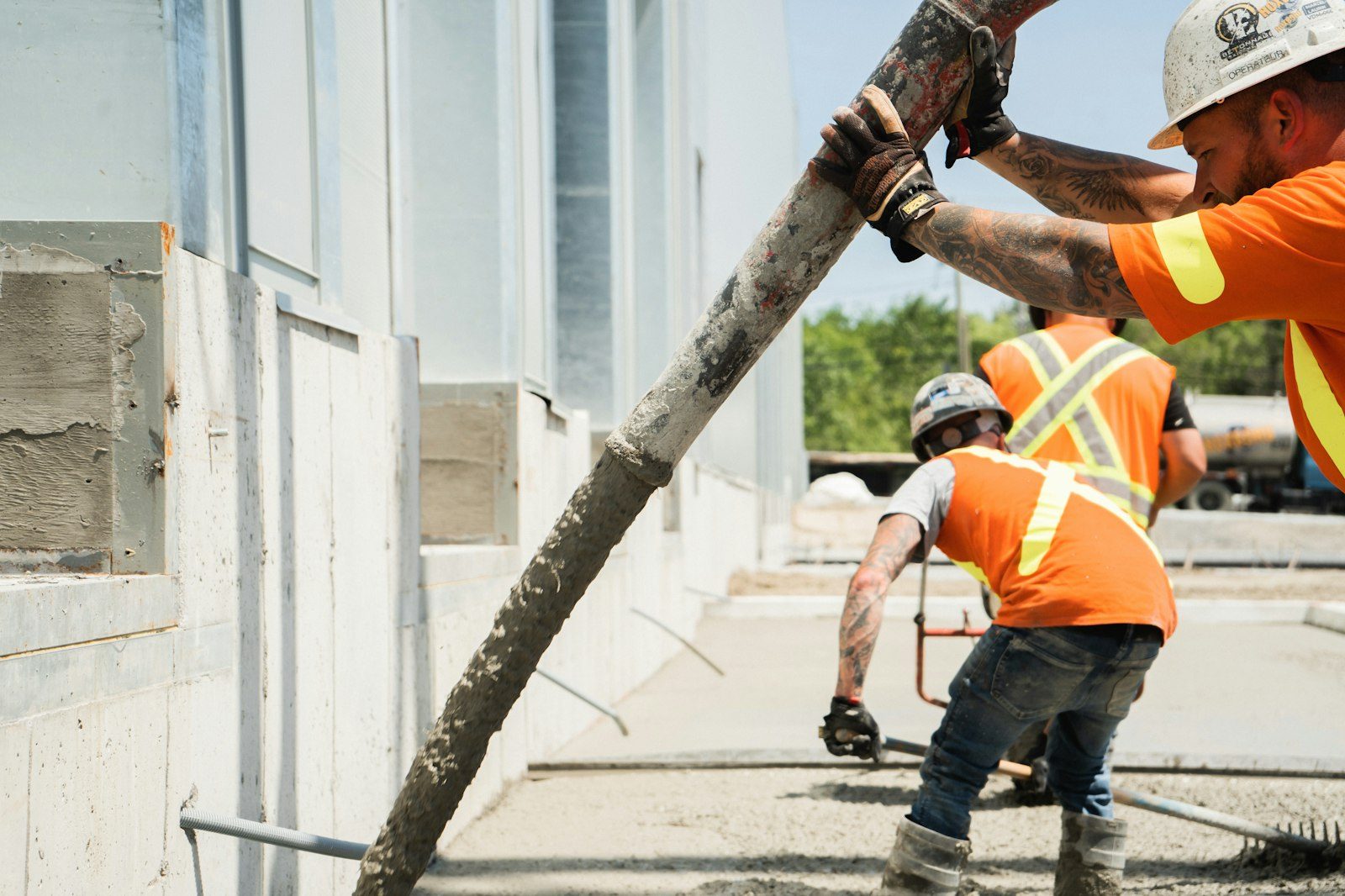
Steps fail from the bottom up, in ground nobody looks at until the demo hammer comes out.
Break out an old stoop and you learn the whole story in about ten minutes. Sometimes there's a proper footing down there, poured deep, still doing its job after decades. More often there's a slab of concrete resting on loose backfill, in the softest ground anywhere on the property. That second one is why we get called.
Steps look like carpentry from outside: rise, run, a rail, a nice broom finish. They behave like foundations. Every problem we get called about, the flight pulling away from the house, the bottom step that shrank, the crack up a riser, comes from what the concrete stands on rather than the concrete itself. So that's where we start, in Old Town where the entries are old and the porches are high, and out in Harmony and The Landing where the side flights down to a garden-level door are newer but sit on ground that was disturbed just as badly.
Think about how your house got built. A machine dug a hole considerably bigger than the foundation, crews worked in that space, and when the walls were done the extra got pushed back in. That backfill ring wraps the whole house, it's several feet wide, and it will never be as tight as ground that was never touched. It keeps settling for years, and being loose, it drinks water faster than the native soil around it.
Now look at where a set of front steps lands. Right on that ring. A stoop poured as a solid block on backfill is a heavy object sitting on the one part of the site still consolidating, which is why it drifts away from the house and drops at the outside corner. The fix isn't more concrete on top. It's footings that punch through the loose material onto soil nobody has disturbed, tied back so the flight and the house move as one thing.
| Layer | Its job | How the shortcut shows up |
|---|---|---|
| Footings below frost depth | Carry the whole flight on ground that doesn't heave | The stoop rises in January and drops in April until the joint at the house opens |
| Undisturbed bearing soil | Give the footings something that won't consolidate further | Even corners of the flight settle, so the whole thing tilts toward the yard |
| Compacted fill or a structural slab under the landing | Support the walking surface between footings | A hollow under the top landing, then a crack across it |
| Drainage away from the backfill zone | Keep water out of the loose ground the steps rely on | Washouts along the sides and ice on the treads every thaw |
Front entries collect water on purpose. The roof sheds onto the ground beside them, the downspout usually ends within a step or two of the flight, the walk drains toward the house more often than anybody realizes, and snow shoveled off the treads gets piled against the backfill. Then it all freezes. At just over 5,000 feet on the north end of the range we get more freeze and thaw swings than the metro does, and each one works the soil a little looser.
So drainage is part of the step job, not a landscaping afterthought. Downspouts get extended past the backfill ring. The grade at the sides gets built up and pitched away. Treads get a quarter inch of pitch per foot so melt runs off instead of refreezing at the nosings. And the joint where the entry meets the house gets sealed, because that gap is a direct path into the very soil holding your steps up.
Season matters too. Steps are hand work: forms, steel, a small load of concrete, hours of finishing on a compact area. Mild weather shows in the finished edges. April into late October is our window, and early fall suits entry work best. Cold pours work with warmed water, an accelerator that carries no chloride, and insulation left in place, but we'd rather not take your only entry out of service in a January cold snap.
Photos of the side of the flight and the joint at the house tell us most of it. Send them over for an honest read.
Still unsure about something?
Call the crew at (303) 569-4046 and we will talk it through.

Get a free, no-obligation estimate from a crew that knows Colorado soil, Colorado weather, and how to finish concrete that lasts.
Accessibility
Adjust the site to fit how you read and browse. Your choices are saved on this device.