
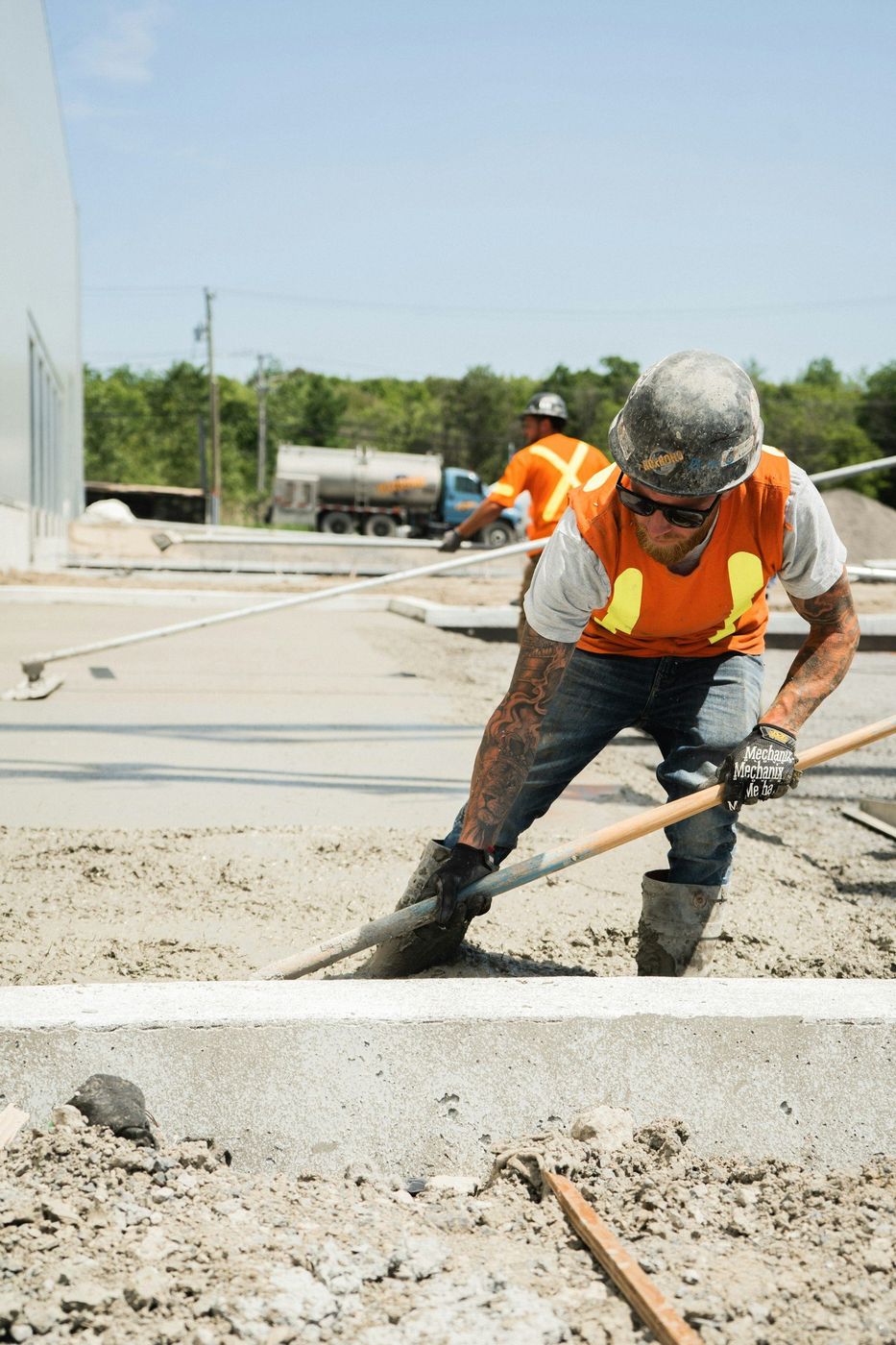
We plan a commercial pour hour by hour, from the walk we do the afternoon before to the last saw cut after dark.
A commercial pour is one long day with no undo button. Concrete leaves the plant on a clock, and once it's on the ground you finish it on its schedule instead of yours. So we spend more hours planning the day than placing it. Where trucks stage, which door your tenants keep, who's walking that sidewalk at eight in the morning, where washout goes: all of it gets settled before anybody mixes anything.
We place flatwork for retail frontage, office entries, warehouse aprons, and service drives across Denver. Cherry Creek work tends to be about threading foot traffic and delivery windows. Central Park and the newer infill blocks usually give us room to stage. Park Hill and University Hills bring the older inventory, panels poured decades back with almost nothing under them. Different problems. Same pour day discipline.
Our crew is on site before the plant opens. The first hour is layout and protection. Cones and barricades where the work zone meets the public walk, plate or plywood over any lid we have to cross, poly on storefront glass if we're inside splash range. When the work touches the public right-of-way we pull the city's right-of-way permit well ahead and run whatever traffic control the approved plan calls for. That paperwork happens days earlier. On pour day it just shows up as cones and a flagger.
Then forms and grade. We string the run and set forms to the grade the drainage needs, not the grade the broken slab happened to sit at. Old grade is a suggestion. A good share of the ponding complaints we inherit trace back to a crew that just matched what was there. Steel goes in last: #4 bar on chairs at roughly a two-foot grid anywhere vehicles cross, dowels drilled into adjoining panels, and isolation joint material at every column, wall, and stoop so the building and the flatwork move independently.
First truck backs in and the day changes gear. Chute where we can reach, pump or buggy where we can't, and a placement order worked out so we're never pouring against concrete that's already stiffening. Screed, bull float, then wait. That wait is the part nobody outside the trade understands. Bleed water has to rise and leave before anyone touches the surface, because troweling water back into the top eighth of an inch is exactly how you get a slab that dusts under a broom two winters later.
Denver makes that window unpredictable. We're a mile up, the air is dry, and a light spring wind pulls moisture off a fresh surface faster than a still ninety-degree day in a wetter climate. So we watch evaporation rate, not just air temperature. Fog spray, evaporation retarder, and windbreaks come out when the numbers say so. Broom finish goes on crosswise to traffic for grip. Then joints, sawed the same day, before the slab is twelve hours old and long before it has decided where it wants to crack on its own.
Send us the site plan and your delivery windows. We'll build the schedule around them and put it in writing.
| Window | Where it fits | The trade you make |
|---|---|---|
| Weekday daytime | Fenced work areas, back lots, buildings with a spare entrance | Simplest to schedule and easiest to finish well. You give up that area for the day. |
| Night | Grocery and restaurant frontage, drive aisles that can't close in daylight, dock approaches on a two-shift building | Lights, a larger crew, and cooler air that stretches the wait between finishing passes. |
| Weekend | Office entries, medical suites, anything with a Monday-through-Friday tenant | Two quiet days and clean access. Plant availability is thinner, so it gets booked further out. |
| Half at a time, two weekdays | Small lots where the surface can't fully close | Two mobilizations and a construction joint you'll be able to see. Still the right call sometimes. |
The pour is the easy part. It's the two hours before the first truck that decide whether we're washing tools at four o'clock or chasing a slab under work lights at nine. Every job that has run long on me, I can point at one thing we didn't settle the day before.What the crew sees on site
Still unsure about something?
Call the crew at (303) 569-4046 and we will talk it through.
Get a free, no-obligation estimate from a crew that knows Colorado soil, Colorado weather, and how to finish concrete that lasts.
Accessibility
Adjust the site to fit how you read and browse. Your choices are saved on this device.