
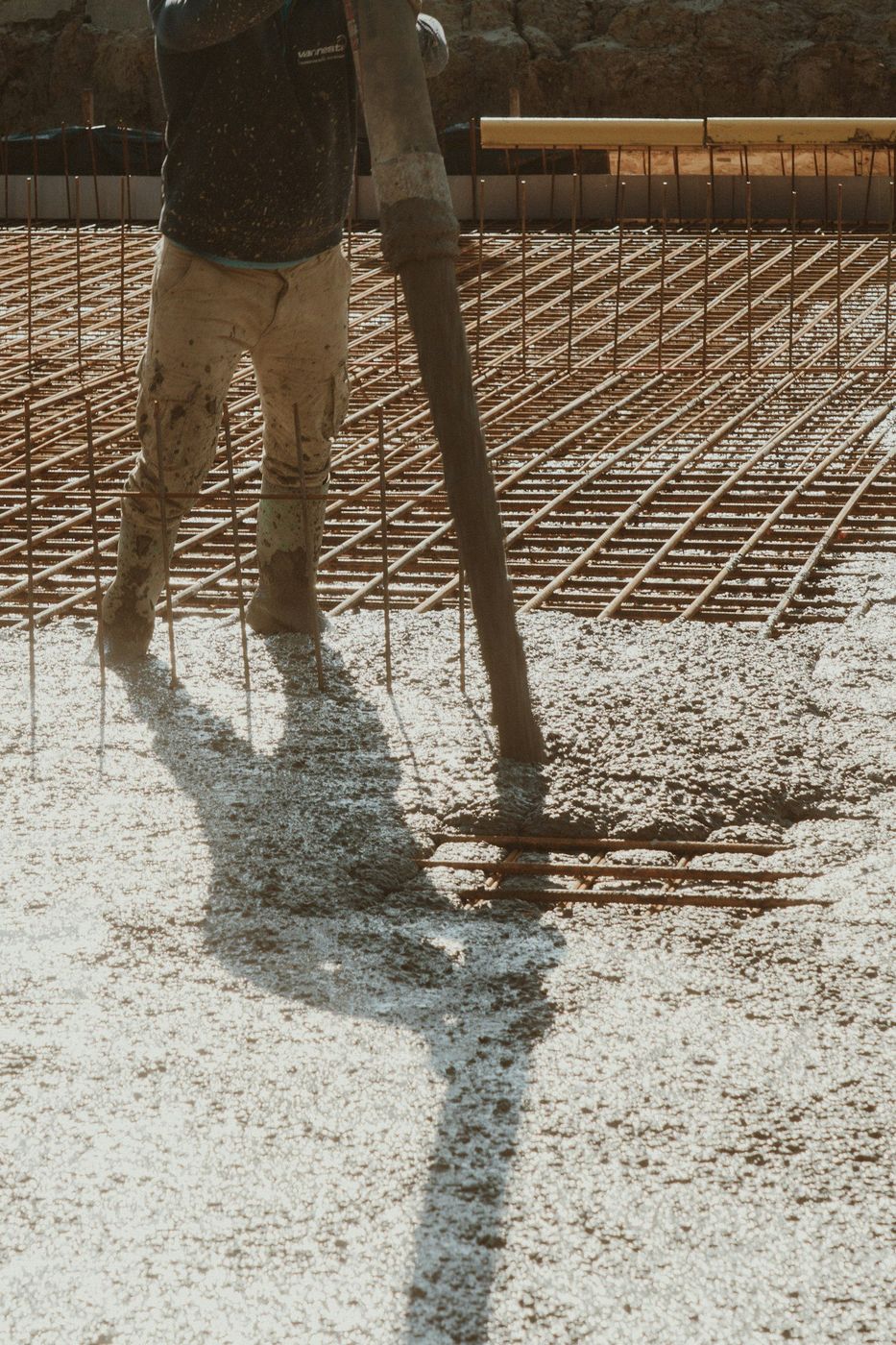
Two mornings a year the floor is soaked and nobody spilled anything. That is the slab telling you about itself.
It happens in April, and again in a warm stretch in fall. Somebody opens the building at six, warm damp air pushes in behind a front, and the whole floor is wet like it rained indoors. Cardboard on the deck goes soft. The lift tires squeal. By noon it is gone and everybody forgets until the next time, except that a floor doing this twice a year is telling you something about what is under it.
The interior slabs we pour around Centennial are not distribution boxes. They are flex bays behind office frontage, contractor and service shops serving Walnut Hills and Foxridge, storage and fleet buildings, and maintenance structures at the back of larger properties. Smaller square footage than a warehouse district, identical physics. Here are the weather moments that expose a floor's weaknesses and how we build slabs that stay boring through them.
Concrete holds temperature. After a cold stretch the slab stays cold well into a warm spell, because that mass takes days to catch up to the air. When humid air meets a surface below its dew point, water forms. That is condensation, not a leak, and no amount of mopping touches the cause.
What makes it worse is moisture coming the other direction. Ground vapor moves up through a slab constantly unless something stops it, and a floor damp from below stays cool and stays wet longer. That is the whole argument for a vapor retarder, and why we place ten mil sheeting with taped laps and sealed penetrations directly under the concrete, with no sand layer on top of it. Sand over the sheeting holds water and hands it back to your floor for the life of the building.
The rest is operational. Ventilate on the days it matters, do not open every door at once when warm wet air is moving in, and keep the floor densified or sealed so the surface is not drinking what lands on it. A floor with a barrier under it can still sweat on a bad morning. It just dries fast and leaves you no coating failures.
The other seasonal moment is January, and it arrives on tires. A lift runs out to the yard, crosses a lot treated with magnesium chloride, and carries that brine back inside four hundred times a season. The first fifteen or twenty feet inside the door take a beating nothing else in the building comes close to. Salt-laden meltwater sits in the joints and the temperature swings every time the door opens.
So we detail that zone differently than the field. Fall away from the door so water leaves instead of ponding at the threshold. Heavier reinforcement and closer attention to joint placement, because a joint where every wheel crosses is a joint that spalls. And those joints get filled with a semi-rigid material that supports both edges under wheel loads, not a soft caulk that squeezes out.
Housekeeping does the rest. A squeegee pass and a rinse after storm weeks makes a real difference, because chloride left to dry and rewet in a joint is harder on concrete than the cold ever is.
Send us photos of the door line and the worst joints. We will tell you whether this is a surface problem, a moisture problem, or a slab that has run out of road.
| Approach | What it gives you | What it asks in return |
|---|---|---|
| Hard troweled and left bare | Lowest cost, nothing to maintain or reapply | Absorbs brine, dusts sooner, and shows wear fastest |
| Densified and penetrating sealed | A tougher surface that still breathes, easy to reapply | Reapplication on a schedule, and it will not hide existing damage |
| Resinous coating over the zone | Cleanable, bright, and resistant to what comes in on tires | Needs a dry slab and real prep, and it fails loudly if moisture is coming up |
| Sloped with a trench drain at the door | Water leaves instead of sitting in the joints | Plumbing work, a drain to maintain, and more coordination up front |
Still unsure about something?
Call the crew at (303) 569-4046 and we will talk it through.

Get a free, no-obligation estimate from a crew that knows Colorado soil, Colorado weather, and how to finish concrete that lasts.
Accessibility
Adjust the site to fit how you read and browse. Your choices are saved on this device.