
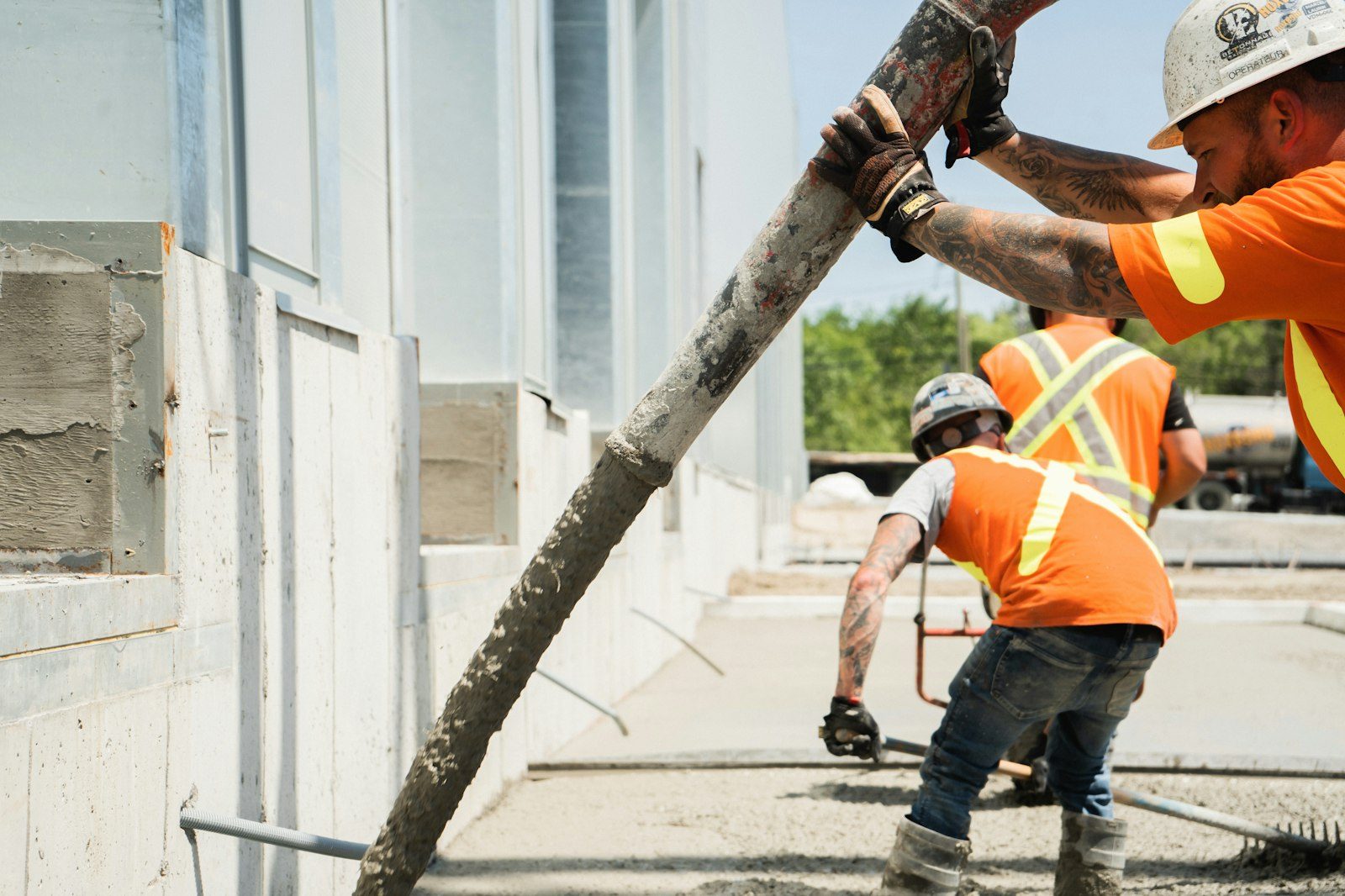
The buildings stayed put. What rolls across the concrete in front of them did not.
A suite that held an insurance office for twenty years is a physical therapy clinic now. The bay next door went from quiet storage to a food tenant with a van in the service drive four mornings a week. Nobody poured new concrete for either change. The walks and the pads out back are still doing a job that was sized in a different decade for different tenants.
That gap is most of our flatwork work in Centennial. Office parks and retail centers that filled in long ago, leased to businesses nobody was planning for, on concrete that absorbed every change without a single line in a capital plan. We rebuild the pieces that stopped keeping up: entry walks, drive aprons, service and trash pads, and the stretches connecting a parking field to a front door. Rarely the whole property. The parts your current tenants broke.
Walk any older center here and the concrete tells you the leasing history. A walk swept twice a day by a restaurant crew looks nothing like the one in front of a suite that has held the same quiet tenant since it opened. Grease and hot wash water darken and etch. A gym opens at five in the morning, so its walk gets salted harder and earlier than anything else on the property. Medical and therapy tenants bring wheelchairs, walkers, and rollators onto walks poured back when a slight cross fall seemed like nothing.
Delivery is the other quiet change. Vans that used to stop at a curb now back onto aprons and sometimes across the walk itself, because that is where the door is. Four inches over a base nobody proofed carries people forever and gives out under a loaded van in a few seasons.
Centers serving Southglenn and the blocks around Willow Creek and Foxridge have turned tenants over several times. Pads built out later near Piney Creek often have sound base and need only the surfaces that took the beating. We scope both the same way: figure out what the property does now, then price concrete for that.
| Change in tenant use | What the concrete suddenly has to do | What usually gets rebuilt |
|---|---|---|
| Office suite becomes a clinic | Carry mobility devices on a route that has to measure right | Entry walk, landing, and the stall-to-door connection |
| Retail bay becomes a food tenant | Take grease, wash water, and a second container | Service pad, rear apron, and the slope to the drain |
| Storage becomes a fitness or studio tenant | Take pre-dawn foot traffic and heavy winter deicing | Front walk panels and the curb ramp at the stall row |
| Any tenant adds regular van or box truck delivery | Support wheel loads on slabs poured for people | Apron, drive crossing, and a thickened panel at the door |
We will walk the property with your maintenance lead, mark what has to come out, and leave a scope you can budget against. Free.
Three things age flatwork here faster than traffic does. The first is the daily temperature swing. A south-facing walk can run above freezing at two in the afternoon in January and drop twenty-five degrees by nine that night, and any water sitting in a joint goes to work every time that happens. Not once a winter. Dozens of times.
Second is what your snow contractor puts down. Magnesium chloride keeps a lot clear and it is brutal on surfaces finished thin or never sealed. Older flatwork loses its top paste at the joints and edges, then starts giving up sand, and the panel looks worn out long before it has lost strength. Third is altitude sun, which cooks any surface treatment faster than the label predicts.
None of that gets stopped by a better mix, though air entrainment is not optional outdoors. What decides how a walk ages is whether water leaves it. Panels that shed in one direction, jointed deep enough on pour day, outlast the identical mix poured flat with a birdbath in the middle.
An occupied center has no natural shutdown, so we build the schedule backwards from the businesses. Tell us the restaurant's prep hours, which suites take deliveries and when, where the clinic's patients park, and which door cannot close. We break the scope into pieces small enough that each tenant loses a day or two instead of living inside a construction zone for a month.
Walkboards go over fresh work where somebody has to reach a door. Barricades are hard barricades, not tape, because tape does not stop a driver in a hurry. And we would rather pour a Saturday than argue with a Tuesday lunch rush.
Season matters more than most owners expect. Our clean window runs mid-April into October, and September is the best month on the calendar because concrete sets at a pace the crew can finish well. We pour into the cold with heated mix water, accelerator, and blankets. What we will not do is place on frozen ground, or hand a new slab its first magnesium chloride winter three weeks after finishing. When a fall scope runs late, we split it and finish in spring.
Still unsure about something?
Call the crew at (303) 569-4046 and we will talk it through.

Get a free, no-obligation estimate from a crew that knows Colorado soil, Colorado weather, and how to finish concrete that lasts.
Accessibility
Adjust the site to fit how you read and browse. Your choices are saved on this device.