
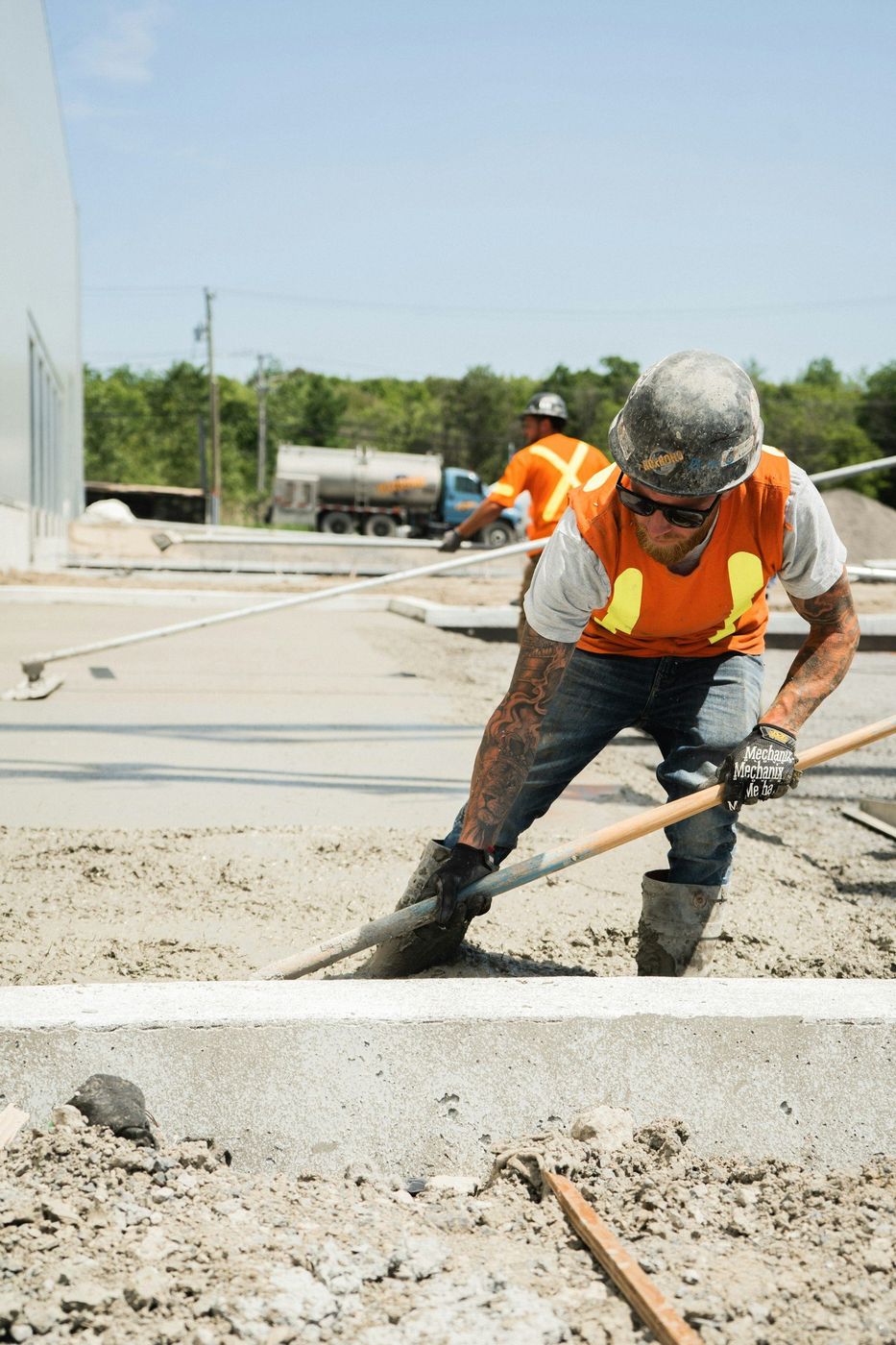
The work starts the afternoon before, when the container gets pulled and everybody finally sees the concrete.
Nobody has looked at the pad in years. A container has sat on it since before the current manager took the property, and the first honest view of the concrete comes the afternoon before we start, when the hauler drops the box elsewhere and the enclosure sits empty. That is when the cracked panel, the low spot full of standing liquid, and the rotated post footing all show themselves at once.
Enclosure pads are small pours with an outsized amount of coordination attached. Retail centers, restaurants, and the townhome and condo courts around Willow Creek, Southglenn, and Piney Creek all run on whether the truck can service the container on schedule, so sequence matters as much as concrete. Here is how it goes, from the day before demo to the morning the truck comes back.
We saw a clean line around the work, break the old pad out, and load it. On a failing pad the concrete comes up in pieces faster than anyone expects, and what is underneath is usually the reason. Wet, dark material that has been holding water for years. Sometimes a void where fines washed out under a crack.
That material comes out and gets hauled, not reworked, because saturated soil does not compact no matter how many passes a plate makes. Then clean base goes in, in lifts, compacted and checked. If posts and bollards are in scope, their holes get dug below frost depth the same day so we are not disturbing finished concrete later.
Forms go up in the afternoon. This is where the shape of the pad gets decided: the containment slope in the direction your jurisdiction allows, the apron extended out past where the truck actually stops, and the tie-in to the existing lot set so water crosses the seam instead of pooling against it. Steel gets tied on chairs before anybody leaves. Then we call the plant and set a morning delivery.
| Option | Where it works | The tradeoff |
|---|---|---|
| Temporary container elsewhere on site | Lots with a spot the truck can reach without blocking a fire lane | Residents and tenants walk farther, and it needs clear signage |
| Share a second enclosure on the property | Larger centers and communities with more than one location | The other enclosure fills fast, so add pickups for those weeks |
| Smaller cans with extra pickup frequency | Restaurants and small tenants with tight space | More hauler visits, and staff have to stage cans somewhere |
| Roll-off staged in the lot | Properties with stalls to spare and a straightforward truck path | You lose parking, and roll-offs are hard on new asphalt edges |
Give us your collection days. We will build the sequence backward from them and help you write the tenant notice.
The truck backs in early. We place, screed, and bull float behind it, and on a pad this size the concrete is all down inside an hour. Then comes the part that looks like nothing is happening and matters more than any other stretch of the day. Bleed water has to come up and leave before anyone touches the surface. Work it too early and you trap water in the top, which is how a pad ends up dusting off in year two.
Edges get tooled, the broom texture gets pulled across the direction the truck travels, and joints get sawed the same day, laid out to keep cuts away from where fork tines land and where the front wheels track. Curing compound goes down before the crew loads up. The barricades stay, and so do the dates written on them.
Weather runs the schedule from June through August. Afternoon storms build fast out here, and rain landing on a surface still being finished works water into the paste and leaves you scaling and dusting within a couple of winters. Rain two hours later on a slab already covered is a non-event. So we start early and we would rather move a pour than gamble on radar. The good months for this work run late April through early October, with September the easiest month to finish well. Cold pours happen with heated mix water, non-chloride accelerator, and blankets, though we will not place on frozen ground, and a pad poured in December faces its first ice season with no age on it.
Still unsure about something?
Call the crew at (303) 569-4046 and we will talk it through.

Get a free, no-obligation estimate from a crew that knows Colorado soil, Colorado weather, and how to finish concrete that lasts.
Accessibility
Adjust the site to fit how you read and browse. Your choices are saved on this device.