
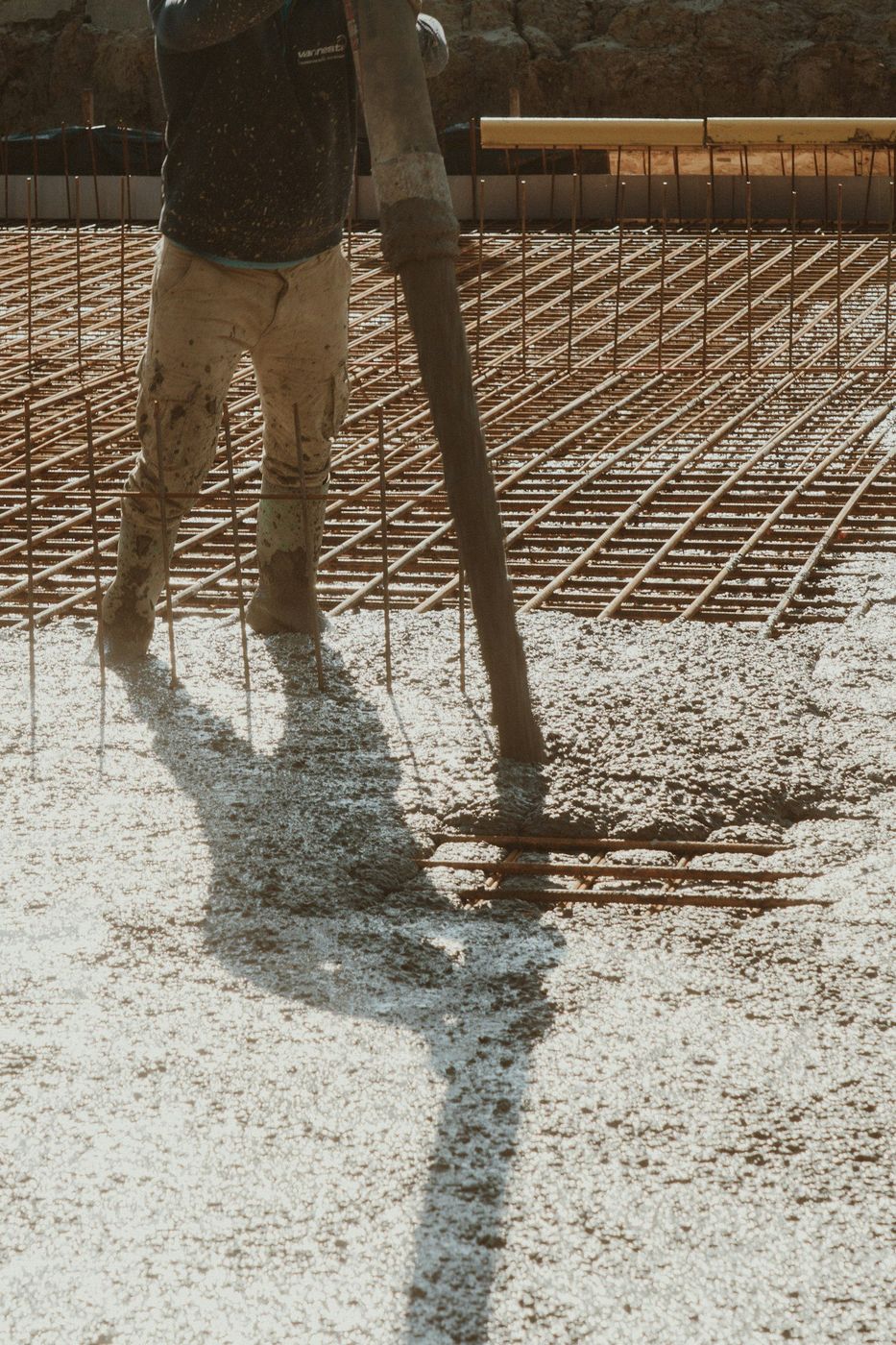
New slabs, replacements, and repairs for the one floor in your house that gets driven on.
Picture the third week of February. Twelve degrees at sunrise, fifty two by two in the afternoon, and your truck rolls into the garage carrying a load of slush packed with whatever the plows laid down on the way home. That melts. It puddles at the low spot near the door, soaks into the surface, then refreezes overnight when the door opens and the temperature drops back through zero. Do that thirty times a winter.
That's the job a garage slab actually has, and it's why the ones we replace almost always fail in the same two feet of concrete: the strip just inside the door. Everything past it looks fine. We pour garage floors in Castle Rock built for the brine, the melt, and the swings, with the slope and the joint layout to match.
Concrete doesn't mind being wet and doesn't mind being cold. It hates being both at once, over and over, with dissolved salt in the water. Deicing brine soaks into the surface pores, freezes, and pushes outward from inside the top layer. The concrete flakes off a chip at a time. Homeowners call it spalling, and once it starts on a floor that never got a sealer, it walks steadily inward.
Newer builds in Sapphire Pointe and Cobblestone Ranch mostly have decent slabs that just need sealing and a smarter parking habit. The calls that turn into replacement come from older stock, where a thin unreinforced pour is sitting on whatever fill the original grading crew left, with no vapor barrier and no slope. Once that floor cracks, moisture from underneath joins the party and you're chasing the problem from both sides.
| Option | Best fit | The honest downside |
|---|---|---|
| Bare broom finish | Workshops, anywhere grip matters more than looks | Porous. Picks up oil stains and road salt readily |
| Penetrating sealer | Any garage slab, new or existing, as a baseline | Invisible when done. Needs redoing every few years |
| Polyaspartic or epoxy coating | Clean look, easy sweep-up, hides an average surface | Only as good as the prep. It will not stick to a damp or unprofiled slab |
| Bonded overlay | A sound slab with a chewed-up top half inch | Pointless if the cracking runs full depth or the base moved |
| Full replacement | Cracked, settled, or slabs poured without a barrier | Costs the most and puts the garage out of use the longest |
A sheet of poly under the slab isn't optional and never was. Ground moisture wicks up through concrete constantly, and in a closed garage that shows as damp spots, white mineral bloom, and coatings that peel in sheets a year after installation. Ten mil, lapped and taped, run up the perimeter. It costs almost nothing during construction and can't be added afterward at any price.
Slope is the other thing worth arguing about. A dead flat garage floor holds every gallon your vehicle brings in. We pitch toward the overhead door at roughly one eighth inch for every foot of run, enough to move water and not enough to let a toolbox roll. Joint layout breaks the rectangle into panels close to square, cut the same day we pour, and kept clear of the door opening where wheels cross.
We'll sound the slab, check for a barrier underneath, and tell you whether it's a coating problem or a concrete problem.
We tell every customer the same thing when the floor is fresh. Park it, then go back out with a push broom and knock the slush off before it melts. Two minutes of that in January is worth more than any product you can buy.What the crew sees on site
An enclosed garage is the closest thing to a year-round pour we get. The walls and roof are already up, we can close the door, and temporary heat holds the space in range while the slab sets. That makes January a workable month for interior floors when it's miserable outside for everything else.
The catch is the ground beneath. Frozen subgrade is still frozen subgrade, and we won't place concrete on it. In an unheated garage that's been sitting open through a cold stretch, we'll heat and blanket the ground before we do anything else. Detached buildings out on the acreage lots take longer to bring up to temperature than an attached garage does.
For everything else, the sweet spot is the same as always. Late spring through October, with September and early October giving us the most predictable finishing weather. And once the floor is in, leave the ice melt alone for the first winter. Sweep, squeegee, and get a penetrating sealer on it before the season turns.
Still unsure about something?
Call the crew at (303) 569-4046 and we will talk it through.
Get a free, no-obligation estimate from a crew that knows Colorado soil, Colorado weather, and how to finish concrete that lasts.
Accessibility
Adjust the site to fit how you read and browse. Your choices are saved on this device.