
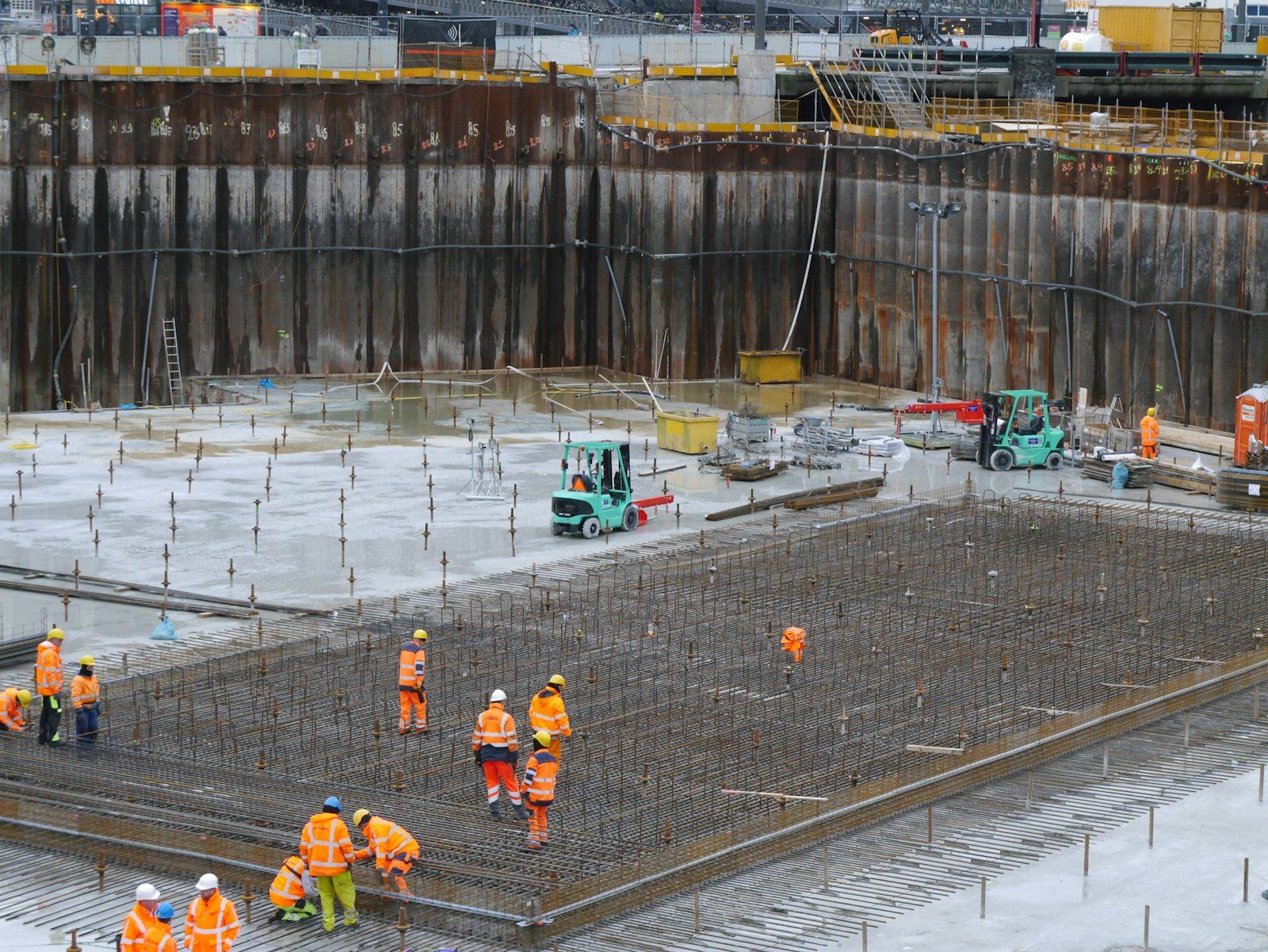
The old slab didn't fail on its own. We dig up the reason and fix it before the new pour.
The most honest hour of a driveway replacement comes right after the breaker stops. The old slab is in pieces, the loader is swinging them into the truck, and there on the ground is the autopsy: two, maybe three inches of concrete that sat directly on raw clay for decades. No gravel. No steel, or a sheet of rusted mesh lying flat in the dirt where it never did a thing. The driveway wasn't unlucky. It was set up to fail on day one.
That's why we treat replacement as an under-the-slab job first. Anybody can pour concrete on top of a bad base; the first contractor already proved that. Around Castle Rock, where the ground swells with every wet spell and drops with every drought, the dirt work decides whether the new drive lasts thirty years or repeats history.
Expansive clay is the villain in almost every tear-out we do here. It takes on water and pushes up with real force, then dries, shrinks, and leaves voids the slab bridges until it can't. Add the freeze line. At 6,224 feet, moisture in and under a slab freezes and lets go over and over each winter, and every cycle pries a little harder at whatever weakness exists.
A slab with no base under it has no defense against any of that. A compacted gravel layer does two jobs at once: it spreads loads so the concrete isn't flexing over soft spots, and it drains, so there's less water sitting under the slab waiting to freeze or feed the clay. That layer is the whole ballgame. It's also the part you never see, which is exactly why the original builder skipped it.
The town's growth rings show up in our demo work. Founders Village drives are the elder statesmen, and most of what we remove there is original concrete that owes nobody anything. Plum Creek and Castlewood Ranch tear-outs tend to reveal that mid-era shortcut: mesh thrown on grade instead of steel on chairs. And the newer stretches, The Meadows and Crystal Valley especially, generate a different call. Homeowners assume a young driveway can't need replacement, then demo shows base prep that was one thin scratch coat of gravel over fill. Metzler Ranch, Sapphire Pointe, Red Hawk, and Cobblestone Ranch land all over that spectrum.
So we never quote a replacement off the surface damage alone. The surface tells us the slab died. The excavation tells us why, and the why is what we're really fixing.
Call (303) 569-4046 for a free written estimate. We'll walk the drive, probe the grade, and give you a real timeline before you commit to anything.
| Found during demo | Why it killed the old drive | Our correction |
|---|---|---|
| Concrete poured on bare clay | Every wet-dry cycle moved the slab directly | Excavate deeper, then build a compacted base layer |
| Mesh lying at the bottom of the slab | Steel below the slab reinforces nothing | #4 bar tied on chairs so it works from mid-slab |
| Soft, wet pocket under one panel | The void let that panel flex and snap | Dig out the pocket, backfill with compacted base |
| Grade pitched at the house | Runoff soaked the clay by the foundation | Regrade so water leaves toward the street |
| Old roots or buried debris | Organic material rots and leaves hollows | Remove it all before anything gets compacted |
Most replacements run three to five working days start to finish: demo, base work, forming and steel, the pour, then joint sawing before the crew leaves that evening. You'll park on the street about a week after the pour. Plan for it; we'll remind you.
Season-wise, mid spring through October gives us the friendliest conditions on the Front Range, and early fall pours cure beautifully. But a collapsed driveway doesn't check the calendar. We replace drives through winter using heated water in the mix, non-chloride accelerators, and curing blankets, working between cold fronts. The single condition we won't work around is frost in the ground. Pouring over frozen base is how you buy the same failure twice, so if a deep freeze lands on your week, we slide the pour and tell you why.
People apologize for how bad their old driveway looks. Don't. The broken slab is the easy part; we'll have it gone by lunch. The dirt under it is where the job gets won or lost, and that part the homeowner never even sees.The crew lead's read on it
Still unsure about something?
Call the crew at (303) 569-4046 and we will talk it through.
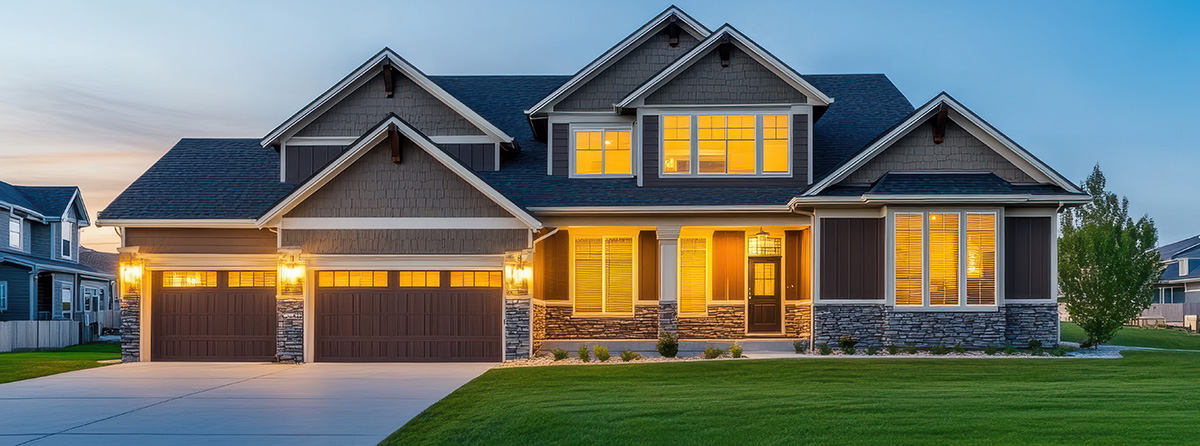
Get a free, no-obligation estimate from a crew that knows Colorado soil, Colorado weather, and how to finish concrete that lasts.
Accessibility
Adjust the site to fit how you read and browse. Your choices are saved on this device.