
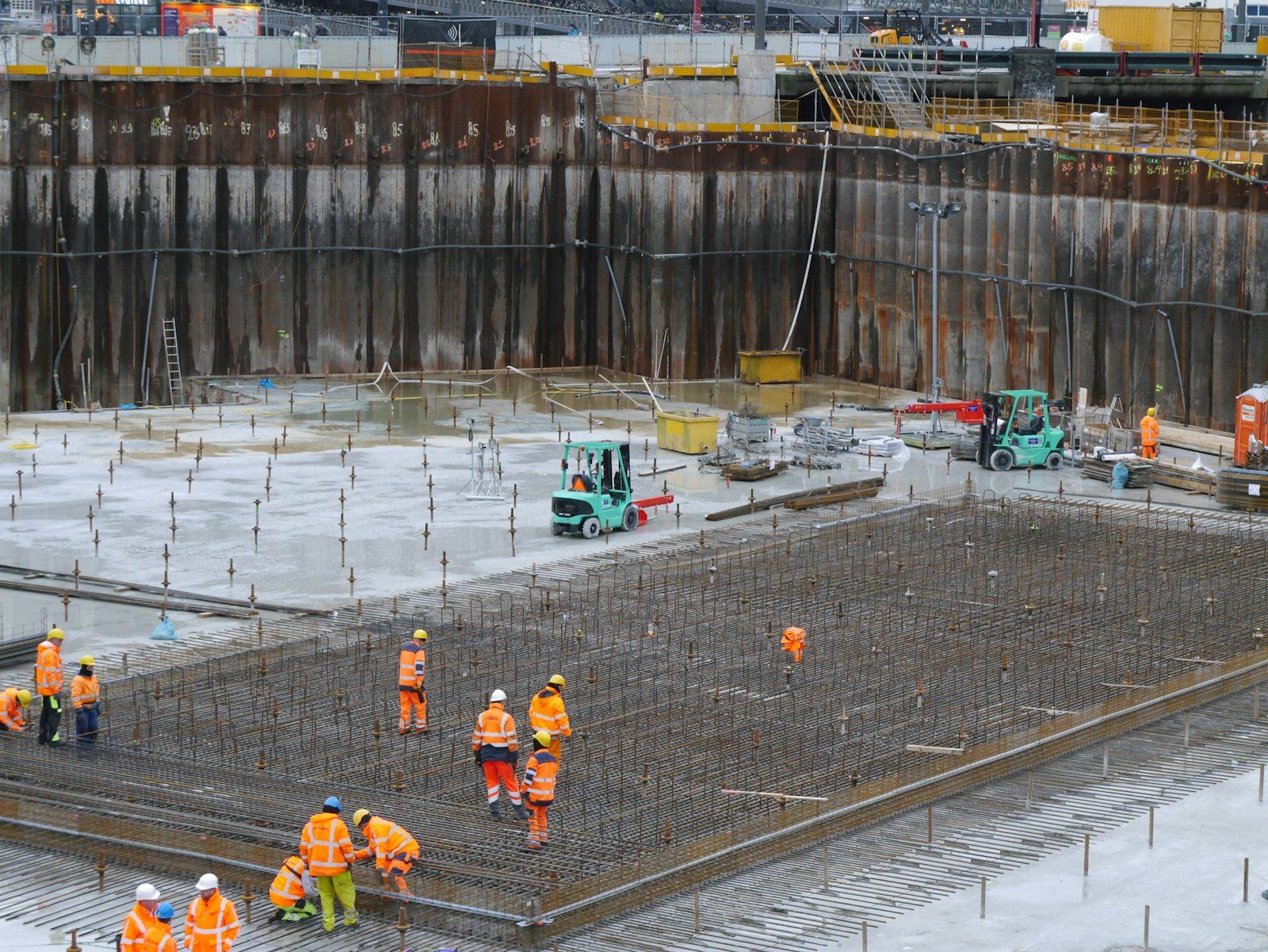
A porch roof that dips toward one post is a footing telling on itself from forty feet away.
Stand across the street and study the roofline of a covered porch. If it sags toward one post, the support under that post has gone down. Diagnosis complete, no tools required. Failing supports advertise themselves. A deck stair pulled a half inch off its landing. A garage side door that used to shut square and now leaves a wedge of daylight at the top corner. A stair step crack climbing through brick away from the house.
We get called to look at those things all over town, and the actual repair almost always sits well below the crack you can see. This is the part of a property nobody photographs and everybody leans on. Done right, nothing happens for forty years. Done shallow, undersized, or bearing on soil that was never going to carry the weight, and the structure above starts writing you letters.
| What sits on top | Depth we plan for | Spacing logic |
|---|---|---|
| House or attached garage foundation | Below local frost depth, onto bearing the geotech confirms | Continuous footing sized to wall load, piers only where soil demands them |
| Detached unheated garage or shop | Full frost depth, no shortcuts because it isn't heated | Perimeter footing plus interior pads under any posted load |
| Deck or elevated porch | Frost depth with a bell or bearing pad at the bottom | Set by beam span and joist layout, not by convenience |
| Covered patio or carport posts | Frost depth, sized for both downward load and wind uplift | One under every post, tied to hardware rated for the connection |
| Fence line | Below frost where posts must stay plumb | Closer spacing on tall or solid panels that catch wind |
| Stoop or entry landing | Frost depth, doweled to the foundation or fully independent | Two supports minimum, never floating on backfill |
Movement shows up first at connections. A post base that's opened a gap. A handrail that used to meet the wall and now stops short. Doors are the loudest tattletale on a house; when one corner of a frame racks, the latch stops finding the strike and people start blaming the hinges. Outside, look at the line where a stoop meets the house. If that seam has widened into something you can slide a pencil into, the stoop is riding on backfill instead of on real bearing, and backfill keeps settling for years.
The other tell is seasonal rhythm. Homeowners describe a door that binds every March and behaves again by August. That's soil taking on water in the wet months and pushing, then giving it back. Cosmetic patching on a seasonal cycle is money down a hole. Fixing what's underneath ends the cycle.
Newer construction in Crystal Valley, Sapphire Pointe, and Cobblestone Ranch mostly calls us for additions: a covered patio going onto a house that never had one, a shop slab with posted loads, a pergola or a hot tub structure that needs proper bearing rather than a pad set on grade. The original house structure is usually fine. We're adding to it.
Older pockets are the repair work. Founders Village and Plum Creek have decks, stoops, and detached garages built when a two foot hole passed for good enough, and thirty winters later those supports have wandered. Castlewood Ranch and Red Hawk bring grade into it. On a sloped lot the downhill supports carry a taller unbraced length and sit in soil that drains water from the whole yard past them. Those are the ones that move first.
Text us a photo from the street plus one up close. We'll tell you whether it's bearing or cosmetic before scheduling a visit.
The best digging stretch here runs from spring thaw into late fall, and early fall is our favorite window. Ground is still workable, water tables have dropped from the wet season, and concrete cures before the first hard night. Spring is fine as soon as holes stop filling with meltwater; a hole full of water is a hole we pump and inspect again before we place anything.
Winter work is possible and we take it. Frozen ground gets thawed rather than chipped through, mix water comes warm, blankets stay on, and we cover open excavations overnight so they don't freeze shut before morning. It's slower and it costs more. But a deck that has already dropped an inch shouldn't wait five months to stop moving. And there's a rule we hold to year round: nothing gets placed against frozen soil, because that soil is going to shrink away from your concrete the moment it thaws.
Still unsure about something?
Call the crew at (303) 569-4046 and we will talk it through.
Get a free, no-obligation estimate from a crew that knows Colorado soil, Colorado weather, and how to finish concrete that lasts.
Accessibility
Adjust the site to fit how you read and browse. Your choices are saved on this device.