
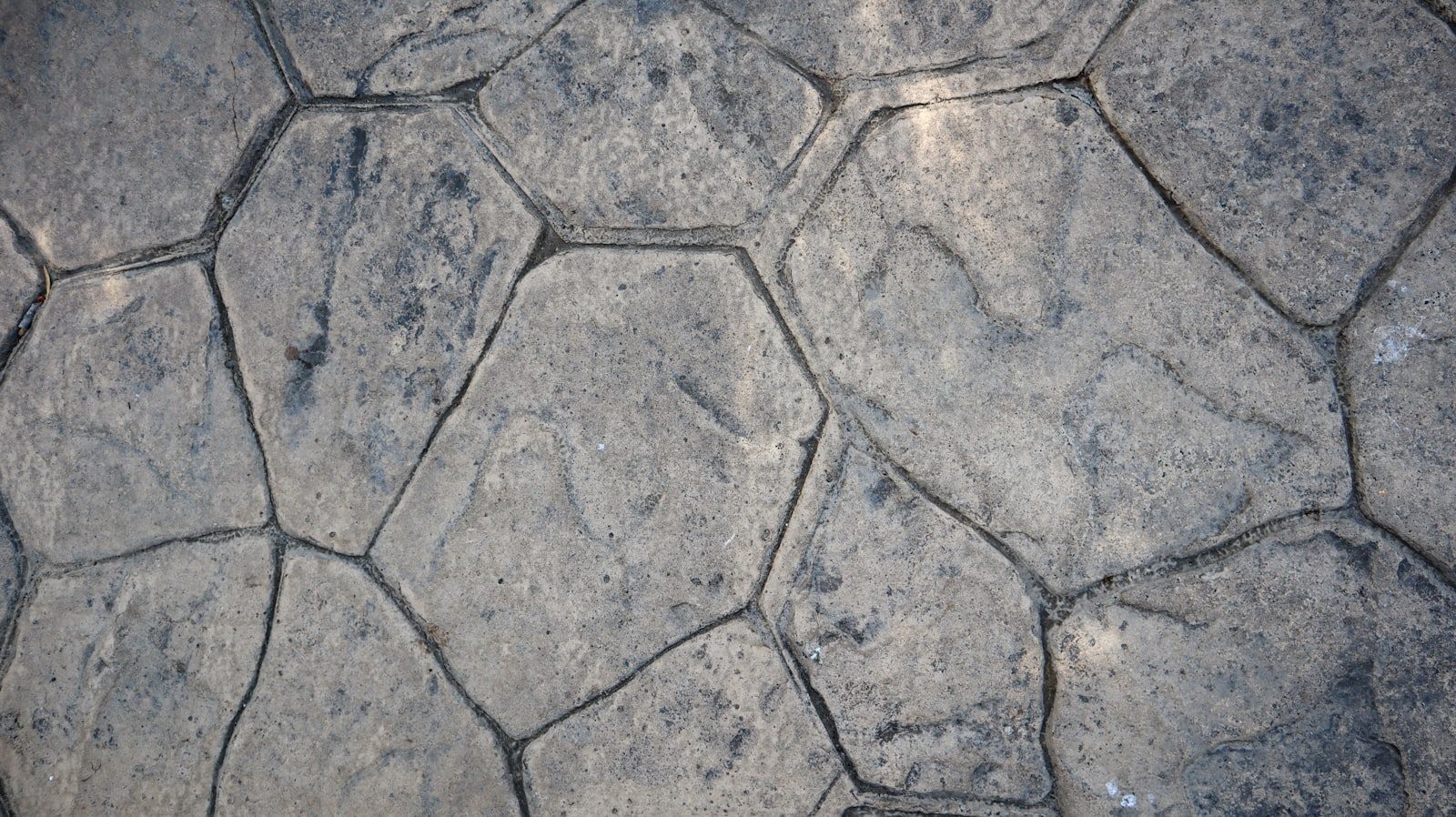
Pattern and color work timed to a slab that sets faster at altitude than the manuals admit.
Stamp day is the one pour where the clock runs the show. Regular flatwork forgives a slow finish. Stamped concrete doesn't. The color has to go down, the release has to dust on, and the mats have to hit the surface in that window when the slab is firm enough to hold a crisp imprint but soft enough to take one at all. Miss it by half an hour and the texture goes mushy, or the mats won't press. So our stamp crews run a different rhythm: more hands on site, mats staged in order, and one person doing nothing but reading the concrete.
That judgment under a timer is what you're really hiring. And in Aurora we're reading the sky while we read the slab, because a 95-degree afternoon and a building thunderhead both shrink the stamping window in a hurry.
By the morning of the pour, the base is compacted and the forms are set; stamp day is only about the stamp. The truck shows up early, usually ahead of the heat. We place and screed the colored mix, float it, then broadcast the release agent that gives the pattern its shadowed, two-tone depth. Then the wait, and it's a short one up here. Dry air and strong sun pull moisture off a slab quicker at this elevation than the product sheets assume, so the crew tests the surface constantly instead of trusting a stopwatch.
When it's right, mats go down in sequence, tamped, lifted, leapfrogged, with somebody detailing seams behind them. Joints get cut before the day ends. A few days later we wash off the leftover release, let everything dry, and seal. That final coat is what makes the color pop, and it's also your maintenance schedule introducing itself.
Two forces work on a stamped surface here: sun and the freeze cycle. UV at 5,471 feet is no joke, and it's the sealer that takes the beating, clouding and thinning long before the color underneath fades. Let the sealer go too many years and the color coat starts going chalky in the sunniest spots. Keep it recoated on a two-to-three-year rhythm and a stamped patio holds its depth for decades. We've done stamped patios, walks, and porch caps everywhere from Murphy Creek out to Southshore, and the well-sealed ones all tell the same story.
Freeze-thaw is the sneakier force. Water sitting in the pattern's low spots freezes, expands, and pries at the surface. So we pour stamped work with the same air-entrained mix we trust on driveways, and we slope it so the pattern sheds water instead of cupping it. And skip the deicers, the first winter above all. Sand for traction, a plastic shovel, done.
| Question | Stamped concrete | Pavers |
|---|---|---|
| Winter behavior | One monolithic slab; no individual pieces to heave or wander | Individual units can lift and shift with freeze-thaw, then need resetting |
| Weeds and ants | No joints between units for anything to colonize | Sand joints invite both unless polymeric sand stays maintained |
| Upkeep rhythm | Reseal every two to three years | Re-sand joints, pull weeds, reset settled units as they appear |
| The look | Continuous pattern with shadowed, variegated color | Modular look, color consistent through each unit |
| If damage happens | A cracked area takes real skill to patch and blend | A broken paver swaps out one at a time; easiest repair in the category |
Bring photos of looks you like and we'll match patterns and colors at the free estimate.
Still unsure about something?
Call the crew at (303) 569-4046 and we will talk it through.

Get a free, no-obligation estimate from a crew that knows Colorado soil, Colorado weather, and how to finish concrete that lasts.
Accessibility
Adjust the site to fit how you read and browse. Your choices are saved on this device.