
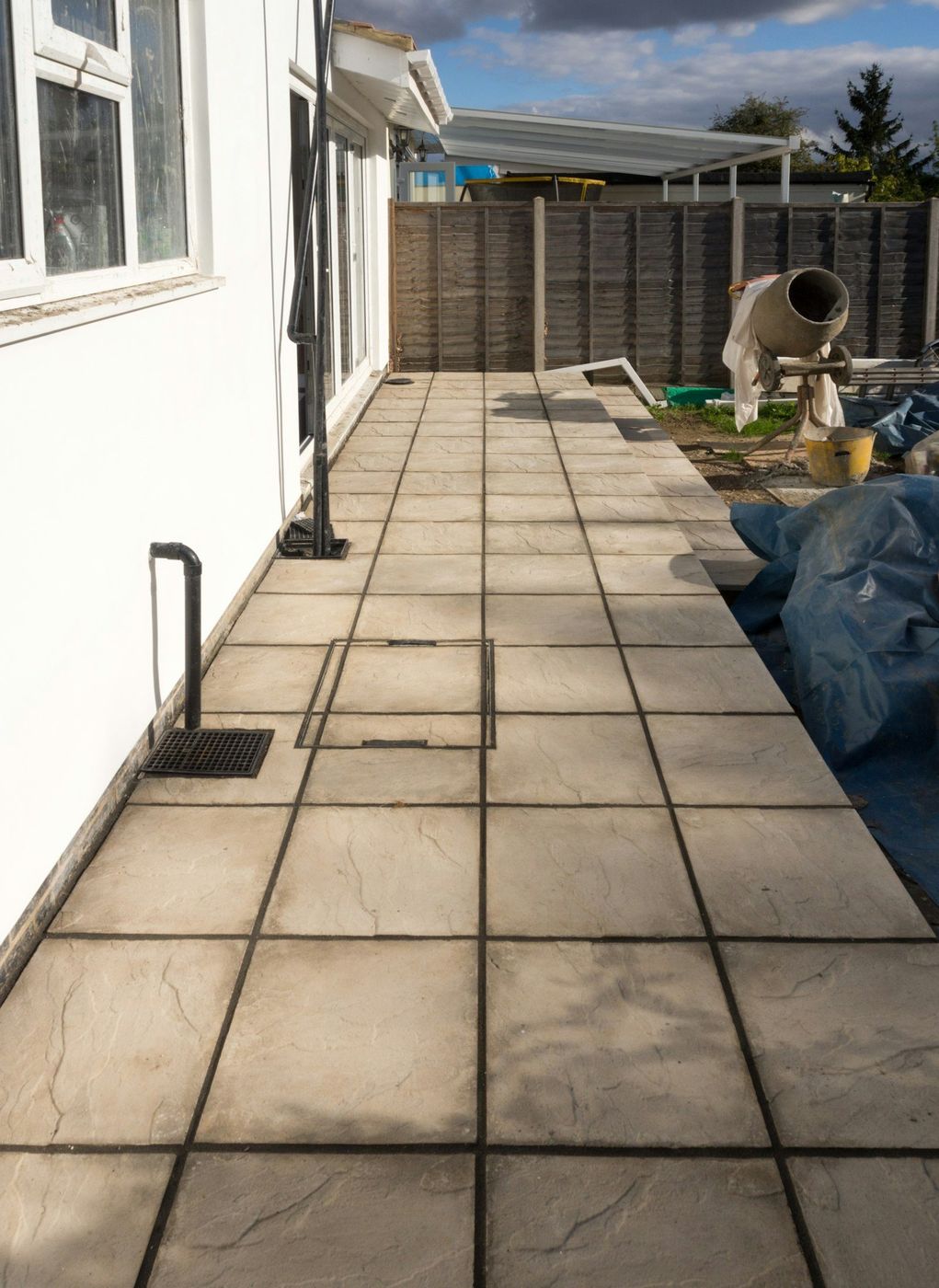
A bonded topping is the right answer about half the time. Here's how to tell which half you're in.
Most people call us about overlays with a number already in their head. Somebody quoted a tear-out and repour, the figure landed harder than expected, and now they want to know whether a topping gets them most of the way for less. Fair question, and it deserves a straight answer, because the wrong choice here costs you the whole job twice.
An overlay is a polymer modified cement material bonded to concrete you keep. Paper-thin skim, sprayed texture with grip, or a thicker layer stamped into a stone pattern. What it is not, ever, is a structural improvement. It inherits every strength and every problem the slab underneath already has. So the decision isn't about what the new surface could look like. It's about what the old slab is doing.
| What you're weighing | Bonded overlay | Tear out and repour |
|---|---|---|
| Cost driver | Prep hours and material. No demo, no dumpster, no base work | Demolition, haul-off, base rebuild, then concrete and finishing |
| Days on site | One to three for most residential slabs | A week or more counting excavation, forming, pour, and cure |
| What it repairs | Worn paste, scaling, faded color, poor traction, a dated look | Failed base, settlement, bad drainage, broken panels, thin slabs |
| Lifespan | Many good years on a sound slab with sealer kept current | Resets the clock completely on a properly built section |
| When it's wrong | Anything moving, settling, hollow, or pitched toward the house | A slab that's structurally fine and only tired on top |
Is anything moving? We walk the joints and put a foot on every panel edge. Two sides of a crack sitting at different heights, a lip you can catch a shoe on, a corner that rocks. Any of those and the ground below has shifted, and no topping ever manufactured holds a moving joint together. It will crack in exactly the same line, usually within two winters.
Is it hollow? We drag a chain along the edges and listen. A ring means the slab is supported. A dull thud means the base washed out, and that void keeps growing whether or not there's something pretty on top.
Where does water go? We watch the pitch and check whether the slab throws water away from the foundation or holds it in a low spot. An overlay is too thin to fix slope, so a patio that ponds now will pond afterward, and the freezing that happens in that puddle every night all winter is what wore the surface out to begin with.
Three yeses and an overlay is a good buy, whether that's a porch in Saddle Rock or a pool deck out in Southshore. One no and we quote the replacement, because we'd rather lose the smaller job than come back in three years to somebody who paid twice.
Text them over and we'll say overlay or tear-out before anyone drives out. Call (303) 569-4046.
Assume the slab passes. Now the job is entirely about adhesion, and adhesion is mechanical before it's chemical. We shot blast or grind to open a real profile, because a topping needs teeth to key into and won't stick to a troweled, sealed, or oily face. Then we bring the slab damp with no standing water, since dry concrete in our air drinks the mix water straight out of the material and starves the bond before it forms.
Thickness has hard limits. Most exterior work lands between a quarter and a half inch, thick enough to carry texture and color, thin enough that thresholds and step risers barely notice. Perimeters get sawn to a clean vertical line rather than feathered into a thin lip that chips the first time a shovel hits it. And every existing control joint carries through the new surface. Bridging one is the most common way these fail.
Then our climate, which is unkind to thin material. Air entrained, polymer modified product on anything exposed, and we texture rather than smooth it, because a slick topping on a driveway in January is a liability. Deicers are the hard rule: magnesium chloride is destructive to a quarter inch of topping. Sand and a plastic blade.
Timing is tighter than a standard pour. These materials want surface temperatures above freezing overnight for several days running, which puts the honest window from May into early October. Late September is the sweet spot. We won't lay an exterior topping in November and promise you a bond, because material that freezes before it gains strength comes off in sheets.
Still unsure about something?
Call the crew at (303) 569-4046 and we will talk it through.

Get a free, no-obligation estimate from a crew that knows Colorado soil, Colorado weather, and how to finish concrete that lasts.
Accessibility
Adjust the site to fit how you read and browse. Your choices are saved on this device.