
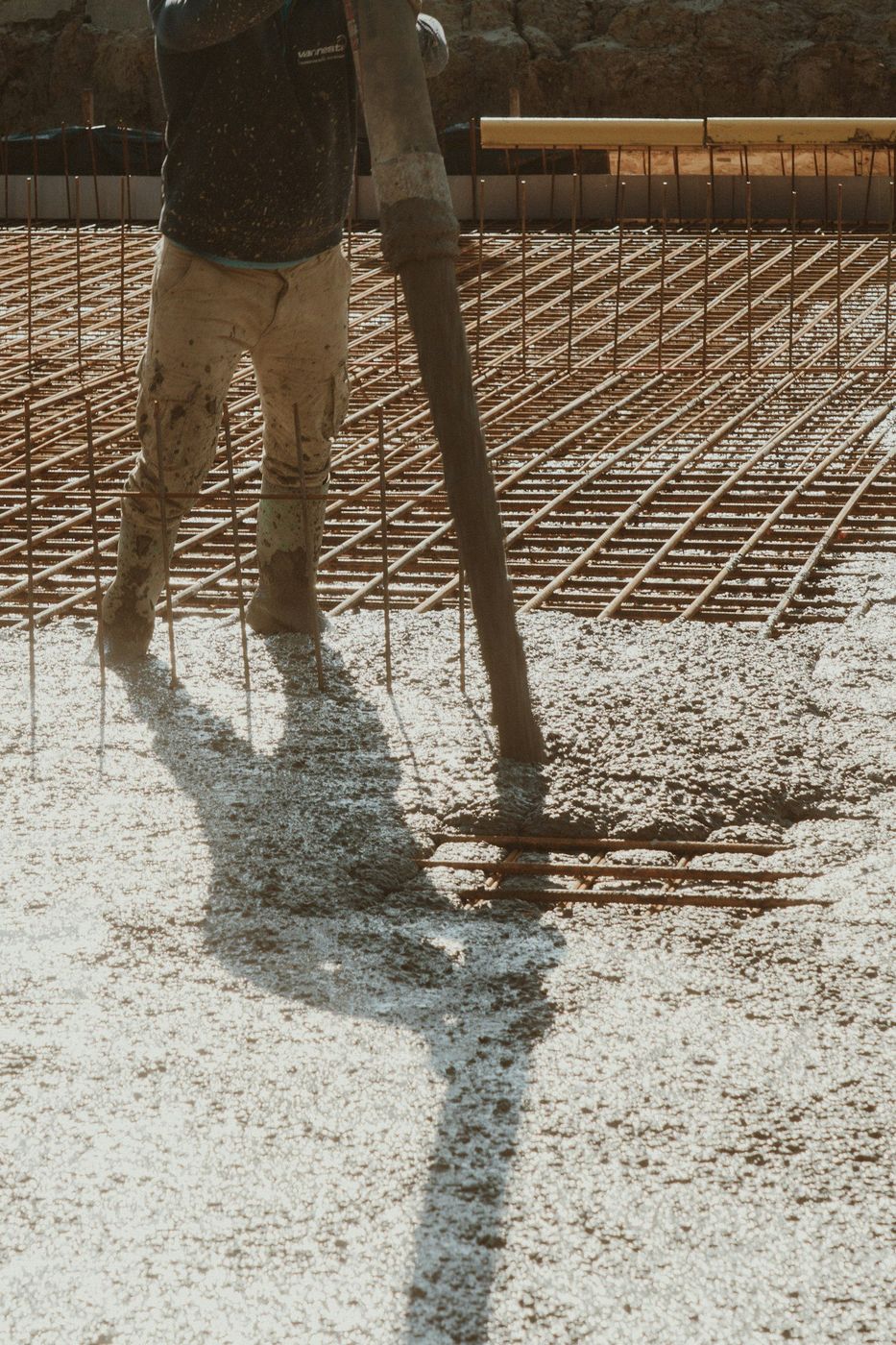
A filled spa is a heavy load that never moves. The slab under it gets built like it knows that.
Tell us where the spa is going and we can usually guess the decade the house was built. In the established parts of Sterling Hills and Murphy Creek, tubs end up on a corner of an existing patio or on a strip of side yard, because those backyards were laid out before anybody planned for one. Out in Southshore, Saddle Rock, and Tallyn's Reach the lot was graded with outdoor living in mind, and the real question becomes whether the pad lands on native ground or on fill the builder brought in.
Different yards, same slab underneath. A full spa presses hundreds of gallons plus a cabinet plus the people in it through a few square feet, and it holds that load permanently. Nothing else on your property works that way. A car rolls across a driveway and spreads out. A tub leans on the same dirt for fifteen years.
Retrofits into an existing patio are the common call from the earlier neighborhoods. We saw out a clean section, dig to firm material, and pour a thicker pad joined to the old concrete so the two can move independently. First we check what that slab actually is, because plenty of thirty-year-old patios are three inches over dirt with nothing to build against.
On the newer side the problem flips. Concrete is fine, dirt is the unknown. Graded lots often carry feet of imported fill on the downhill half and undisturbed ground on the uphill half, and a pad straddling that boundary is the arrangement that cracks. So we dig and look, and where the pad crosses a seam we run steel straight through and build base in compacted lifts on both sides.
Access shapes the day either way. A wide side yard means a buggy and a two-hour pour. A narrow gate means wheelbarrows and a longer morning, and we'd rather say so up front.
| Where it goes | What we build | The catch |
|---|---|---|
| Corner of an existing patio | Saw out a section, dig, pour a thickened pad joined at the seam | The old slab has to be sound. We measure its thickness before promising anything. |
| Standalone pad in the side yard | Small slab with its own base, plus a walk connecting it to the door | Narrow gates turn a truck pour into a wheelbarrow day |
| Cut into a slope | Thickened edge or a low wall holding the grade behind it | Drainage behind that wall matters more than the wall itself |
| Set flush inside a deck | Pad poured low, framed opening above, service clearance planned in | Cabinet access disappears if the framing wasn't drawn around it |
| On builder fill | Deeper excavation, base in compacted lifts, steel run through the whole pad | Half on fill and half on native ground is the arrangement that cracks |
The slab has to shed water away from the cabinet, and that's easy to get backwards. Splash-out, rain, and snowmelt all land around a tub, and if the pad is dead flat with a wall on one side, that water sits under the skirt and freezes. We build a slight fall away from the equipment side and shape the grade so runoff has an exit.
Conduit goes in before concrete. Spas run a dedicated circuit to a disconnect, and that wire has to travel from the house somehow. We sleeve it under the pad, stub it where the electrician asks, and cap it so nothing packs with mud. Ten minutes on form day saves somebody sawing a channel through a three-week-old slab.
Pour season runs April into October, and late September may be the best date of all for a spa pad: cool nights, no rush, a slab fully cured before the first cold-evening soak. Winter pours work on something this small with heated water, a non-chloride accelerator, and blankets. Frozen subgrade is the hard stop.
Send us the model footprint and the delivery date and we'll work backward so the concrete is ready before the truck is.
Every spa pad we get called back to fix went low at one corner, and every one of those was poured on ground nobody dug into. You cannot see engineered fill from the surface. You find it with a shovel, which takes twenty minutes, or you find it three winters later, which takes a crane.From the crew lead on these jobs
Still unsure about something?
Call the crew at (303) 569-4046 and we will talk it through.

Get a free, no-obligation estimate from a crew that knows Colorado soil, Colorado weather, and how to finish concrete that lasts.
Accessibility
Adjust the site to fit how you read and browse. Your choices are saved on this device.