
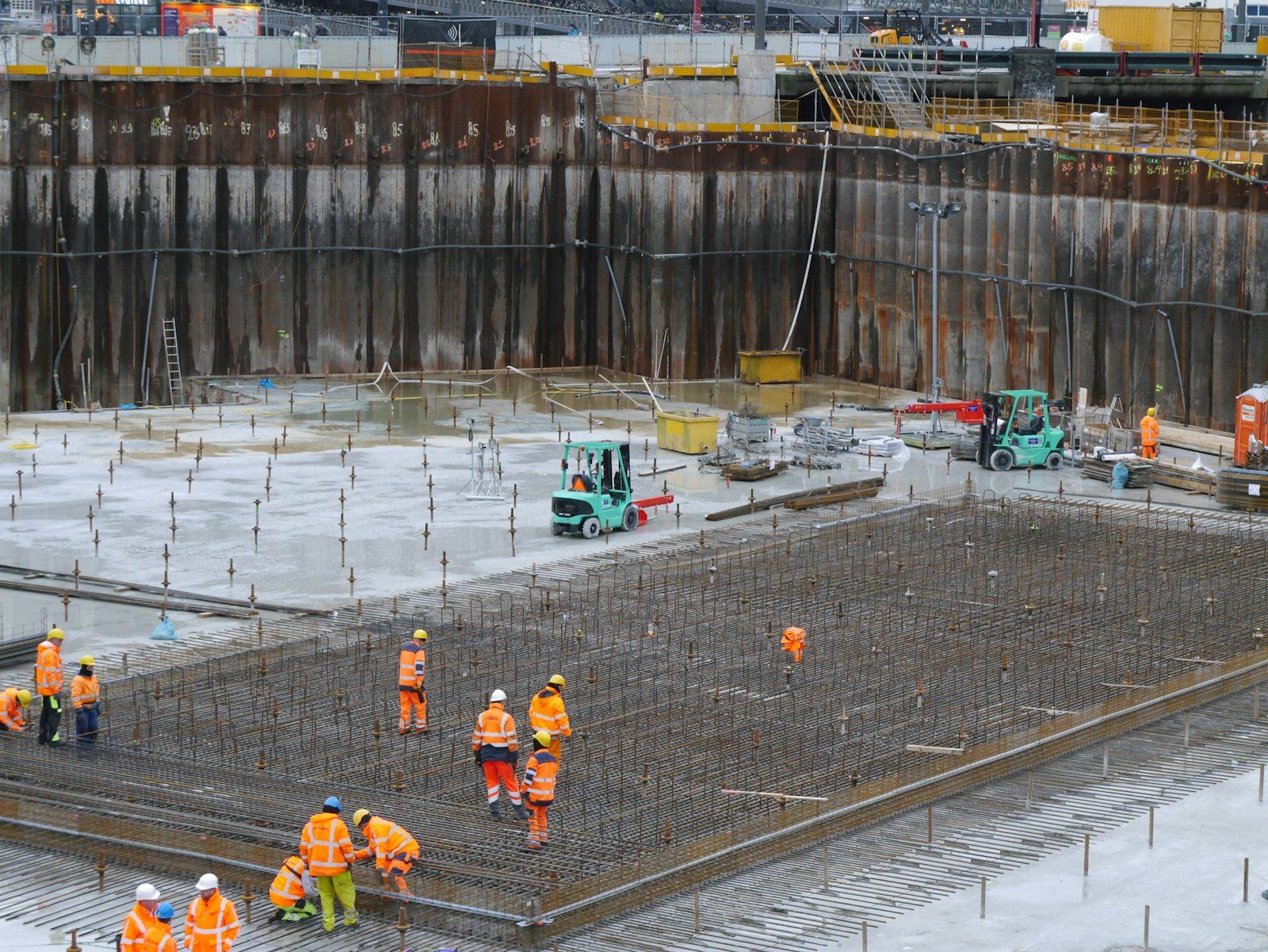
Demo, haul-off, regrade, and a new slab, usually inside a working week.
Every March it's the same call. The snow melts off, somebody walks out for the mail, and the driveway they've been ignoring since October has picked up a crack you can fit a house key into. Winter does its damage quietly. Dozens of freeze-thaw swings, water riding down into every gap, ice prying the slab apart from the inside. Spring is just when the bill comes due.
When a driveway gets to that point, patching is money thrown after bad concrete. Replacement means the old slab comes out, the real problem underneath gets fixed, and the new pour starts from a base that drains. We handle the whole sequence in Aurora, from the first saw cut to the last joint, and most residential drives are carrying cars again about a week and a half after demo day.
Cracks alone don't condemn a slab. Concrete cracks; that's why joints exist. What matters is movement. Panels that rock when you drive across them. Edges that heave in February and never quite settle back. A slab that's started tilting toward the garage, sending meltwater at the one place you least want it. Those are base failures, and no surface patch reaches down far enough to fix them.
We see the pattern across older Aurora blocks and in some surprisingly young ones too. Drives in Sterling Hills and Tollgate Crossing from the earlier build-out years are hitting the age where original builder flatwork shows what kind of base prep it got. Some of it was done right. Some of it wasn't, and twenty-odd winters have sorted out which was which. If you're not sure which side of the line your slab falls on, that's exactly what the free walk-through is for. We'd rather talk you out of a replacement you don't need than sell you one you do a year early.
| Stage | What happens | Time it takes |
|---|---|---|
| Saw cut and demo | Clean cuts at the street and garage, then the old slab gets broken and loaded out | One day |
| Haul-off | Old concrete leaves your property, recycled when the load allows | Same day as demo |
| Regrade and base | Subgrade corrected, road base placed and compacted in lifts, forms set | One to two days |
| Pour and finish | Concrete down, screeded, finished, joints sawed before the crew leaves | One day |
| Cure | Foot traffic in a day or two; cars stay off until day seven | Seven days |
The tear-out is the honest part of this job. Once the old slab is up, the base can't hide anything. Half the time the homeowner comes out, looks in the hole, and says: well, no wonder.What our crew lead tells homeowners
Estimates are free, and the calendar fills fast once the snow melts. A photo of the worst panel is enough to start.
If you can pick your week, pick fall. September and early October give us warm afternoons, cool nights, and a slab that's fully cured before the ground freezes. Late spring runs a close second once overnight lows hold above freezing. Summer replacements happen constantly; we just start the pour at sunrise so the finish beats the afternoon storm rolling off the mountains, and if the radar looks ugly we'd rather push a day than trap rainwater in a fresh surface.
Cold months aren't off the table either. A winter tear-out uses heated water in the mix, a chloride-free accelerator, and blankets over the new slab, and it works fine as long as the subgrade isn't frozen. That last part isn't negotiable. Concrete placed over frost settles when the frost lets go, and then you're paying for the same driveway twice.
Still unsure about something?
Call the crew at (303) 569-4046 and we will talk it through.

Get a free, no-obligation estimate from a crew that knows Colorado soil, Colorado weather, and how to finish concrete that lasts.
Accessibility
Adjust the site to fit how you read and browse. Your choices are saved on this device.