
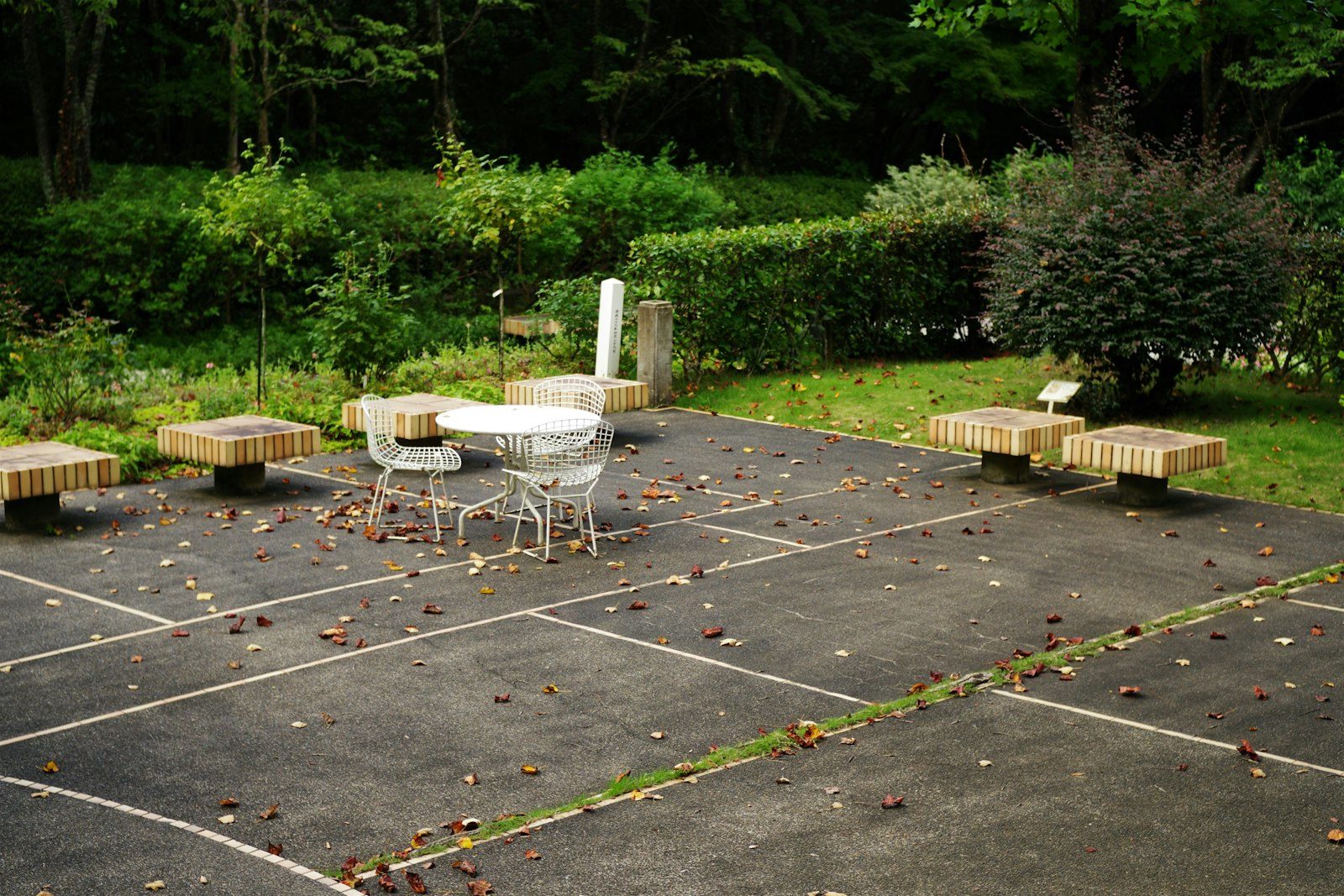
You can usually guess the decade a pool went in by standing on the deck for thirty seconds.
Pools around Westminster came in waves, and each wave left behind a different deck. The oldest ones are thin slabs poured tight against the coping with no steel and no joint, and they've been arguing with the freeze-thaw cycle ever since. The newest sit on small lots where the deck is essentially the entire backyard and every drop of water has to be told where to go.
So the first question we ask isn't what finish you want. It's what you inherited. The deck around a pool from decades back needs different work than a five-year-old deck on a compact lot, and both need different work than a spa and plunge combination squeezed against a fence. Here's how those property types actually differ.
On the older, established streets, the decks we meet were usually poured with the pool as one operation, by whoever was cheapest that week. Four inches at best, often less at the edges, no reinforcement, and coping mortared solidly to the deck so the two are locked together. That last detail is the one that gets them. Concrete moves and the bond beam doesn't, so the crack shows up right where the water is.
Homes from the middle era tend to have better base under them and a broom finish worn smooth in the traffic lanes. Those decks are often good candidates for an overlay rather than a tear-out.
Then there are the newer, tighter lots you see in places like Bradburn, where the pool takes most of the yard. Those decks are usually well built and badly drained, because there's nowhere for water to go except toward the house or back at the shell. Fixing those is a drainage project with a concrete finish on top.
| The setting | What we usually find | What the deck has to solve |
|---|---|---|
| Older in-ground pool, generous yard | Thin, unreinforced slab bonded to the coping | Separate the deck from the coping and rebuild what's failed |
| Middle-aged deck, sound but tired | Good base, worn-smooth finish, joint sealant gone | Traction and appearance, usually without full removal |
| New build, small lot, deck is the whole yard | Nowhere for water to run except the house | Built drainage: pitch, deck drains, and a discharge point |
| Spa or plunge pool against a fence | Narrow walking strips and constant splash-out | Grip in a tight space and a slab that drains both directions |
| Above-ground pool set on an existing patio | Point loads and a slab never sized for them | Real thickness and steel under the ring, not patio concrete |
| Pool with an equipment pad at one corner | Vibration and drips on the thinnest part of the slab | Thickened edge and a pad that sheds water away from the deck |
That one has a specific cause and a specific fix. Send a photo of the crack and where it starts, and we'll tell you which.
A pool shell sits in the ground and stays put. The deck around it is flatwork, and flatwork moves with the seasons whether anyone likes it or not. Mortar those two into one rigid piece and something has to give. It's never the bond beam.
So we hold a compressible joint at the coping, filled with a flexible sealant that we expect to maintain rather than forget. The deck expands and contracts against that joint instead of against your pool. On rebuilds, opening that connection is often the single most valuable thing we do all week.
Control joints get cut the day of the pour and laid out to follow the shape of the deck, curving with it rather than slicing across a radius. And we keep the finished plane falling away from the water, so what runs off your feet doesn't run back into the pool carrying everything it picked up on the way.
A hard-troweled finish photographs beautifully and has no business at a pool. Wet feet plus a slick surface is how people get hurt, so a light broom is our default and it takes color well. Exposed aggregate gives outstanding grip at the cost of comfort on bare knees. Textured overlays work when the slab beneath is sound.
Pool decks also take chemical abuse ordinary patios never see: splash-out, spilled shock, sunscreen ground into the surface, all under high-altitude sun that is hard on sealers. Plan on resealing decorative work every couple of years and skipping deicers entirely. That surface paste already works harder than anything else in your yard.
For scheduling, the build window runs from late spring into early fall, and the shoulder weeks are the smart booking since the pool is closed anyway. Summer pours start early to beat the afternoon storms. Cold-weather work is possible with warm water and blankets, but frozen subgrade stops us, and nobody should pay to compact base in December.
First thing I do at a pool is walk the perimeter barefoot, then walk it again wet. You feel things a tape measure never tells you: the sticky spot where it drains backward, the panel that rocks, the place everybody steps out and slips.Straight from the crew
Still unsure about something?
Call the crew at (303) 569-4046 and we will talk it through.

Get a free, no-obligation estimate from a crew that knows Colorado soil, Colorado weather, and how to finish concrete that lasts.
Accessibility
Adjust the site to fit how you read and browse. Your choices are saved on this device.