
The first hard freeze in October is the honest inspection. Everything we build into the base is aimed at that night.
Late October, the forecast drops into the twenties overnight, and every outdoor kitchen along the Front Range gets tested at once. Not the grill. The thing the grill is sitting on. Water that soaked into the block over three weeks of fall storms is now freezing, expanding, and looking for the weakest joint in the whole assembly.
That night is why the base matters more than the countertop. An island is masonry, appliances, stone, and plumbing stacked on concrete, and it either sheds and drains water or it stores it. We build the part nobody photographs: the slab, the footing under the walls, the sleeves, and the paths that let water leave before it turns solid.
Concrete masonry drinks. So does stone veneer, thinset, and the mortar between them. Through September and October the island takes on water from rain, sprinkler overspray, and the wet snow that shows up early some years, and unless the assembly can drain and dry, that water is still in there when the temperature falls.
Then it freezes, and it grows. Not much, but relentlessly, dozens of times a season here rather than once. Veneer pops off corners. Mortar joints craze. A hairline in the counter opens into something you can catch a fingernail on.
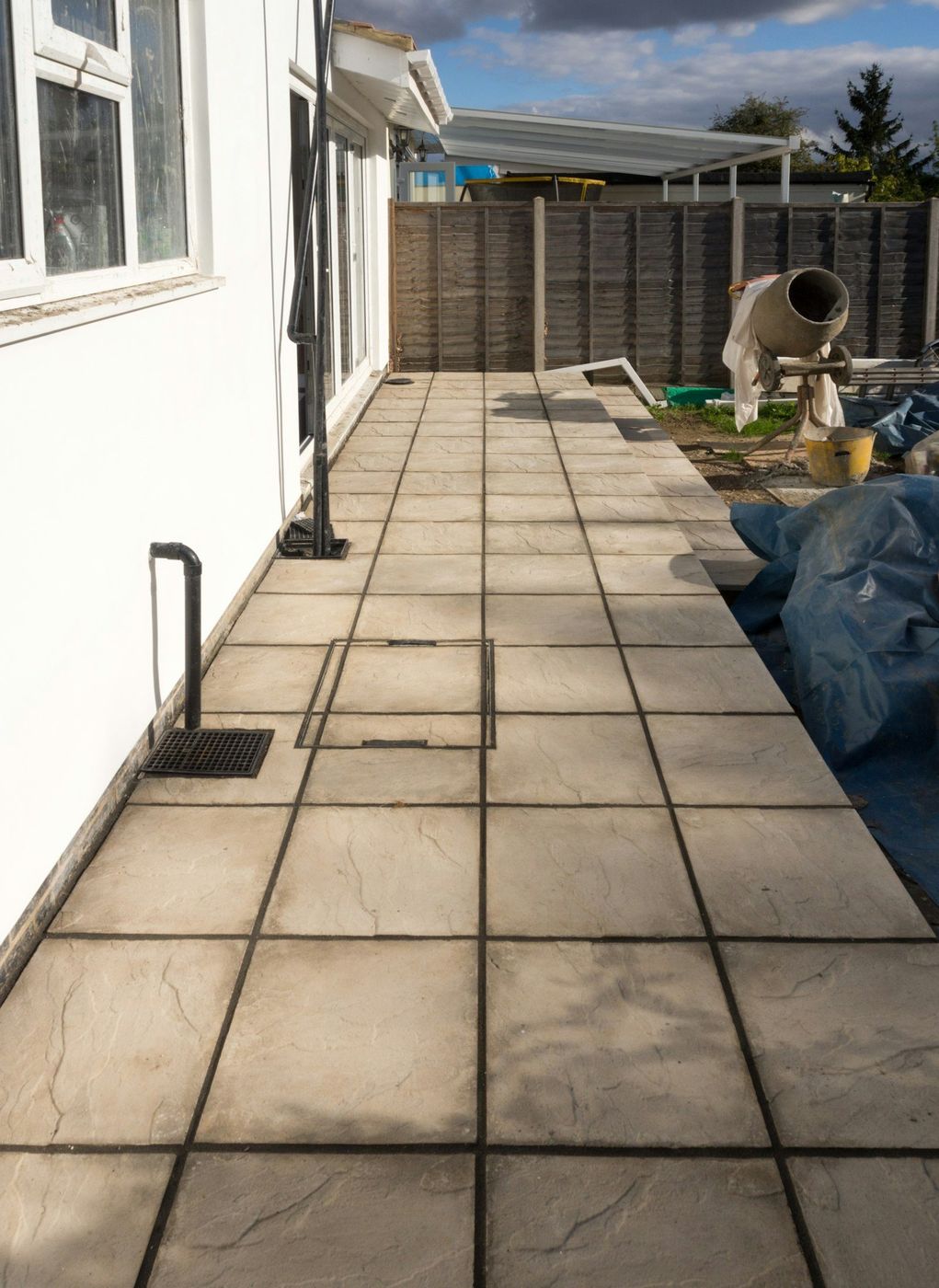
Below all that, the same cycle works on the slab, especially at the edges where the concrete is thinnest and coldest. A four-inch patio slab that was never built to carry a block wall will crack under the load once the ground beneath it starts heaving and settling with the season. That's the failure we get called out to look at every spring, and it started the previous fall.
Start with the footing. A masonry island is a small wall, and walls want continuous support reaching below where the ground freezes. So we thicken and reinforce the slab where the block runs, or pour a proper footing under it, rather than setting a heavy island on flatwork poured for patio chairs.
Then we give water an exit. The cavity inside an island gets a floor that drains rather than a bathtub that collects. Any penetration for gas, water, or power gets sleeved and sealed at the concrete, not caulked from the inside two seasons later. Countertop overhangs get real support beneath them, because unsupported stone plus ice is a broken corner waiting to happen.
The slab itself gets air-entrained mix, steel on chairs, joints cut the day of the pour, and a surface pitched away from the house. Water that leaves quickly never gets the chance to freeze where it can do damage.
| Part of the build | What winter does to it | What we detail in |
|---|---|---|
| Slab under the island | Edges heave and crack under wall load | Thickened, reinforced section over compacted base |
| Block or steel-framed walls | Absorbed water freezes and pushes joints apart | Footing below frost, drainage inside the cavity |
| Stone or tile veneer | Corners pop where water sat behind the face | Weeps, a drainage plane, and no mortar dams at the base |
| Countertop and overhangs | Unsupported stone chips and cracks | Support brackets or corbels cast and anchored into the base |
| Water and gas penetrations | Ice in a line nobody drained | Sleeved through concrete, sloped, with shutoffs you can reach |
| Appliance cutouts | Trapped moisture in the cabinet space | Sized to the actual equipment, vented, and open to drain |
Send us the appliance list and a photo of the yard. We'll lay out the base, the footings, and the utility runs before anybody orders stone.
May through September is the working season for the concrete side, and earlier in that window is better than later. An island built in June has all summer to dry out, cure, and get sealed before the first cold snap arrives to test it.
Summer brings the afternoon storms that roll in off the plains, so slab pours start early and we keep cover on hand. Rain during finishing is the one weather event that genuinely hurts a slab, since it dilutes the surface paste and leaves you dusting concrete. Hail is the other Front Range specialty, and it's a reason we like counters and veneer to be materials that shrug it off rather than materials that dent.
Fall builds are fine when the schedule is honest about curing time. Winter is for planning. We'll walk a yard in Bradburn or Legacy Ridge in January and have your base drawn and priced so the crew starts the first workable week of spring.
Still unsure about something?
Call the crew at (303) 569-4046 and we will talk it through.
Get a free, no-obligation estimate from a crew that knows Colorado soil, Colorado weather, and how to finish concrete that lasts.
Accessibility
Adjust the site to fit how you read and browse. Your choices are saved on this device.