
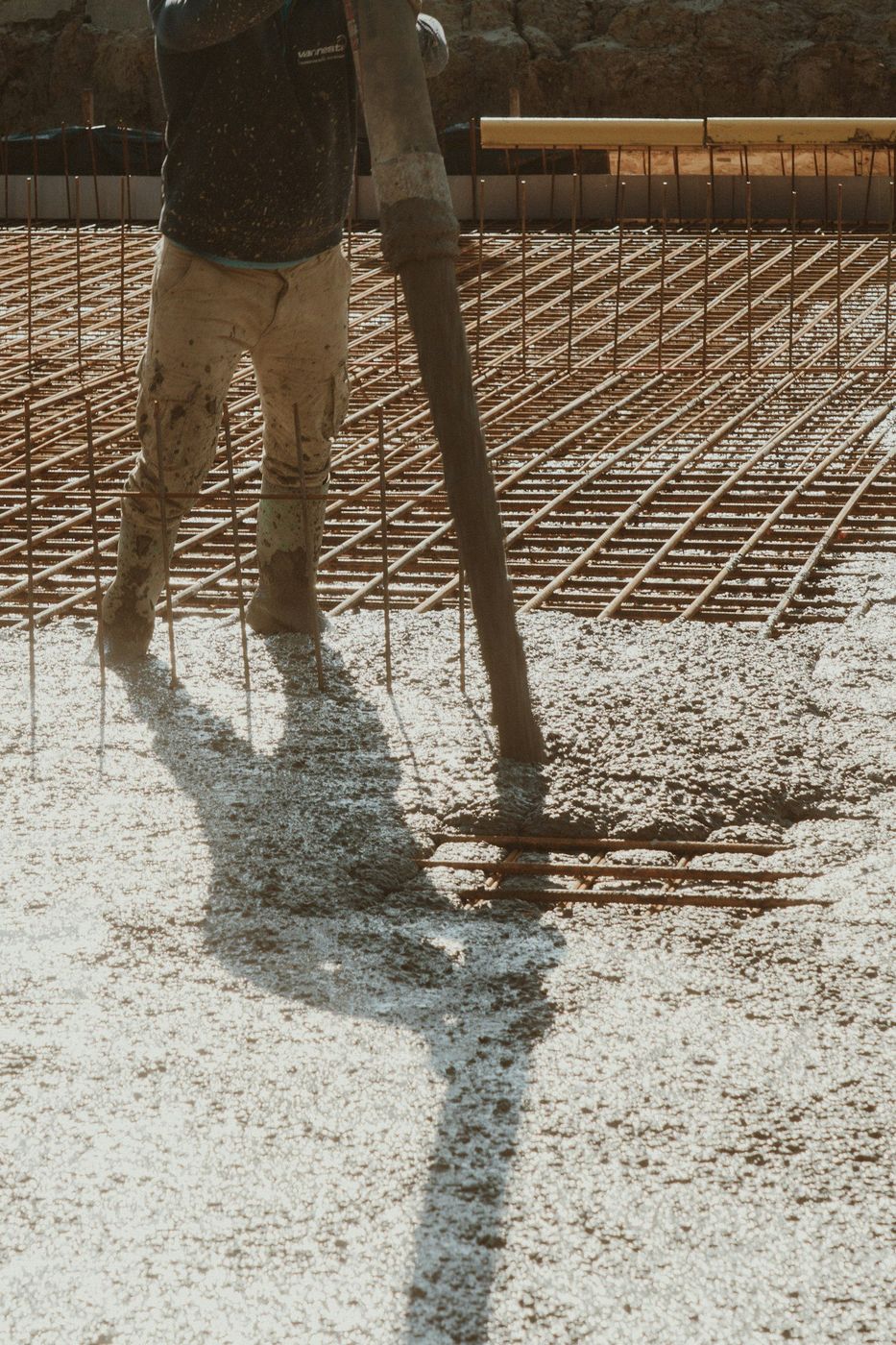
The truck comes once a week. Everybody else is in that enclosure every single day, and they are the ones who wear it out.
Ask a property manager to describe how the trash enclosure gets used and you'll hear about the hauler. Fair enough, since the truck is the biggest thing that touches it. But the truck is there for four minutes a week. The rest of the week belongs to residents dragging bags across the apron, restaurant staff wheeling out a loaded cart at eleven at night, somebody wrestling a gate that won't stay open, and whoever gave up and left a couch outside the fence.
We build and replace enclosure pads for apartment and townhome communities, retail centers, restaurants, and association property around the north metro, from the mature neighborhoods out by Quail Creek to the newer blocks near Bradburn. This page is about the daily half of the job, because that's the half most pads are never designed for.
Watch an enclosure on a Tuesday. A cart comes out the back door of a suite, loaded, and it crosses whatever transition exists between the building walk and the pad. If there's a lip there, the cart bangs over it, and after a few thousand crossings that lip is a chipped edge with a puddle behind it.
Then the gate. Somebody props it, or doesn't, and it swings back against a person carrying a bag with both hands. Gates that drag on the concrete are the single most common complaint we hear, and the fix isn't the gate. It's the post footing that moved because it wasn't set below frost depth.
After that comes everything the enclosure was never sized for. Cardboard stacked outside because the recycling container filled up on Wednesday. A mattress. Rinse water from a mop bucket. A hose that somebody left running. All of that lands on the concrete and stays there until the truck comes, and most of it is water, which is the real enemy in a shaded box that never gets full sun.
Everything above is the wear. The truck is the load. A front-load unit rolls in with the container lifted and its weight thrown forward, and the fork tines put point loads into the same two spots, week after week. Then the container drops back down. That impact goes into a square yard of concrete a few hundred times a year, which is why we build a pad thicker than the lot around it and put bar on chairs rather than mesh on the dirt.
The apron matters more than the pad interior, and that's where most bids go light. The truck's front wheels sit outside the enclosure while the fork does the work, so the concrete under those wheels is carrying the highest load on the whole assembly. If the reinforced section stops at the gate line, the failure will start at the gate line. Every time.
| Piece of the approach | What it deals with every day | How we build it |
|---|---|---|
| Cart path from the building | Loaded carts and hand trucks that need a flat run | Continuous concrete at walk thickness, no lip at the transition |
| Walk-in gate landing | Foot traffic, propped gates, bags set down mid trip | A level pad outside the swing, sloped just enough to shed water |
| Gate swing arc | Steel gates dragging as the ground moves under them | Post footings below frost so the arc stays where it started |
| Bulk drop area outside the gates | Furniture, boxes, and everything nobody wants to carry in | Reinforced slab past the gate line so this stays pavement, not lawn |
| Rinse and wash zone | Hose water, spills, and whatever leaks out of a container | Slope to the outlet your jurisdiction allows, with no flat corner |
| Curb and apron transition | Wheels crossing at an angle and plows all winter | Thickened edge with the joint kept off the crossing line |
We'll pull the container, look at what's under it, and tell you whether this is a repair or a rebuild.
Still unsure about something?
Call the crew at (303) 569-4046 and we will talk it through.

Get a free, no-obligation estimate from a crew that knows Colorado soil, Colorado weather, and how to finish concrete that lasts.
Accessibility
Adjust the site to fit how you read and browse. Your choices are saved on this device.