
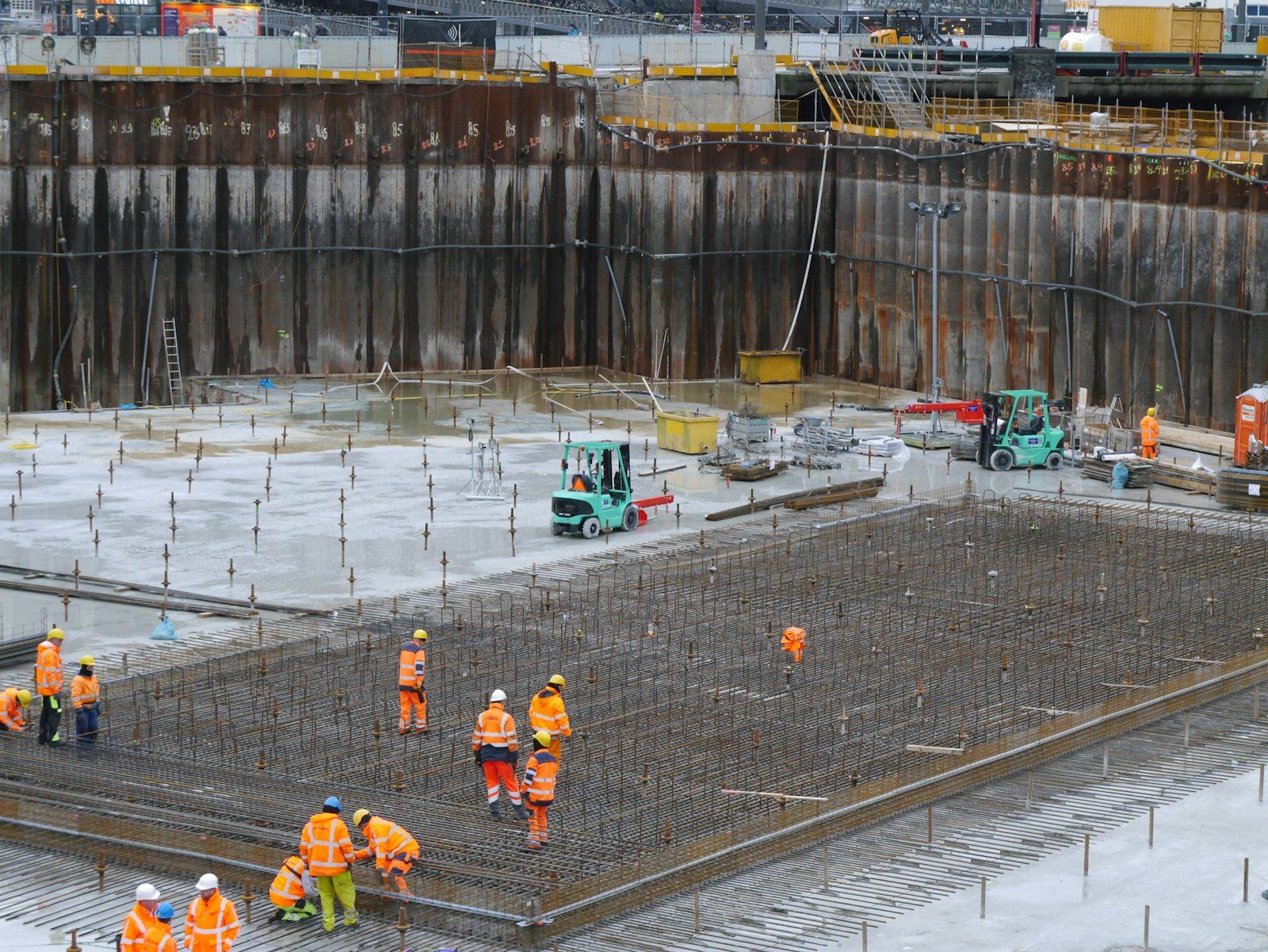
The useful part of a tear-out starts the moment the last chunk goes in the truck and the dirt is finally visible.
Breaking concrete is the loud part. It's also the easy part. Any crew with a hammer and a skid steer can turn a driveway into a pile by lunch. What separates a tear-out that solves something from one that just resets the clock is the hour after the pile is gone, when the ground is open and nobody has covered it up yet.
That's the only time anyone gets to look at why the old slab failed. Depth of base, if there is any. How the soil behaves when you press on it. Where water has been traveling. We take that hour seriously on every removal we do in Westminster, because the next slab is going to sit on exactly what we're standing on.
Most failed flatwork we take out was doomed below the surface. The single most common finding is no base at all: concrete placed straight onto graded native soil, which held fine for years and then stopped. Older flatwork around Legacy Ridge and the established blocks near The Ranch turns up that way regularly.
Second most common is base that used to be thicker. Fines wash out from under an edge, year after year, until the gravel loses its interlock and the slab is bridging air. Third is trench spoil, from a water line, a gas run, or low-voltage conduit, backfilled with a shovel and left to consolidate on its own schedule.
Then there's soil that stays damp. A shaded side yard, a downspout feeding the same square foot since the house was built, an irrigation zone throwing half its pattern onto concrete. Ground that never dries out won't carry a slab the way packed dry ground does, and new concrete changes nothing about that.
When we pull a driveway and find one badly failed corner, there's almost always a downspout above it. Roof water carries an enormous amount of energy into one spot, and over a decade it will excavate a cavity that no slab thickness can span.
So while the ground is open, we deal with it. Downspout lines get extended or piped past the new concrete. Grade gets cut so the fall runs away from the house rather than back at the foundation. Sump discharge gets moved if it's been dumping beside the work. Where a yard sends runoff across the slab area during a hard storm, we'd rather build a swale now than watch the new pour go the way of the old one.
None of that is glamorous and none of it shows in a photo. It's also the difference between a slab that lasts and a slab that repeats.
| What the open ground shows | How it got that way | What has to happen next |
|---|---|---|
| Bare clay, no gravel anywhere | Base prep skipped when the original slab went in | Scarify, moisture condition, compact, then import real road base |
| Gravel in patches, thick here and gone there | Material raked around instead of placed in lifts | Strip the inconsistency out and rebuild to one uniform depth |
| A soft strip crossing the area | A utility trench backfilled loose years ago | Excavate the trench line, refill in thin lifts, carry steel across it |
| Ground that pumps and springs underfoot | Water with nowhere to go, often for years | Fix the source first. Dry it, dig it out, or stabilize it. |
| Fill on one half, undisturbed dirt on the other | Lot grading during original construction | Extra compaction on the fill side and jointing planned for that seam |
| Roots running through where the slab sat | A mature tree doing what mature trees do | Decide root pruning or a redesign before we form anything |
Ask each contractor what they'll do with the ground once the concrete is gone. The answers won't match, and that's the story.
Breaking concrete is a year-round activity. The subgrade work behind it isn't. Frozen ground can't be compacted properly, and soil that's frozen at the surface reads solid when it isn't, so a winter tear-out is only worth doing if the pour is scheduled for spring anyway.
Spring brings the opposite problem. A saturated subgrade turns to soup under a machine and can't be packed until it dries back to something workable. We've walked plenty of April sites and rescheduled by a week for exactly that.
Our preference at 5,384 feet is late spring through October, with the shoulder weeks running most efficiently. Summer demo starts early, for the heat and because afternoon storms off the plains can undo a morning of grading. Dust control runs all day regardless, since your neighbors deserve better.
Still unsure about something?
Call the crew at (303) 569-4046 and we will talk it through.

Get a free, no-obligation estimate from a crew that knows Colorado soil, Colorado weather, and how to finish concrete that lasts.
Accessibility
Adjust the site to fit how you read and browse. Your choices are saved on this device.