
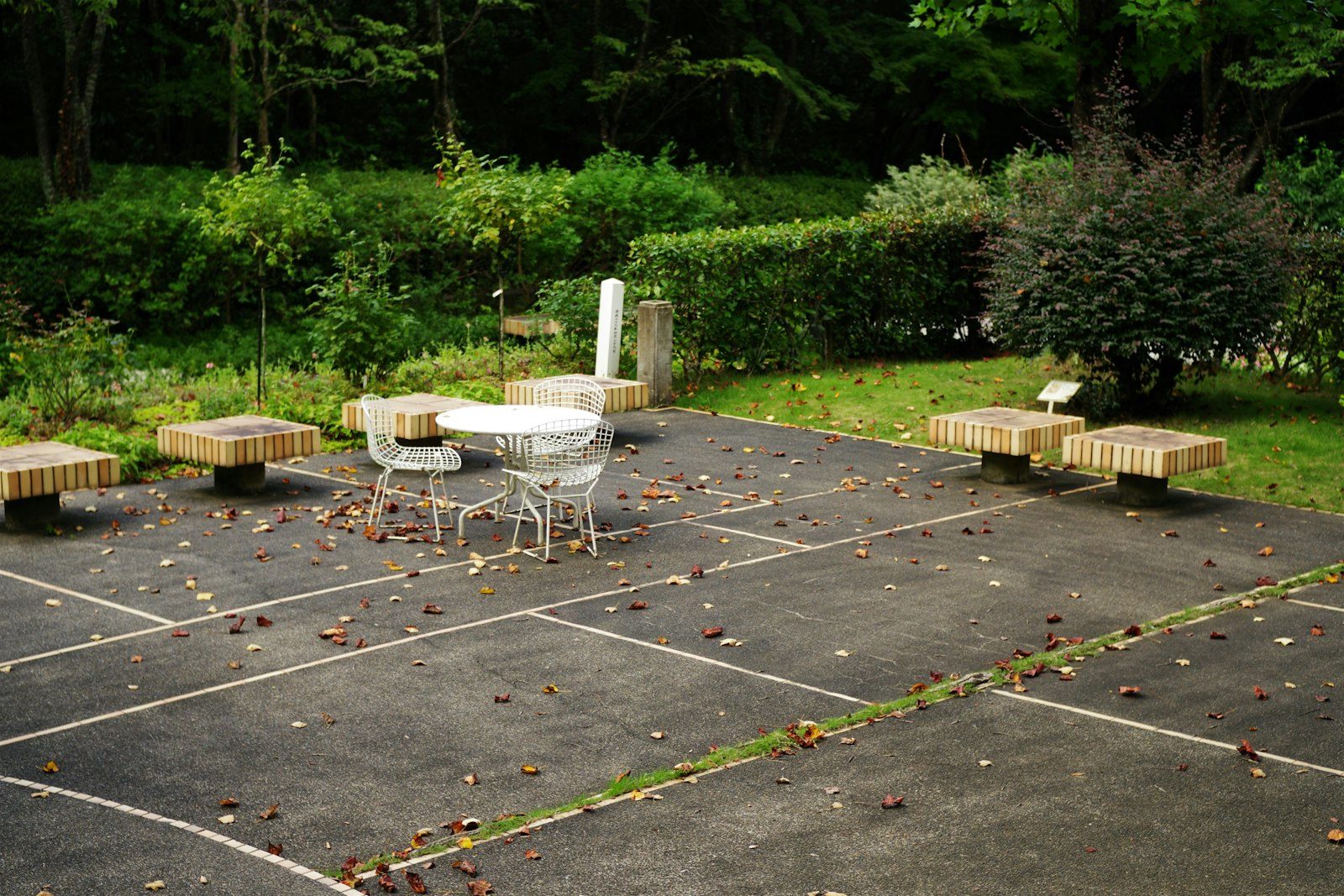
You can spot a failing surface from the street. What the street can't tell you is how deep it goes.
Drive slowly down almost any block in town in early spring and the failing slabs pick themselves out. A driveway that's gone pale and chalky while the neighbor's is still gray. An apron with dinner-plate patches missing and dark aggregate sitting exposed in the bottom of them. A front walk with a crumbling ribbon along one edge, right where the shovel and the ice melt have been meeting all winter.
Every one of those is a surface problem until proven otherwise, and surface problems have a good answer. What decides whether resurfacing is the right call isn't how bad it looks from the sidewalk. It's how far down the failure has traveled, and that's a measurement, not an opinion.
There's a rough ladder to these symptoms and it's worth knowing where your slab sits on it. Dusting comes first: rub a hand across it and your palm comes back gray. Then scaling, where thin flakes lift off in patches and the surface looks like it's peeling. Then spalling, which is divots with real depth and sharp shoulders, usually starting near joints and edges because that's where water gets in.
Past that the signals change character. Rust staining bleeding out of a crack means water has reached the steel. One panel sitting higher than its neighbor means the ground moved. Neither of those is a surface problem, and no topping in the world fixes them. We see the whole range across Westminster, from tired aprons around Quail Creek to newer drives where a hard winter and the wrong bag of ice melt did years of damage in one season.
The top layer of any slab is the weakest part of it. It's the part that got worked with tools, the part that can end up with extra water in it if the finishing went sideways or a storm arrived at the wrong hour, and the part that takes every freeze, every shovel pass, and every chloride application. Air entrainment is what protects it, giving freezing water microscopic room to expand, and a surface that was over-troweled has largely lost that protection right where it matters.
Then deicers finish the job. Magnesium chloride keeps working at temperatures where the slab is cycling through freezing several times a day, which multiplies the number of freeze events the surface actually endures. That's the single most common story behind a driveway that looked fine at five years and looks terrible at eight.
Season for the repair runs May through September, with the slab warm and no freezing nights while the new material is young. Early October sometimes works with blankets. We won't do it in cold weather, because a topping that freezes before it gains strength doesn't partly fail, it comes off.
| How deep it runs | What you're looking at | What actually fixes it |
|---|---|---|
| The top sixteenth of an inch | Chalky gray dust on your hand after you rub the concrete | A densifier and a sealer, or a light grind. Nothing goes on top |
| An eighth to a quarter inch | Scaling. Thin flakes lifting across an area rather than in one spot | A bonded resurfacer. This is the whole reason the product exists |
| Half an inch and deeper | Spalling, with aggregate exposed and sharp shoulders around each divot | Partial-depth patching first, then a topping thick enough to carry itself |
| Down to the steel | Rust bleeding out of a crack, or bar visible in the bottom of a hole | Cut that section out and replace it. A topping over corroding steel is a countdown |
| Full slab thickness | A crack that moves, or panels sitting at different heights | Nothing on top helps. That's the base talking, and it needs a slab |
Half of these get diagnosed over the phone, and we'll tell you if it's not worth a visit. Call (303) 569-4046.
The question homeowners ask is whether it looks bad. The question we ask is how deep it is. Those two things line up maybe half the time, and the other half is why we bring a hammer and a tape instead of a brochure.What our crew lead tells homeowners
Still unsure about something?
Call the crew at (303) 569-4046 and we will talk it through.
Get a free, no-obligation estimate from a crew that knows Colorado soil, Colorado weather, and how to finish concrete that lasts.
Accessibility
Adjust the site to fit how you read and browse. Your choices are saved on this device.