
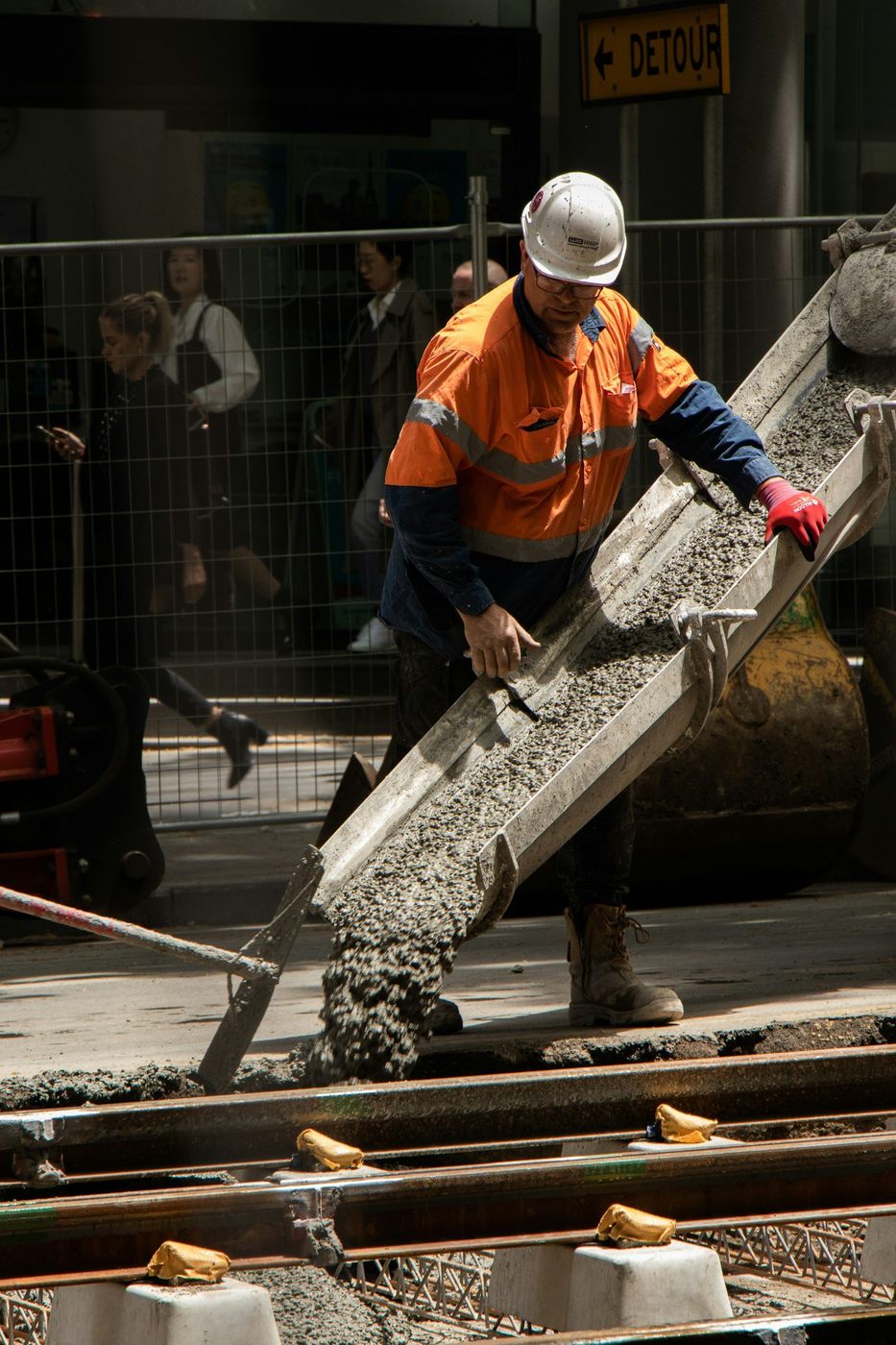
Nobody plays a full game on a home court. They shoot a hundred free throws and chase one bad bounce into the flowerbed.
Here's what a backyard court gets used for, in rough order: shooting alone after work, two kids arguing about the score, a driveway game with four teenagers, chalk and scooters on a Saturday morning, and eleven months later a folding table for somebody's graduation party. Actual five-on-five almost never happens.
That usage pattern should drive the build, and it usually doesn't. Courts get sold on dimensions and paint. What makes one good to use is duller than that: a surface that's genuinely flat so the ball comes back true, joints that aren't sitting under the free throw line, and drainage that clears the slab after a storm instead of leaving a puddle at the top of the key.
The heaviest use on any court is one person shooting. The same few square feet get pounded thousands of times: the foul line, the blocks, the arc where a right-handed kid takes every shot. Ball impact isn't hard on concrete. Feet pivoting in one spot for years is what polishes a surface smooth, and smooth plus dust puts people down.
So we finish for grip that lasts, with a light broom rather than a hard trowel. It's not the glossy look people picture. It's the surface you can still stop on in year eight.
Plan for everything that isn't basketball, too. Bikes, chalk, a hockey net, pickleball lines, a party tent. A court in a yard around Legacy Ridge or Quail Creek spends more hours as flat, clean, usable space than as a basketball venue, which argues for a slightly bigger rectangle instead of a regulation-shaped one.
Ask where the hoop goes and people point. Ask where the ball goes when it misses, and they think about it for the first time. Downhill of the court is either a fence, a garden, or the neighbor's yard, and that answer changes the whole layout.Our crew lead, after the walkthrough
A court has to shed water and bounce true, and those two goals fight each other. The answer is a single plane. We pitch the whole slab one direction at a gentle, consistent fall, so water leaves without anybody feeling the slope. What ruins a court is a crown down the middle or a dish in a corner, because a ball rolls to the low point and a dribble goes sideways.
Joints get the same treatment. Control joints have to be cut, that isn't optional, but where they land is a design decision. We keep cuts off the free throw line and out of the key where the geometry allows, running them square to the court instead of at odd angles. A ball catching a joint at the top of the key is the difference between a make and a rattle out.
Underneath, it's four inches over six inches of compacted base with steel on chairs. Courts crack when the base was thin or uneven, not because someone dunked on it.
| What happens out there | What it demands | How we build for it |
|---|---|---|
| One person shooting for an hour | Grip in the same worn spots for years | Broom finish, and joints kept off the shooting line |
| Two kids playing one on one | True bounce across the whole surface | One continuous plane, checked with a straightedge |
| A driveway game with six people | Room outside the lines to land safely | Extra apron beyond the playing area, not just the court |
| Pickleball or hockey on the same slab | Different line sets and a bigger rectangle | Size the pour for both games before we form it |
| Snow and a shovel all winter | A slab that tolerates scraping and no deicer | Air-entrained mix, sealed edges, and sand for traction |
| A tent and tables for a party | Flat footing and no puddles the morning after | Drainage that clears in minutes, not hours |
Send a photo and rough dimensions. We'll show you what fits and where the hoop should stand.
A court is a big, exposed, unshaded slab, the most weather-sensitive flatwork in most yards. Sun at this elevation works on it all day. Hail hits it directly. Snow melts and refreezes on it with no roof or tree to interrupt the cycle. So the mix carries 4,000 PSI and real air entrainment, and joints get sawed the same day the concrete goes down.
May through October is the working season, and we like the shoulder months best. A big pour in July has to beat the heat and the afternoon storms off the plains, so those days start before sunrise and the crew works in sections. Rain during finishing genuinely damages a slab this size, and covering a court is a scramble.
Winter pours are possible with heated water, blankets, and non-chloride accelerators, though a slab this large is a lot of surface to protect, and frozen subgrade stops it entirely. If you want to play by summer, the smart call is booking in late winter for a spring start.
Still unsure about something?
Call the crew at (303) 569-4046 and we will talk it through.
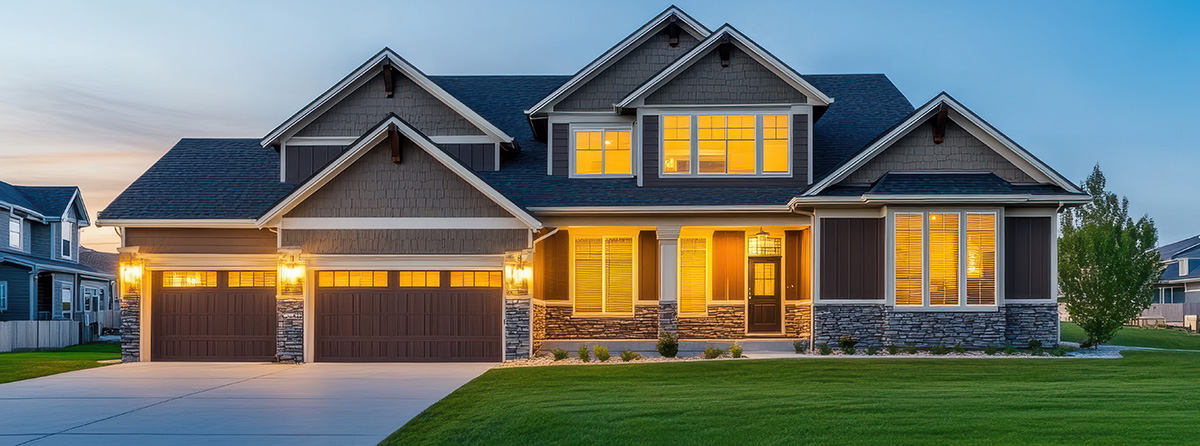
Get a free, no-obligation estimate from a crew that knows Colorado soil, Colorado weather, and how to finish concrete that lasts.
Accessibility
Adjust the site to fit how you read and browse. Your choices are saved on this device.