
The hardest ground of the year isn't frozen ground. It's ground that was frozen last week.
Late March on a north metro job site. Overnight it was in the twenties, by two in the afternoon it's shirtsleeve weather, and the yard looks perfectly firm right up until a loaded truck crosses it and leaves ruts to the axle. Frost leaves the ground from the top down, so the surface dries and stiffens while the layer underneath is still holding all the water that used to be ice, with nowhere to send it. That's the worst bearing conditions of the entire year, and it lands right in the middle of the season when everybody wants to start building.
For tilt-up that matters more than for almost any other method, because this whole approach concentrates enormous point loads onto a few square feet of dirt for a few hours. Cast the walls flat, stand them up in a morning, brace them, move on. It's a wonderful way to build a shell. It is also completely at the mercy of what's under the outriggers.
Soil strength is mostly about water and where it can go. Frozen ground is stiff because the water in it is locked up solid. When that ice melts in a soil that drains slowly, the water sits in place, pore pressure climbs, and the ground briefly gives up a large share of the strength it had in October. Drive on it in that condition and you don't just make a mess, you destroy the structure of the subgrade you already paid to compact.
Now put a crane on it. A mobile crane picking a heavy panel puts far more pressure through its outriggers than a truck puts through its tires, and the lift plan assumes a bearing value somebody wrote down. If the real ground can't deliver that value, an outrigger settles an inch mid-pick. Nobody wants to be present for the rest of that sentence.
Panel braces are the same story on a smaller scale. Every standing panel leans on braces that run down to either the floor slab or to deadmen in the dirt, and those braces stay in place for weeks. Soft spring ground under a brace footing is a slow problem rather than a sudden one, which somehow makes it easier to ignore.
Send us the footprint and your target occupancy. We'll work backward and show you where the weather risk actually sits in that schedule. (303) 569-4046.
| What's bearing on the ground | What a thaw does to it | How we plan around it |
|---|---|---|
| Crane outriggers | Concentrated pressure into a layer that has lost strength, so a pad settles mid-pick | Engineered cribbing and mats sized to the actual bearing, checked before the first pick |
| Crawler tracks, if the machine walks | Rutting that destroys the compacted pad and leaves the next pick lower than the last | Set a travel path, mat it, and keep the machine off everything else |
| Panel brace footings in soil | Slow settlement under a brace that's holding a standing wall for weeks | Anchor into the floor slab where possible, and use sized deadmen where it isn't |
| The casting slab edge | Undermining as saturated soil sloughs away from the perimeter | Keep grade falling away from the bed and never stockpile against the edge |
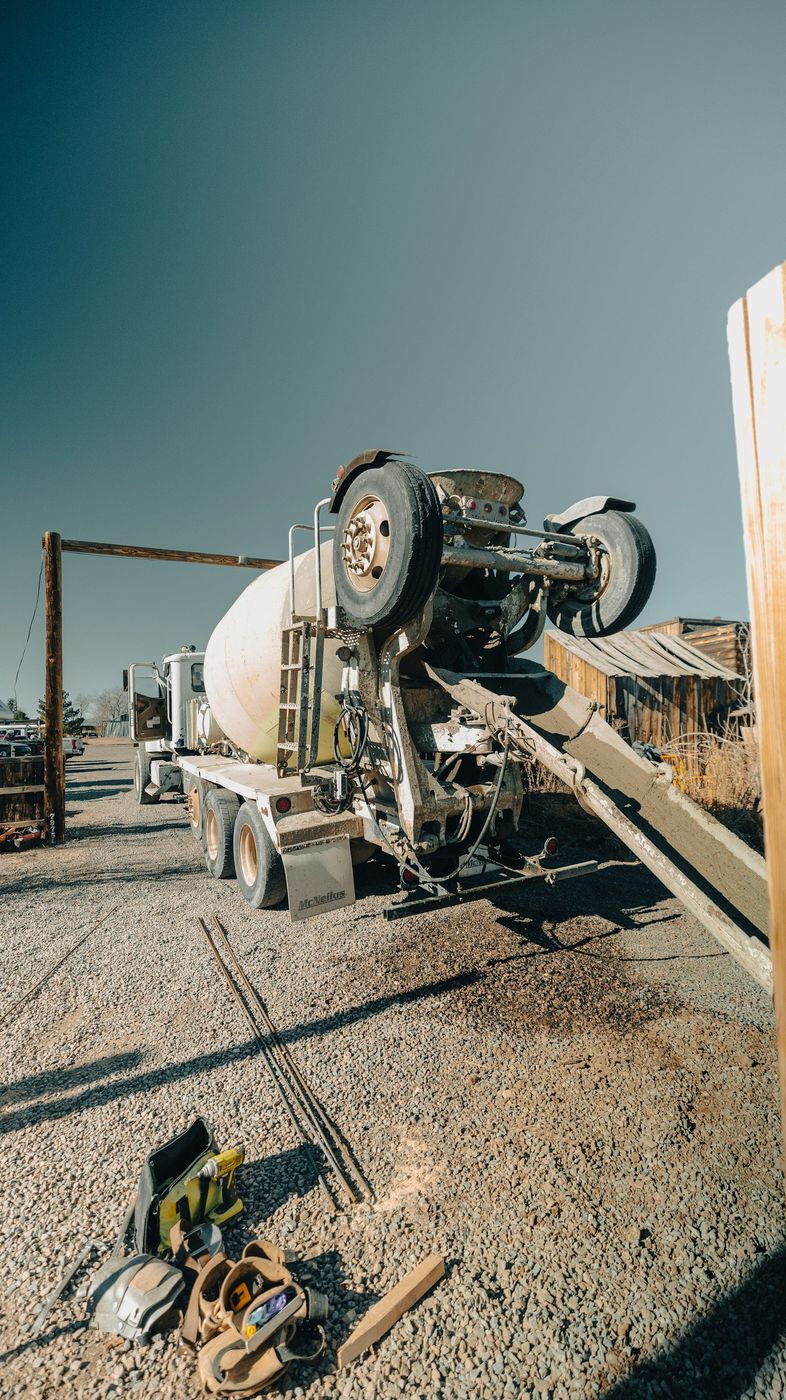
| Ready-mix trucks on casting day | Deep ruts that turn into standing water, which keeps the ground soft longer | One protected route in and out, gravel where it's needed, and no shortcuts across the pad |
| Stacked or stored panels | Uneven settlement under dunnage, which can twist a panel that has to stay flat | Store on the slab or on prepared bearing, never on raw spring ground |
None of this works without a good casting slab, because that slab is the mold. Whatever is in its surface transfers to the face of your building, so it gets finished with that in mind and treated with a bond breaker that lets a panel release cleanly without staining it. Lifting inserts and the steel around them get engineered for the pick itself, which is often a harder load case than anything the panel sees once it's standing.
For scheduling, early fall is the friendliest window up here: dry ground, decent temperatures, and runway to get a shell braced and closed before deep winter. High summer works too, with the usual caution about afternoon cells during a placement and about wind, which stops a pick faster than cold ever will. Casting through cold weather is routine with warm mix water, accelerators, blankets, and enclosures where needed.
What we plan hardest around is neither cold nor heat. It's the few weeks when frost is coming out and the ground can't be trusted with a number. Sometimes the answer is casting through it and lifting after. Sometimes it's starting earlier. Either way it goes in the schedule on purpose.
Still unsure about something?
Call the crew at (303) 569-4046 and we will talk it through.

Get a free, no-obligation estimate from a crew that knows Colorado soil, Colorado weather, and how to finish concrete that lasts.
Accessibility
Adjust the site to fit how you read and browse. Your choices are saved on this device.