
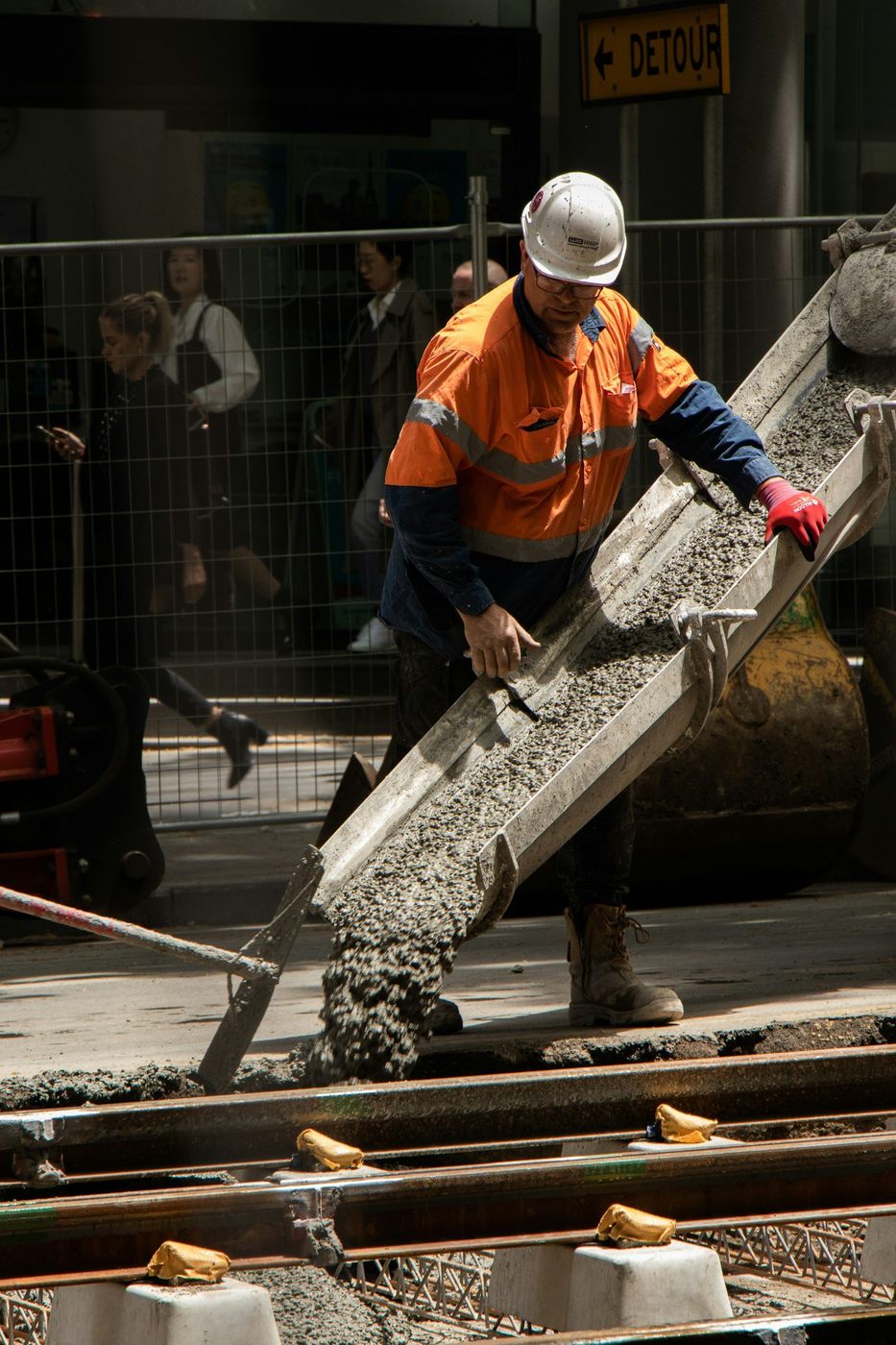
Reinforced shells with waterstops at the joints and a week of wet cure, because a pond that leaks is just a wet hole.
Liner or concrete. That's the question behind almost every pond call we take, and the honest answer depends on how permanent you want the thing to be. A liner is cheap, quick, and fine for a small garden pool you might redo in eight years. Poured concrete costs more on day one and then stops being a project. It holds a formal edge, it takes a waterfall wall and cast-in plumbing, and it doesn't care about a heron's feet or a rock working its way up from below.
We build the concrete version, and we'll tell you plainly when your project doesn't need one. Small, informal, tucked into a planting bed, changing next year? Buy a liner. Permanent, visible, plumbed, and holding real volume? Pour it, reinforce it, waterstop the joints, and cure it properly. That last part is where most leaking ponds were lost.
Three questions settle it. First, how long do you want this to last. A concrete shell built right outlives the landscaping around it. A liner has a service life, and Colorado sun plus annual ice pressure shortens it further than the box claims.
Second, what does the edge need to look like. If you want a crisp coping, a sitting wall, a formal rectangular basin, or stone mortared to a solid substrate, that's concrete. Liners always tell on themselves at the corners, and no amount of rock stacking fully hides the fold.
Third, is there plumbing. A skimmer, a bottom drain, a pump return, a waterfall feed, or lighting all want to be cast into a rigid shell where the penetration can be properly sealed once and forgotten. Every fitting through a liner is a fitting that can weep. On the treed properties around The Pinery, where we build a lot of larger features fed by recirculating waterfalls, that alone decides it.
| Poured concrete shell | Flexible liner | |
|---|---|---|
| Service life | Decades when it's reinforced, jointed, and sealed correctly | Years, and both UV and ice work against it |
| Shape and edge | Any geometry, with formed shelves and a real coping edge | Follows the hole you dug, and the folds show at every corner |
| What damages it | Cracking if it's under-reinforced or the soil moves unevenly | Punctures from rock, roots, wildlife, and one careless shovel |
| Repair | Rout, patch, reseal while it's drained, and it's whole again | Patch kits hold, right up until the seams start letting go |
| Winter at this elevation | Handles freeze-thaw with an air-entrained mix and proper design | Ice presses the liner against the edges every single year |
| When we'd pick it | Permanent features, formal edges, waterfalls, cast-in plumbing | Small informal garden pools and short-horizon projects |
We'll find where the water is going and price both the repair and a concrete rebuild, so you can compare them side by side.
Concrete is not waterproof by nature. It's watertight when you build it that way, and that comes down to four things: a dense mix, enough steel to keep cracks tight, joints that are detailed instead of ignored, and a real cure.
Joints are where ponds leak. Any place a second pour meets a first one, floor to wall most commonly, is a cold joint and water will find it. We put a waterstop in that joint, either a swelling strip or a formed profile, so the joint has a built-in barrier rather than a seam of hope. Every pipe penetration gets the same attention, sealed at the shell rather than caulked from inside later.
Then we cure it wet, and we mean wet. Seven days of keeping the shell damp, longer when the air is dry and windy. Concrete that skins over and dries out in high-altitude June air ends up more porous and more crack prone, and porosity is the one thing you cannot afford in a vessel meant to hold water. Homeowners see the soaker hoses and burlap and think we've forgotten them. We haven't.
Season shapes the schedule. We build ponds from thaw into fall, and early summer is the sweet spot: warm enough to cure well, early enough that the feature is running and planted before the weather turns. Winter work is possible on small features with heated mix and blankets, but frozen subgrade stops us cold.
Still unsure about something?
Call the crew at (303) 569-4046 and we will talk it through.

Get a free, no-obligation estimate from a crew that knows Colorado soil, Colorado weather, and how to finish concrete that lasts.
Accessibility
Adjust the site to fit how you read and browse. Your choices are saved on this device.