
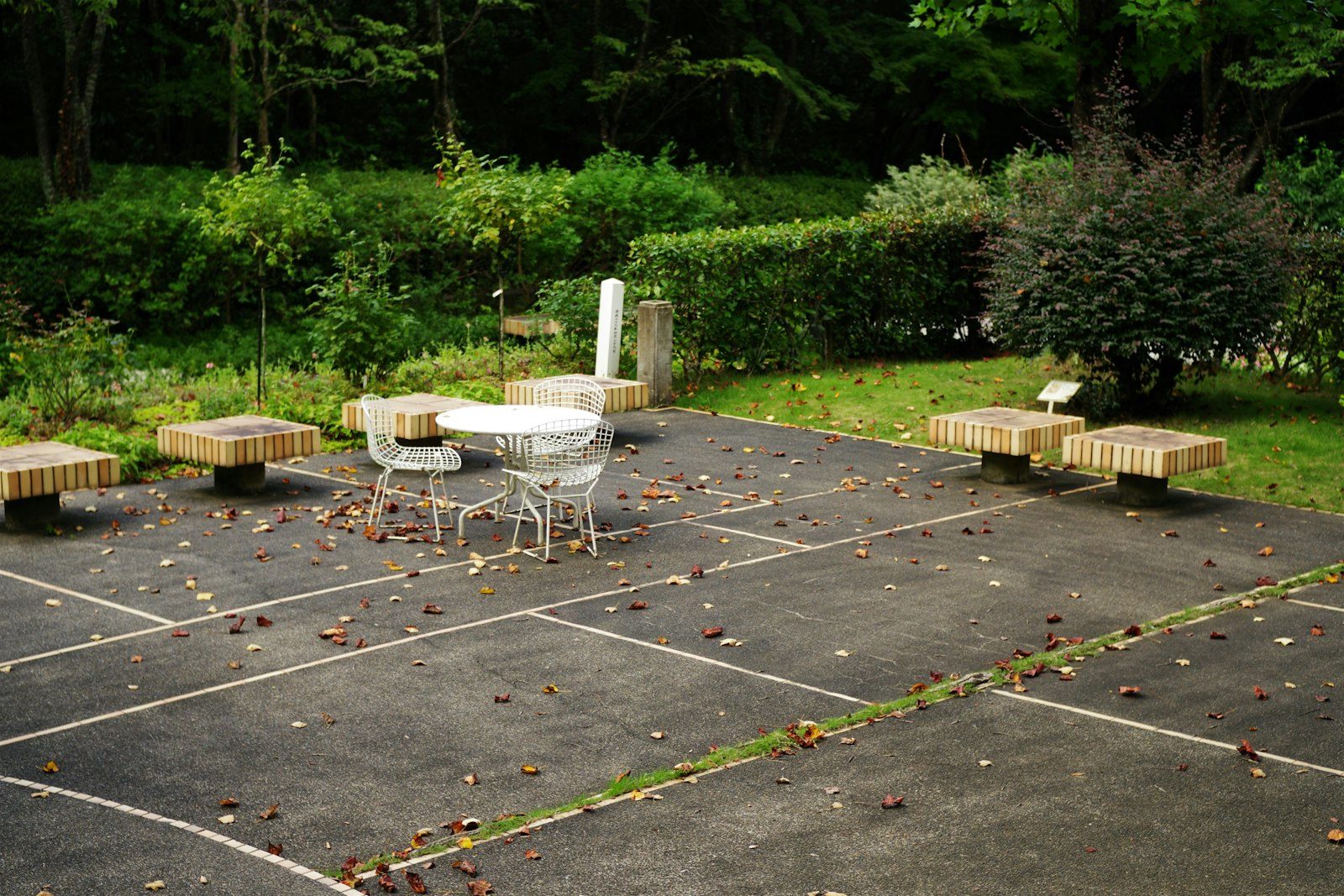
The concrete is the one line on a court budget you buy exactly once. Everything else is a decision you can still change.
Court projects come to us from community boards and property owners who have already gotten a number from a surfacing contractor and are trying to work out why the whole thing costs so much more than the color coat. Fair question. The acrylic everyone argues about is a few millimeters thick. The thing under it is a structural slab with footings, drainage, and a flatness requirement, and that's where the budget actually sits.
We build court pads for communities across Littleton: tennis conversions at older associations in Columbine and Southbridge, new amenity courts in Highland Walk, and pads cut into sloping ground near the Ken Caryl edge. What follows is what drives the number, so a board can tell a cheap bid from a bid that left things out.
Start with the earthwork, because it's the line that varies most and the line that gets underpriced most. A flat site with decent soil is straightforward. A sloped or rocky spot toward the foothill edge means cut and fill, possibly retaining, and imported base. Two properties three miles apart can be a long way apart on this one item alone, which is why a court price quoted over the phone is worthless.
Then the slab. A court is a single continuous placement, reinforced, on a compacted base, finished flat and pitched just enough that water leaves it. There is no such thing as pouring a court in two halves on two days. A cold joint through the playing surface will telegraph through the color coat, and once it does, nobody is happy and nothing fixes it short of starting over.
Then footings and site work. Net posts, fence posts, gate posts, and light poles if you're adding them all need footings to frost depth, set before or with the slab rather than cored afterward. Then fencing, then surfacing, then striping. Each of those is usually a different contractor, and the coordination between them is a real cost that somebody has to own.
| Line item | Who typically handles it | What makes it swing |
|---|---|---|
| Site work and grading | Concrete contractor | Slope, rock, imported fill, and whether drainage has to be built |
| Base and subgrade | Concrete contractor | Soil quality and how much material has to be removed and replaced |
| Court slab | Concrete contractor | Number of courts, access for trucks or a pump, flatness target |
| Post and fence footings | Concrete contractor | Frost depth, number of posts, whether lighting is included |
| Fencing and windscreen | Fence contractor | Height, gates, and whether courts share a perimeter |
| Surfacing and striping | Surfacing contractor | Number of coats, color scheme, and how many lines per slab |
| Lighting and power | Electrician | Distance to the panel and whether trenching crosses finished work |
Two places a board finds real value. First is building more than one court at once. Mobilization, base equipment, and the pour day crew are much the same whether we place one pad or a bank of them side by side. A second court is never half the price of the first, but it's a long way from double.
Second is a tennis conversion, and here we push back on assumptions. Painting pickleball lines on a sound old slab is cheap and sensible. An aging asphalt court with cracks that reopen every spring is not a foundation, and a fresh surface over it just buys a nicer looking crack in eighteen months. We cut a test square before we tell a board which of those two they have.
Timing follows the rest of our outdoor work. Late spring through early fall, with the pour scheduled so the twenty eight day cure lands before the weather turns, because a surfacing crew cannot coat green or cold concrete. A court poured in September often doesn't get surfaced until spring, and boards should know that before promising residents a season.
Send the site, how many courts, and whether lighting is in scope. We'll walk it and price the concrete honestly, line by line.
Still unsure about something?
Call the crew at (303) 569-4046 and we will talk it through.

Get a free, no-obligation estimate from a crew that knows Colorado soil, Colorado weather, and how to finish concrete that lasts.
Accessibility
Adjust the site to fit how you read and browse. Your choices are saved on this device.