
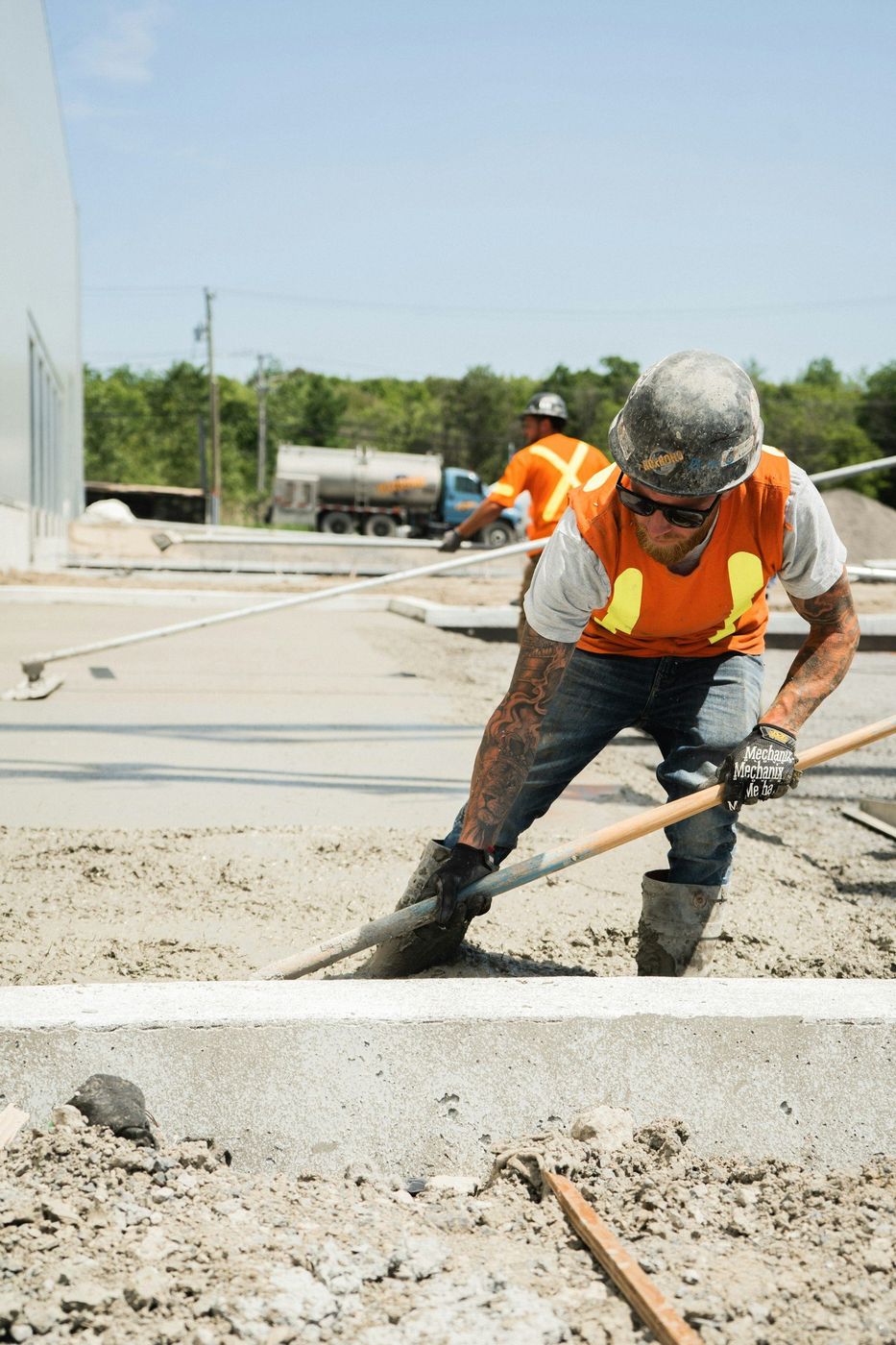
Everything that decides whether a shell lasts happens below it: bearing soil, drained backfill, and a way for groundwater to get out.
There's a valve in the floor of a properly built concrete pool that most owners never think about, right up to the afternoon it keeps their pool in the ground. It's a one-way relief valve, and its whole job is letting water that has collected under the shell come inside rather than pushing up on eleven tons of concrete from below.
That valve exists because a pool is a boat parked in dirt. Full of water it's heavy enough to stay put. Empty, in wet ground, it becomes something that wants to float. Everything we do below the finished surface, from where the excavation stops to how the backfill drains, is about the ground and water underneath. Littleton hands us two very different versions of that ground depending on which side of town you're on.
Concrete doesn't mind being wet. What it minds is being asked to hold back pressure it wasn't designed for. Groundwater collecting outside a shell pushes inward on the walls and upward on the floor, and if the pool is empty at the time, nothing is pushing back. That's how shells crack, and in bad cases how they lift.
So we build the escape routes. A gravel drainage layer under the floor, a relief valve set at the low point, and sometimes a perimeter drain running to daylight when the lot allows it. On a sloped Ken Caryl property, daylight is often available and we take it. On flatter ground around Columbine, a sump or a dry well may do the same job.
Which is also why we tell you never to drain your pool because it looks dirty. If it has to come down for repairs, that happens with a plan, with the valve pulled, and preferably in a dry stretch. A pool is safest full.
| What the dig finds | What it does to the excavation | What we design around it |
|---|---|---|
| Clay on the flatter ground | Cuts clean, holds a wall, turns greasy after a storm | Positive drainage away from the shell and controlled, drained backfill |
| Rocky material on the foothill side | Slower digging, sometimes a hammer instead of a bucket | Bearing is excellent, so the design shifts to over-excavation and haul |
| Deep placed fill on a benched pad | Easy digging that keeps going past where you wanted to stop | Excavate to competent material or engineer the shell to span it |
| Seasonal seep or perched water | A wet hole that fills overnight during spring runoff | Dewatering during the build, then underdrain and a relief valve for good |
| Buried debris from an older build | Unknown pockets that show up mid-dig | Remove it entirely, replace with compacted structural fill, no exceptions |
The nicest hole I ever dug was in rock. Took two days longer and cost more, and I'd take it every time over a soft one, because nothing under that shell is ever going to move.
What the crew sees on site
We'll look at the grade, the access, and what the ground is likely doing under it, and give you a straight read before you commit to a design.
Two ways to build the shell. Shotcrete is sprayed at high velocity onto the steel cage from inside the excavation, which means the earth itself acts as the outside form and the crew can shape a curved wall, a bench, or a sun ledge freehand. Cast-in-place means building forms on both faces and placing concrete between them, and it makes sense for straight walls, tanks, and elements we want formed to a hard line. Most residential pools around here are shot, because the shapes people want are not rectangles and because there's no practical way to form the back of a wall against a dirt bank.
Either way, curing is where the shell is won. We keep water on it, repeatedly, for a solid week. High-altitude air in June will pull moisture out of fresh concrete faster than the crew can hose it back in, and a shell that dries out early is a more porous shell for the rest of its life.
On timing, breaking ground in late summer or early fall is a good play if you want to swim the following season. The shell and the deck go in before the weather turns, the interior finish and startup wait for spring, and you're not standing in a construction site in June wondering why nothing's done.
Still unsure about something?
Call the crew at (303) 569-4046 and we will talk it through.
Get a free, no-obligation estimate from a crew that knows Colorado soil, Colorado weather, and how to finish concrete that lasts.
Accessibility
Adjust the site to fit how you read and browse. Your choices are saved on this device.