
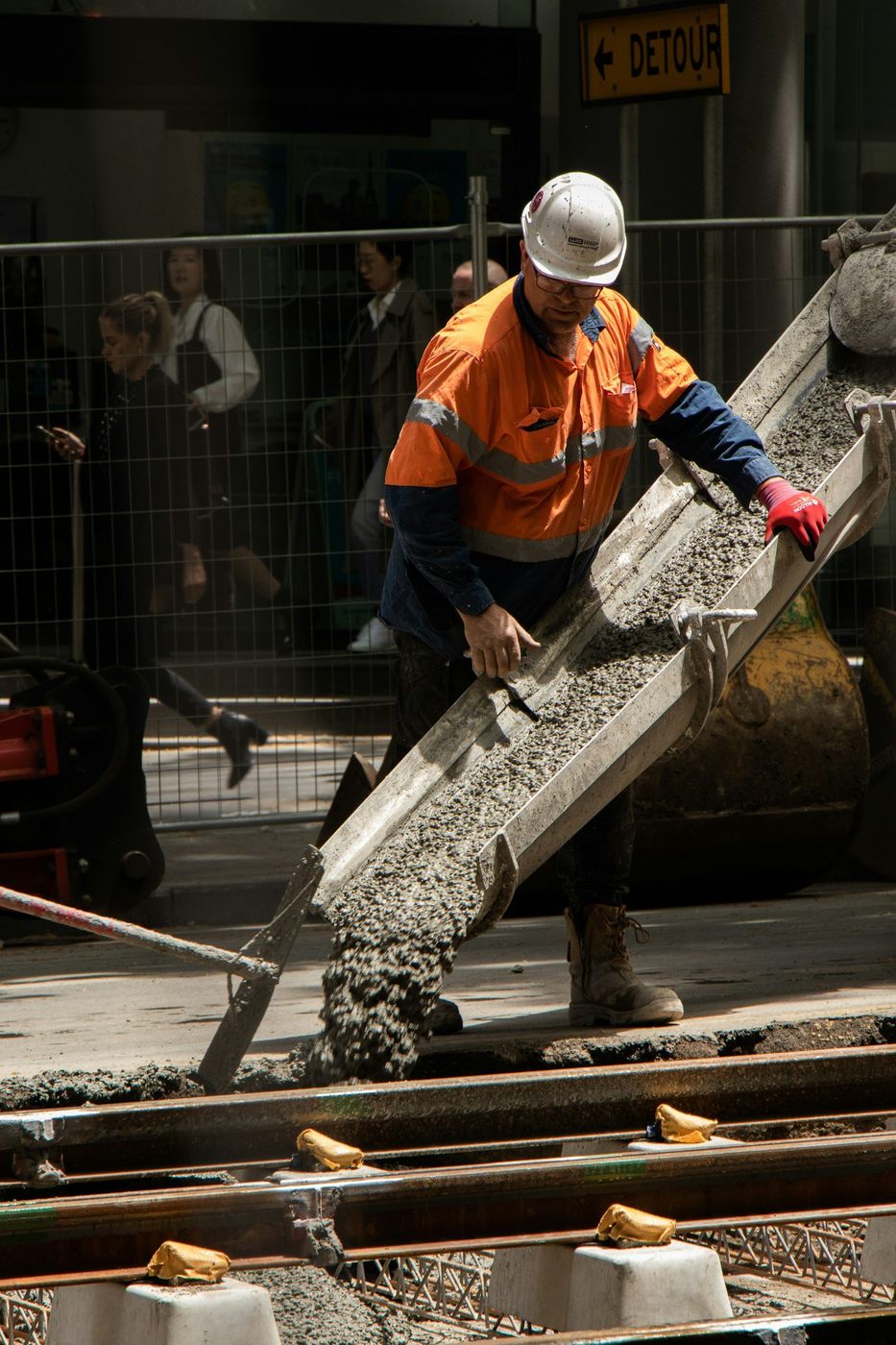
The line items you can't see afterward are the ones deciding what this wall costs you later.
Two stem wall bids can look like they're for different buildings. Same height, same length, same house on top, and a gap between them that makes no sense until you read past the concrete line. Concrete is rarely where the difference lives. It's the trench, the rock, the pipe, and the coating on the buried face.
Around Larkspur that gap matters more than it would on flat ground. These lots slope, they hold water in the shade, and the backfill trench you dig against a new wall is the easiest path that hillside water will ever find. What you spend below grade is not finish work. It's the wall's life expectancy, priced in advance.
A stem wall does two jobs. It carries the building down to the footing, and it holds back the ground the building sits in. The first job is straightforward: right thickness, right steel, right mix, and the concrete handles it without drama for a very long time. The second job is where walls fail.
Soil pressing on a buried wall is not a fixed number. Add water and it climbs; clay that swells adds more on top. So every dollar spent keeping the backfill drained is a dollar off the load the wall has to resist. Drain rock, pipe to daylight, filter fabric, and a coated face aren't upgrades. They're the design working as drawn.
The dirt that came out of your trench is sitting right there, and putting it straight back is free. That's why so many bids assume it. On a Sage Port lot with sandy, workable soil, native backfill can be fine. On a Perry Park hillside where the dig produced heavy, sticky clay, putting it back against a fresh wall builds a bathtub with your foundation as the lining.
Our usual answer is a hybrid. Free-draining material next to the wall where pressure and water matter most, native soil above it where it's just holding shape, and a compacted cap of the least permeable stuff on top to shed rain outward. Placed in lifts, compacted as we go. Backfill dumped in one pass looks identical on day one and settles into a trough against the house within a year.
| Line item | What you're buying | What its absence buys you |
|---|---|---|
| Excavation and trench width | Room to place rock, coat the wall, and compact properly | A crew working blind against dirt, no space to do the rest right |
| Concrete and reinforcement | Structural capacity, which is rarely the failure point | Little savings. This line reads about the same on every honest bid |
| Drain rock and pipe | A path that carries water out instead of parking it at the footing | Pressure on a wall never designed to hold it back |
| Coating on the buried face | A barrier between soil moisture and the concrete | Efflorescence inside, damp crawl space air, rusting steel over decades |
| Imported backfill material | Soil next to the wall that drains rather than swells | A clay jacket that loads the wall every time it rains |
| Compaction in lifts | Ground that stays where you put it | A settlement trough against the house, aimed the exact wrong way |
Send them over. We'll mark up what's below grade in each one so you're comparing the same wall.
Concrete placement is the flexible part. We pour stem walls through most of the year with heated water, accelerator, and blankets when it's cold, and the wall doesn't much care which month it was born in. What we plan the calendar around is the window between stripping forms and closing the trench, because that's when an open excavation against a new wall is most exposed to weather.
Best case, that window lands in dry, workable weather. Worst case it lands during the spring melt on a north-facing Bear Dance lot, where the trench collects everything the slope is shedding and the sides start sloughing in. So we sequence backward from backfill day. Pour when the following two weeks look reasonable, cover and pump the trench if they don't, and never backfill a wall before it can take the push.
The tell is the same on every wall that fails early. You dig it up expecting bad concrete and find good concrete sitting in wet clay. No rock, no pipe, and a black spray coat somebody put over a dusty surface in ten minutes. The wall did its job. Nobody gave it a chance.Straight from the crew
Still unsure about something?
Call the crew at (303) 569-4046 and we will talk it through.
Get a free, no-obligation estimate from a crew that knows Colorado soil, Colorado weather, and how to finish concrete that lasts.
Accessibility
Adjust the site to fit how you read and browse. Your choices are saved on this device.