
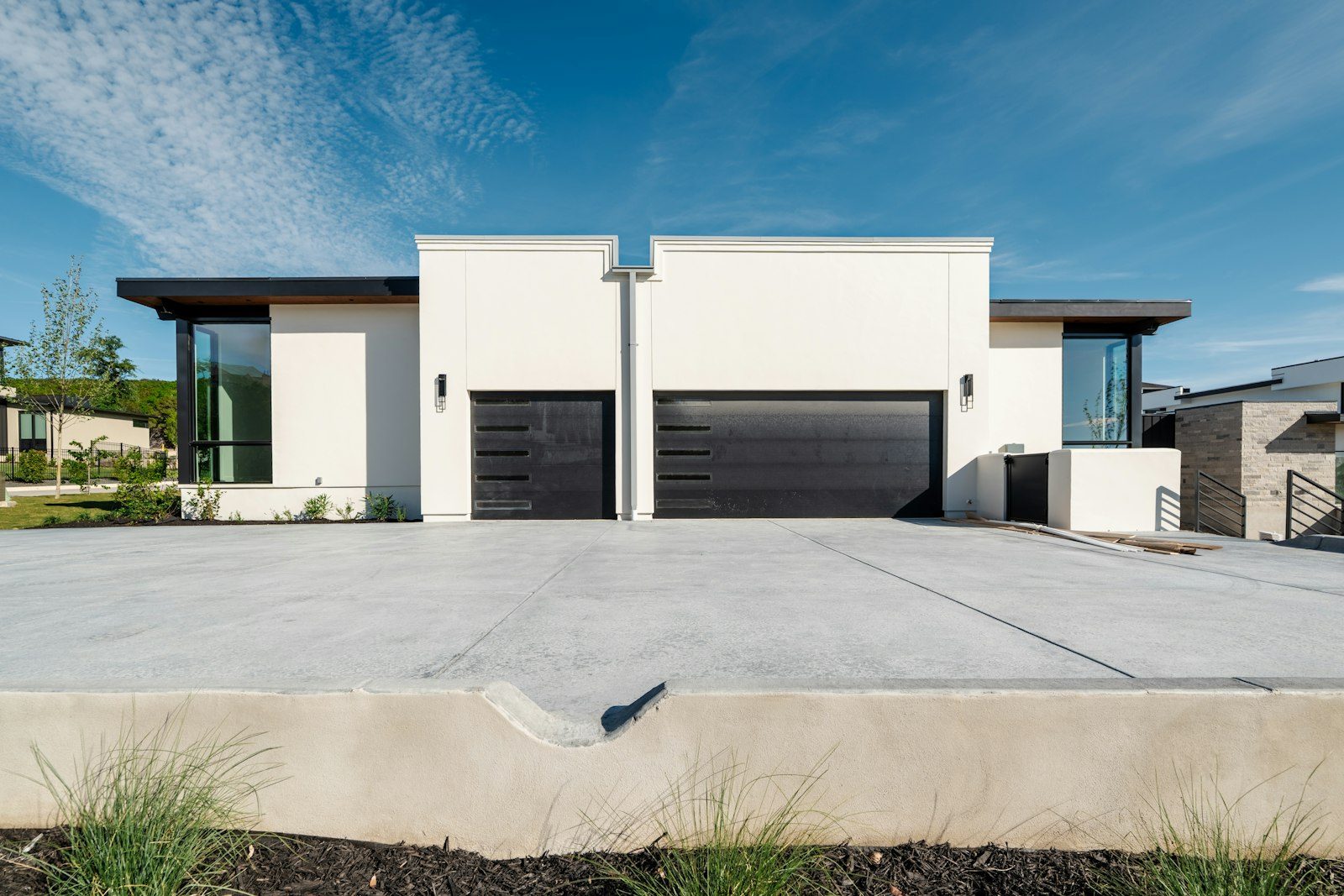
An unsealed slab drinks. You can watch it happen ten minutes after a summer rain.
Go outside ten minutes after a summer rain and look at your flatwork. If the whole slab has gone dark and stays dark for an hour, it's drinking. Water is moving into the pores carrying whatever it picked up on the way, and it'll still be in there tonight when the temperature drops twenty-five degrees. Protected concrete darkens for a minute and comes back.
The other symptoms are easier to spot and worse news. Chalky white bloom along the apron. Fine pitting that shows up first where the plow pushes the pile. Edges giving up a grain at a time. Tire paths that stay a different shade than the concrete around them. Every one of those is a slab losing its top layer to water and freezing, and up here it happens faster than most people are expecting.
Start at the far end and walk down. Scaling shows up as flat sheets of surface lifting away, usually near a door or wherever somebody has been salting. Spalling is chunkier and often follows a crack or an edge. Efflorescence is the white powder: minerals riding water out of the slab and drying on top, which tells you water moves in and out freely.
Then check joints and edges, because those go first. A joint that's opened and raveled at the shoulders has been feeding water into the base for a while. An apron crumbling into the gravel is usually a slab saturating from the side. None of these are cosmetic problems that got worse. They're one problem at different ages, and sealer is the cheap end of it.
Builders almost never seal. The concrete goes in months before anybody moves in, there's nobody living there to care, and it isn't on anyone's list. So a lot of what we see is a slab that has taken five winters with nothing on it and is only now starting to complain.What the crew sees on site
| Type | What it does | Where it goes on a Larkspur property |
|---|---|---|
| Penetrating silane or siloxane | Goes into the concrete and coats the pore walls. Nothing sits on top. | Long drives, walks, RV and shop pads, anything that gets plowed |
| Acrylic topical | Forms a film, deepens color, adds sheen and some gloss | Stamped and colored patios out of the plow path, where the look matters |
| Urethane or epoxy topical | Hard film, good against chemicals, poor on its own under sun | Interior floors and shop bays, or under a sun-stable topcoat |
| Nothing at all | Water in, water freezes, the paste breaks apart from the surface down | Never on decorative work. On a plain rural drive it's a bet that loses eventually. |
Sealing a damp slab is the number one cause. The concrete looks dry on top while it's still carrying moisture underneath, the film traps it, and within a month you've got a cloudy white surface that has to be stripped. We test rather than guess, and we won't seal after a wet week just because it's on the calendar.
Second is putting it on too thick. More is not better with a topical, and a heavy coat can't breathe, so it lifts. Third is sealing over dirt, efflorescence, or a previous coat that's already failing, which guarantees the new one goes with it. Fourth is timing on new concrete: fresh slabs need to finish curing before anything goes on, which means a month at minimum and longer for some products. Get all four right and a sealer job is boring, which is exactly what you want.
We'll look, tell you what's on there now, and give you a straight answer. Call (303) 569-4046.
We want a dry slab, moderate temperatures, and a couple of dry days on either side. That puts the best work in late spring and again in early fall, when the concrete isn't hot enough to flash the product off and the nights aren't cold enough to stop it curing. Midsummer works if we start early, because a slab baking in direct sun by eleven is a bad surface to be coating. Fall sealing is our favorite: get everything protected before the first real freeze and the slab enters winter ready.
Exposure decides the schedule more than the address does. Around Perry Park, heavy tree cover keeps slabs damp and shaded, so drying time before sealing is the constraint and moss is a real thing we deal with. Sage Port and Bear Dance have more open, sun-exposed flatwork, where ultraviolet shortens the life of anything with a film in it and the reseal clock runs faster. Two to three years is the honest interval for exposed concrete at this elevation, and we'd rather come back on schedule than strip a failure.
Still unsure about something?
Call the crew at (303) 569-4046 and we will talk it through.

Get a free, no-obligation estimate from a crew that knows Colorado soil, Colorado weather, and how to finish concrete that lasts.
Accessibility
Adjust the site to fit how you read and browse. Your choices are saved on this device.