
Sixty degrees on a Thursday in January, fifteen by Friday. Your stem wall lives through that swing forty times a winter.
Sixty degrees on a Thursday in January. Fifteen by Friday morning. Meanwhile the snow on the north side of the house hasn't budged since December and the south side has been bare for weeks. That swing is the hardest thing a Lakewood stem wall deals with, and at 5,518 feet with hard winter sun it happens over and over between November and April.
Concrete doesn't mind cold. What it minds is being wet when the cold arrives, and so does the ground packed against it. We pour new stem walls for houses, additions, garages, and outbuildings, and we rebuild the ones that lost the argument. Almost every failure we get called to traces back to water that had somewhere to sit and then a night that turned it into ice.
Here's the part that surprises people. The damage isn't only on the face you can see. Soil holds water, and when water in soil freezes it doesn't just get hard, it grows. Ice forms in layers and those layers push, sideways against the wall and upward against anything shallow. The backfill trench beside your foundation is the wettest, loosest soil on the property, which makes it the most willing participant in the whole process.
An unheated building feels this worst. A house leaks enough warmth into the perimeter soil to keep the ground under it comparatively calm. A detached garage or a shop in Applewood, Belmar, or out toward Bear Creek has nothing helping it, so frost drives deeper against those walls and the soil can grip and lift a shallow section. That's why we don't design an outbuilding's perimeter to the same standard as a heated house and call it done. Different conditions, different wall.
| Where the water ends up | What the overnight freeze does with it | What actually solves it |
|---|---|---|
| Roof melt landing in the old backfill trench | Saturates the loosest soil on the property, then expands against the wall | Extend the downspout past the trench line, every single one |
| A drift on the shaded side that never leaves | Weeks of slow melt feeding the wall while the ground stays frozen | Grade that falls away, and nothing stacked against the concrete |
| Native clay packed straight against the wall | Holds the moisture in place instead of letting it drain past | Free-draining material in the zone next to the concrete |
| The footing drain outlet daylighting on a cold slope | Freezes shut, and the drain quietly becomes a holding tank | Outlet placed where sun reaches it, screened, and checked each fall |
| A winter watering in the bed along the wall | Adds water to soil that has nowhere to send it until spring | Move irrigation off the wall and skip the perimeter beds in winter |
| Water sitting in a form-tie hole or a hairline crack | Freezes inside the concrete and works the opening wider each cycle | Patch and seal the small stuff before the first hard freeze |
We'll look at the wall, the backfill, and where your roof water lands, then tell you which of the three is the actual problem. (303) 569-4046.
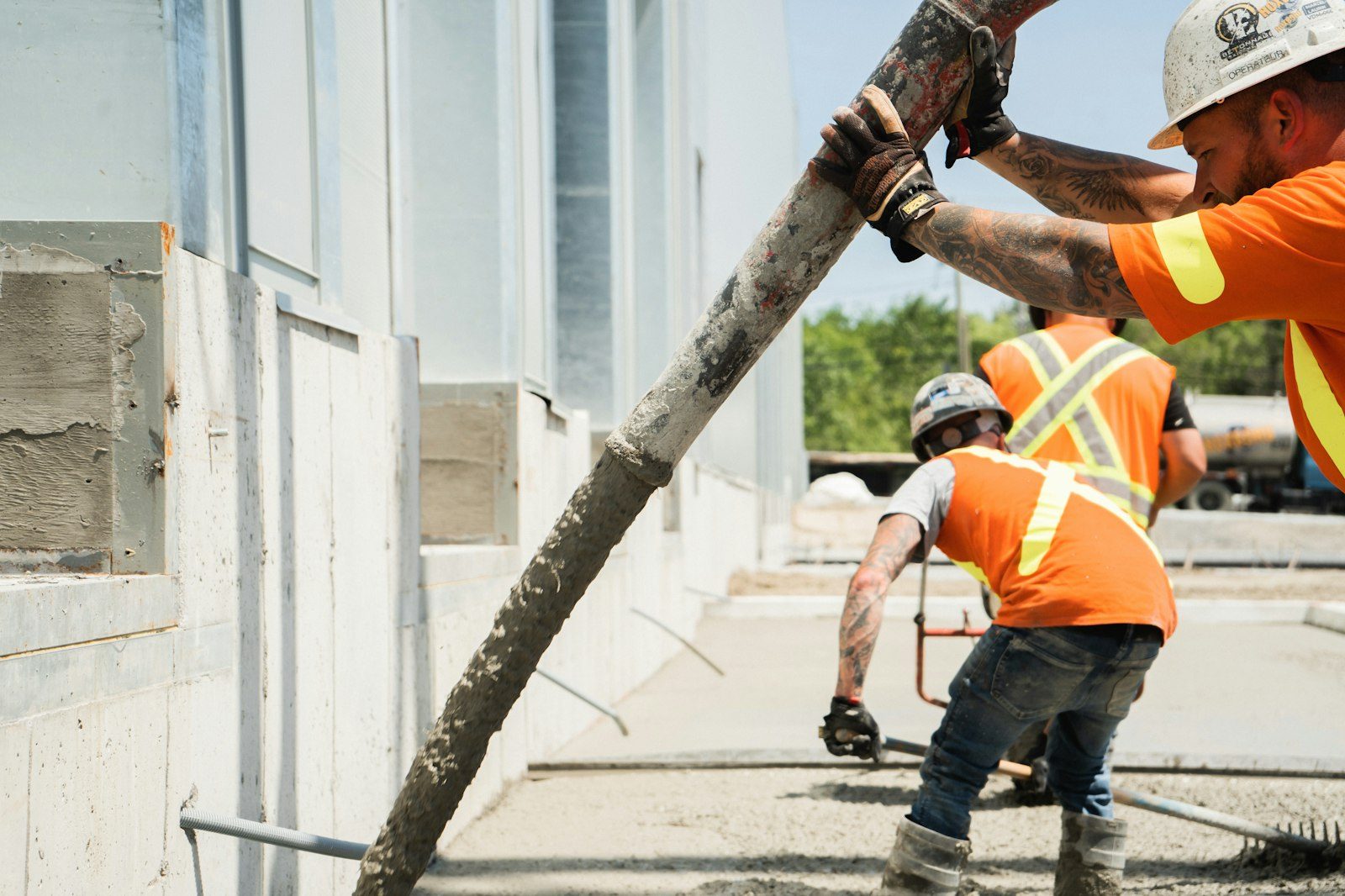
Walls go up nearly year round. Cold pours get warm mix water, a non-chloride accelerator, insulated blankets over the forms, and longer waits before forms come off. We won't place on frozen bearing, so a hard freeze sometimes costs us a morning of stripping frozen material back to good ground. None of that is exotic. It's just work that has to happen and get paid for.
The step we're stubborn about is backfill. Frozen clumps of soil don't compact, they stack, and they leave voids that show up as a sunken walk or a dropped flower bed in April. Tall walls also need the floor system above bracing the top before dirt goes back. So if the calendar is tight, we'd rather pour late in the season and import material that behaves than shove frozen spoil back in and call the job finished.
People think a hard winter breaks these walls. It doesn't. A wet fall breaks them and winter just finishes the sentence. Whatever water was there in November is still there in January, only now it's got somewhere to push.What our crew lead tells homeowners
Still unsure about something?
Call the crew at (303) 569-4046 and we will talk it through.

Get a free, no-obligation estimate from a crew that knows Colorado soil, Colorado weather, and how to finish concrete that lasts.
Accessibility
Adjust the site to fit how you read and browse. Your choices are saved on this device.