
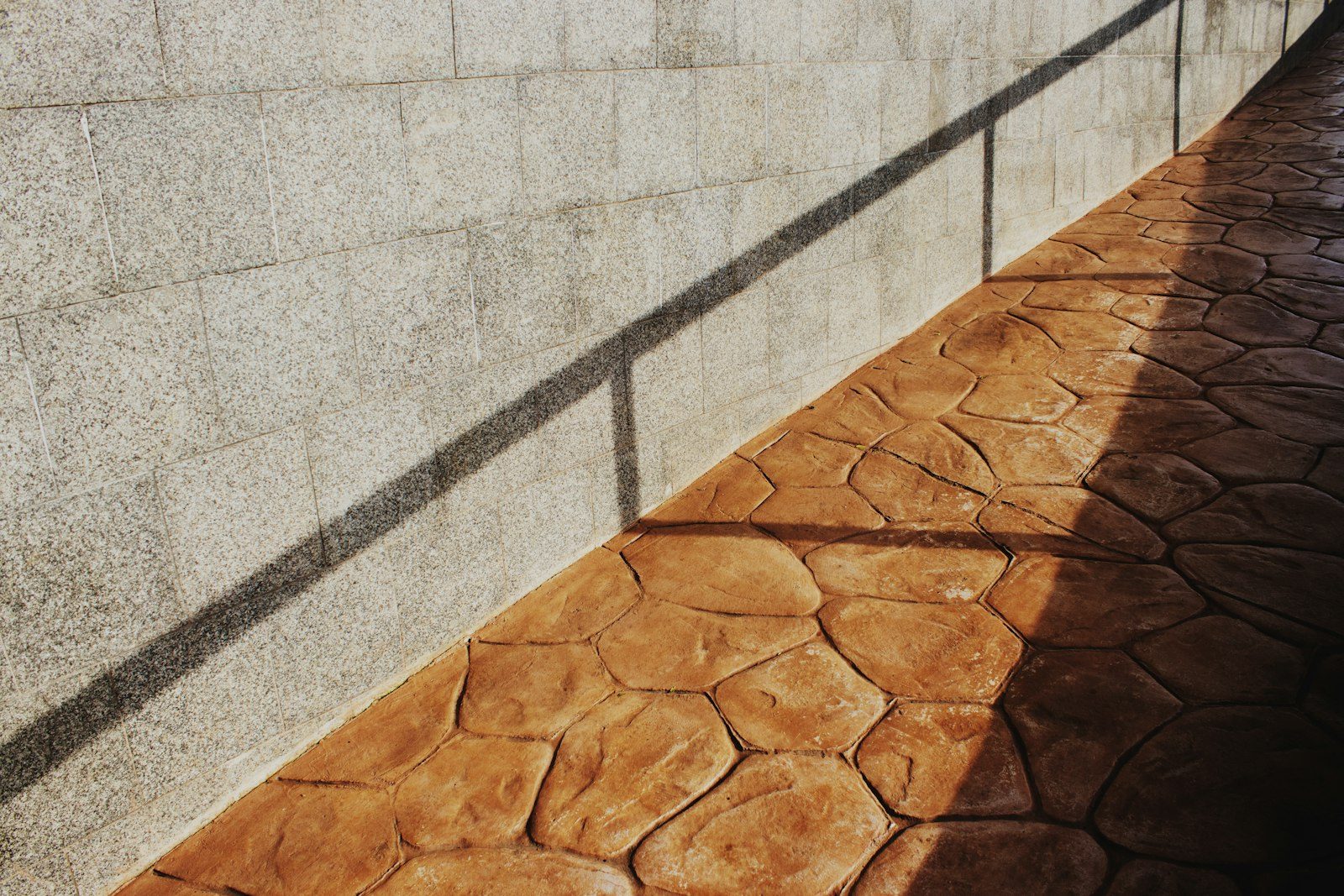
Every washed slab is really two decisions: which stones show, and who chose them, the plant or us.
People come to us wanting a washed finish and start the conversation at the wrong end. They ask how deep the reveal should be, or which sealer makes the stone pop. Fair questions, both of them, and both downstream of the one that actually decides how the slab looks for the next thirty years.
Which stone is in there? Because you can wash the paste off a truck of ordinary mix and get a perfectly good gray-brown surface, or we can put specific rock on top by hand and get something nobody else on your street has. Those are two different jobs with two different price tags and two different pour days. On the size of slab most Greenwood Village properties need, the gap between them is worth understanding before anybody orders concrete.
| Source of the stone | Control over the look | The practical catch | Worth it when |
|---|---|---|---|
| Standard local mix, washed as delivered | Almost none. You get whatever rounded river rock and crushed material the plant runs that week | Color varies load to load, which shows up if the job takes two trucks | Service walks, side yards, anywhere the finish is about traction and not about the view |
| Aggregate specified through the plant | Good. Size and type are called out on the ticket and the whole load matches | Costs more per yard, needs lead time, and some blends have a minimum order | Large open areas where consistency across the whole surface is the point |
| Stone broadcast by hand on the fresh slab | Total. We choose the rock, the density, and how much of each color goes where | Adds a full crew station on pour day and a real risk if the timing slips | Feature areas, entries, pool surrounds, anywhere people stand still and look down |
| Standard field with a seeded accent band | High where it matters, ordinary where it doesn't | Two finishing rhythms on one slab, so the crew has to be split and staged | Big properties where a full seeded pour is more than the space needs |
| Recycled glass or specialty aggregate seeded in | Total, and unmistakable | Sharp edges want a deeper polish or a rounded blend, and the material has to be sourced ahead | Courtyards and interior floors, or an owner who wants something distinctly not gray |
Slope is the first argument for it. A washed surface has real texture standing proud of the paste, so a sloped walk down to a lower level in Greenwood Hills or a drive that pitches toward the street keeps its grip when there's a film of meltwater on it. Pool surrounds are the second argument, same reason, plus the surface hides the constant wet-dry cycling far better than a smooth trowel ever will.
It also hides dirt, which nobody puts in the brochure and everybody appreciates. Hard water spots, pine needles, the gray film that settles on everything in the dry months, all of it disappears into the texture. Compare that to a smooth finish in Cherry Hills Farm where every sprinkler overspray line shows for a week.
Where we'd point you elsewhere: covered patios with outdoor furniture, because chair legs and bare feet both dislike an aggressive reveal. Anywhere you plan to set a dining table. And any surface a snow blower has to cross regularly, since the auger housing rides the high stones and the stones tend to lose. On those we'd rather give you a light broom or a fine reveal and save the deep wash for the approach walk.
We'll bring stone samples out and set them on the ground where the slab is going. Seeing rock on dirt in your own light beats any photo. Call (303) 569-4046.
Exposing stone means taking the cement paste off the very top while the concrete underneath keeps setting. There are two ways in. Straight water and a broom works on a small slab if the crew reads the surface correctly, and it's entirely dependent on catching the concrete at exactly the right stiffness. Surface retarder is the grown-up version: we spray it on after finishing, it holds the top skin soft while everything below hardens, and the next morning we wash off a controlled depth with pressure. On anything large, retarder is what we use, because it turns a nervous afternoon into a scheduled morning.
The other half is what the sky is doing. Wind and low humidity at this elevation drive surface moisture off fast, and a slab that skins over early gets away from you. Storms are worse. A hard shower on retarded concrete washes the product unevenly and you'll see the difference in the reveal for good, so we tarp or we don't place.
Season runs late April into October. September is the best of it. Early spring works when the ground has thawed all the way, and we won't put concrete on frozen subgrade regardless of how nice the afternoon looks. Late fall pours get blankets and heated water, though we generally push seeded work to spring because the wash step wants a morning above freezing.
Still unsure about something?
Call the crew at (303) 569-4046 and we will talk it through.
Get a free, no-obligation estimate from a crew that knows Colorado soil, Colorado weather, and how to finish concrete that lasts.
Accessibility
Adjust the site to fit how you read and browse. Your choices are saved on this device.