
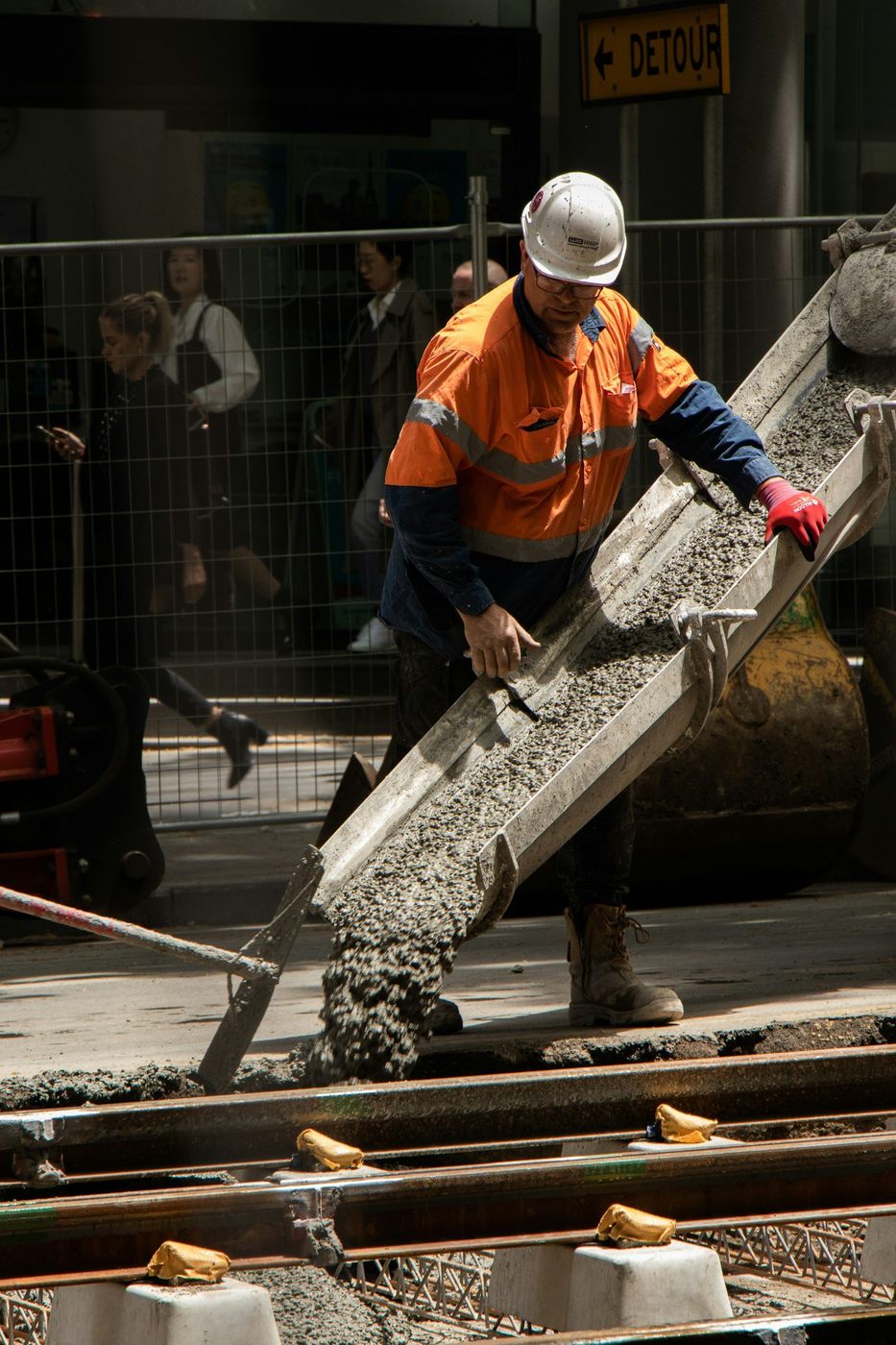
Everything worth knowing about a panel building is in the bottom two feet of wall.
Owners assessing a concrete panel building tend to look up. Parapet, paint, the tenant sign. Almost everything diagnostic sits at knee height. That's where salt lands, where a plow pushes snow and leaves it, where the panel meets the apron slab, and where a building's water problems get written out in stains and flakes you can read from across the parking lot.
We cast, erect, and repair tilt-up around Fort Collins, mostly on the working side of town and out where the Harmony corridor keeps filling in. Panels handle this climate well as a system. What suffers is that band along the ground, because a northern winter concentrates every damaging thing into it at once: freeze cycles, plow blades, deicer chemicals, and meltwater with no place to go.
| What you see near the ground | What's usually behind it | What correcting it takes |
|---|---|---|
| Surface flaking off in thin layers, a foot or two up | Deicer splash plus freeze cycles working on unprotected concrete | Clean back to sound material, patch, seal, and change where snow gets pushed |
| A white bloom low on the panel | Water traveling through the wall and evaporating on the face | Chase the source: grade, a downspout, or a failed joint above it |
| A rust streak running from a small hole | An embed or a tie corroding under a patch that was too shallow | Open it up, treat the steel, re-cover it with proper depth of material |
| A gap opening between the panel and the apron | The exterior slab settling away, usually not the panel moving | Lift or replace the apron, then reseal, then fix what washed the base out |
| Sealant pulled loose at the bottom of a vertical joint | Joint movement with water and ice concentrated at the low end | Cut the old sealant out and reinstall with proper backer and joint shape |
| A panel edge no longer lined up with its neighbor | Movement in the foundation under one panel | An engineer looks at it. This is the one that is not cosmetic |
Follow a snow event through a commercial site and the pattern is obvious. The plow clears the drive lanes and pushes everything to the edges, which usually means a windrow against the building. That pile sits a week, melting slowly into the base of the wall and refreezing every night. Meanwhile the walk crew throws deicer near the doors and passing vehicles spray a salty mist onto the concrete.
North elevations get it worst, staying shaded and holding snow long after the south side dried out. Add a downspout discharging at the base instead of past the pavement, or a landscape bed irrigated all summer against the wall, and you've built a machine for wetting concrete and freezing it. The panels aren't defective. They're being asked to sit in water through a Larimer County winter.
Above the splash zone, cast panels age remarkably well. What ages is everything applied to them. Coatings at this elevation take serious ultraviolet exposure and will chalk and fade on the south and west faces first, with darker colors going soonest. Recoating is maintenance, not failure.
The joints are the real item. That thin line of sealant between panels is the building's weather barrier, and it lives a hard life: stretching every cold night, compressing every hot afternoon, baked by sun in between. When it pulls away at the edges or looks glazed and cracked, it's near the end. Replacing sealant is cheap. Chasing water that got behind panels for three years is not.
We'll walk the elevations with you, sort cosmetic from structural, and put a repair sequence in writing. (303) 569-4046.
New panel work is a spring through fall operation up here, and there's no way around it. Panels get cast flat, they have to reach strength before anybody hooks a crane to them, and cold weather slows that clock while adding protection costs. We can cast into the cold season with heat and blankets, and we do, but the honest advice is to schedule casting so the lift lands before deep winter, when a frozen or snow-covered casting bed turns a routine morning into a bad one.
Repairs follow the thermometer even more closely. Patching material and joint sealant both have installation temperature ranges, and joints should be cut and filled when they're near the middle of their annual movement instead of fully open in January or squeezed shut in July. That points at spring and fall, which is when we do most of our panel maintenance work.
Still unsure about something?
Call the crew at (303) 569-4046 and we will talk it through.
Get a free, no-obligation estimate from a crew that knows Colorado soil, Colorado weather, and how to finish concrete that lasts.
Accessibility
Adjust the site to fit how you read and browse. Your choices are saved on this device.