
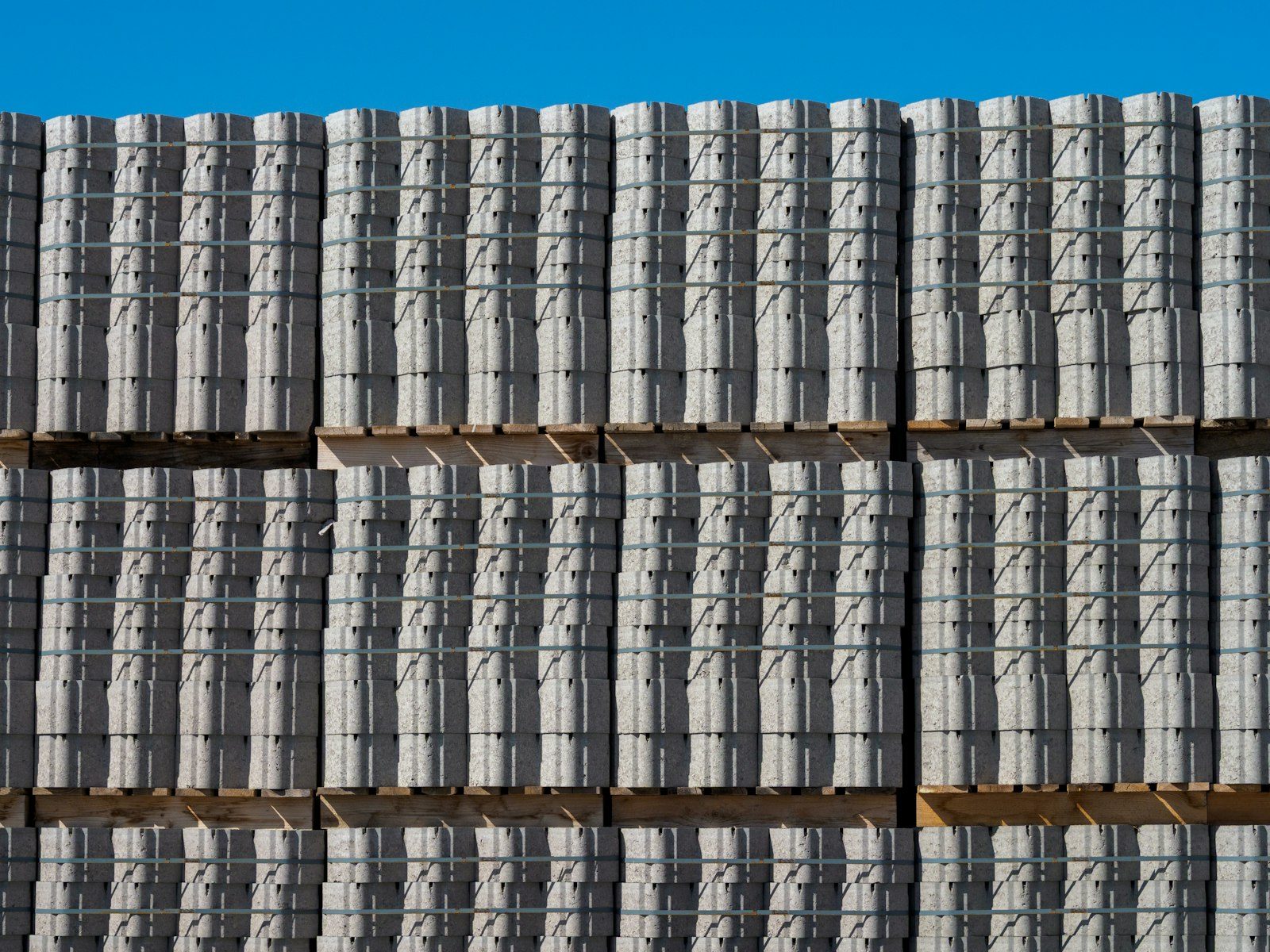
The slab that makes the whole front of a house look tired is usually the cheapest thing on the property to be rid of.
Drive any older block and you can pick out the failed flatwork from behind the wheel without slowing down. It's the walk with a patch quilt on it, three shades of grey in six feet. It's the apron that tips toward the garage so hard that the door has a dark water line across the bottom panel. It's the driveway with weeds standing up out of every joint, which is a joint that hasn't been sealed in a decade telling you that water has been running down into the base the whole time.
Those are the calls we get, and they usually arrive as a question about resurfacing. Sometimes resurfacing is real. Often what's showing at the curb is the last chapter of something that started underneath years ago, and the honest move is to take it out, fix the ground, and start over. We tear out, haul off, and hand back a compacted pad, whether or not we're the ones pouring next.
A few symptoms are worth learning to read. Panels that no longer line up at the joints mean the ground moved, not the concrete. A surface that's turned rough and sandy, showing the stone, is a slab that lost its top layer to freeze-thaw and deicer, and there's no putting that back with a coating if the loss runs deep. Dark staining that never dries out marks a spot holding water, which in Larimer County is the same as saying that spot is going to keep getting worse every March.
Then there's the geometry problem. Anything sloped toward the house is a removal candidate on principle, whatever shape the concrete is in, because you can grind and patch all day and the water still runs the wrong direction. Same with a walk that's heaved into a step. Those two get taken out and rebuilt at a corrected grade. Everything else we sort case by case, and plenty of slabs we look at get a recommendation to leave them alone another few years.
Concrete comes apart quickly. A breaker on a compact machine turns a two-car driveway into rubble in a couple of hours, and if the slab has mesh in it, it comes up in sheets that peel like a bad carpet. Rebar takes longer because every piece has to be cut free before it goes in the truck. None of that is the hard part.
The hard part is everything around the concrete. Where the machine gets in without wrecking your turf. Whether the gate comes off its hinges. How close the sprinkler main runs to the edge we're sawing. Whether the trailer can sit somewhere legal and reachable, which on the tighter Old Town lots is a genuine puzzle and on the wider setups out near Fossil Creek and Registry Ridge usually isn't. We saw a clean line first so the concrete that stays keeps a straight, square edge instead of a ragged one you'll be looking at for years.
Clean concrete goes to a recycler when the load allows it, and around here most loads do. Broken slab gets crushed into road base and comes back around as somebody's subgrade. What we won't do is bury the rubble in your yard and grade over it, which we still find on properties where a previous crew took a shortcut.
| What arrives | What it's for | How long it's out front |
|---|---|---|
| Crew trucks and trailer | Tools, saws, hand equipment, and the crew | The whole working day |
| Compact machine with a breaker | Breaking the slab and loading the pieces | Most of the day on a driveway, a few hours on a walk |
| Dump trailer or roll-off | Hauling broken concrete off the property | Placed in the morning, gone by evening on a one-day job |
| Walk-behind saw | Cutting the line where old concrete meets new | An hour, usually first thing |
| Plate compactor or roller | Compacting the subgrade once the slab is gone | Late in the day, after grading |
| Cones and caution tape | Keeping the sidewalk and your neighbors sorted out | Up while equipment is working, down before we leave |
We'll walk it with you and give you a straight yes or no on removal, free, with no pour attached to the answer.
Still unsure about something?
Call the crew at (303) 569-4046 and we will talk it through.
Get a free, no-obligation estimate from a crew that knows Colorado soil, Colorado weather, and how to finish concrete that lasts.
Accessibility
Adjust the site to fit how you read and browse. Your choices are saved on this device.