
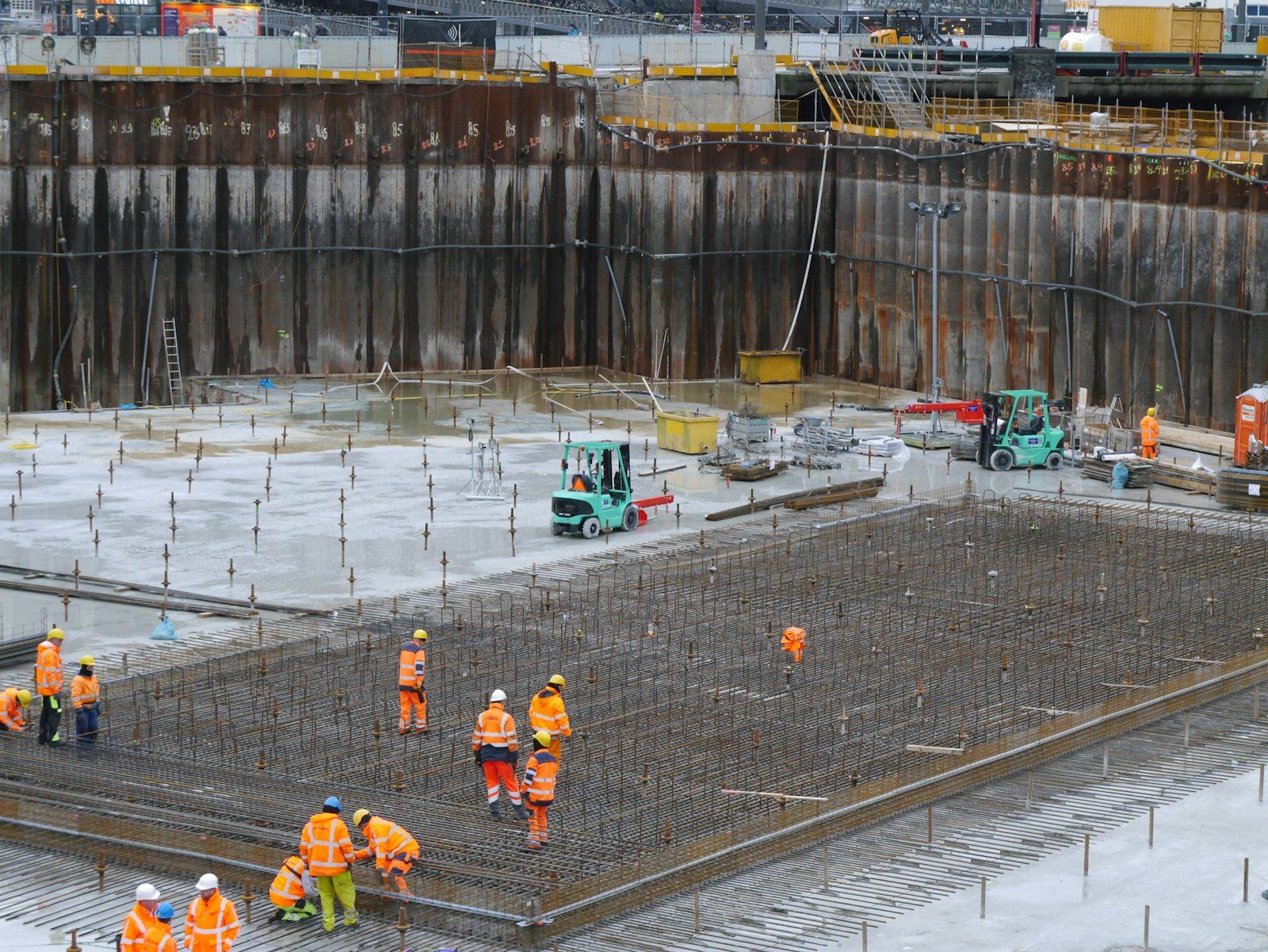
Nearly the whole bill is prep. The material on top is the cheap part, and knowing that tells you which bid to believe.
Two resurfacing bids on the same driveway can come back looking like quotes for different projects. Usually they are. The material that ends up on top is close to identical between the two. What separates the numbers is how much work each crew planned to do before any of that material went down, and that's where the honest conversation belongs.
Prep is the job. Getting an old slab clean and open enough for a topping to actually grab is slow, loud, and boring to watch, and it's the only thing standing between you and a surface that sounds hollow three winters from now. So here's what genuinely moves a resurfacing number. No dollar figures, because the range on any one of these is wide enough that a figure in a paragraph would be a lie.
Split a resurfacing estimate into pieces and it lands in five buckets. Opening the slab up, which is blasting, grinding, and stripping whatever coating is on it. Repairing what the blaster uncovers, which nobody prices accurately from a photo. Joint work, since every joint in the old concrete has to carry through. Placement day, which is crew hours and mixing. Then finish work: texture, color, sealer.
Two of those buckets dominate, and they're the first two. That's the part homeowners find surprising, because the topping is the thing they're shopping for. The topping is not what they're paying for.
The value math is simpler than the estimate. If the concrete below is structurally fine and only the top wore out, a topping gives you a fresh wearing surface with no demolition, no dumpster, and no new base. If the concrete below is failing, a topping buys a good-looking surface on a bad slab, and you pay for removal later with the resurfacing money already gone. The first visit exists to tell those two apart.
| What we find | How we open it up | What it adds |
|---|---|---|
| Sound concrete, just filthy | Pressure wash and a light blast | Least of any scenario. Also the least common one |
| Old sealer or curing compound still on it | Chemical strip, then blast, then a water test to confirm | Half a day, and it's the step cheap bids leave out |
| Light scaling across the field | Full shot blast down to sound material | Machine time, not much else. Still a strong candidate |
| Deep scaling with aggregate showing | Blast plus partial-depth patching first | A real add, since patches have to cure before anything goes over them |
| Oil-soaked concrete near the garage | Degrease, blast, then bond-test that area on its own | Small footprint, outsized cost. Sometimes we cut it out instead |
| Crumbling edges and a broken apron | Saw a straight line, form it, and pour real concrete back | The largest single add, and the one people most want to skip |
Ours breaks out stripping, patching, and edge work as separate lines. Free estimate. (303) 569-4046.
A quarter inch of material can do a lot. It can't do these. It can't change your slope, so a patio holding a puddle keeps holding it. It can't lift a panel that has settled, because that's a base problem and toppings have no structure to give. It can't bridge a crack that's still moving, and it can't make a thin slab thick enough to park a trailer on. Anybody telling you otherwise is describing a different job.
What it does well is give a sound slab a new face. Around Old Town there's plenty of concrete poured right, sitting on a base that never moved, with a top worn out by decades of shovels and weather. Same story on postwar drives and on plenty of walks out around The Landing. Those are the best money in this trade. The apron and street edge usually need real repair first, and that repair decides whether a topping lasts or starts lifting.
Winters up here shorten the life of any wearing surface, which puts more weight on maintenance than it would farther south. A resurfaced slab wants sealer on a two to three year rhythm and no chloride deicer, ever. Do both and a topping runs a long time. Skip them and you're looking at the same driveway again far too soon.
Placement runs mid-May into early October. September is the month we'd choose: calm, dry, and enough warm weeks after to cure and seal before anything freezes. We don't place outdoors with a hard freeze in the next day, and we won't rush a late October date just to fit a job into this year.
The low bid almost always got there by skipping the strip or leaving the broken edges alone. Ask every crew what they're doing about the apron and watch how fast the numbers start matching.Our crew lead, after the walkthrough
Still unsure about something?
Call the crew at (303) 569-4046 and we will talk it through.
Get a free, no-obligation estimate from a crew that knows Colorado soil, Colorado weather, and how to finish concrete that lasts.
Accessibility
Adjust the site to fit how you read and browse. Your choices are saved on this device.