
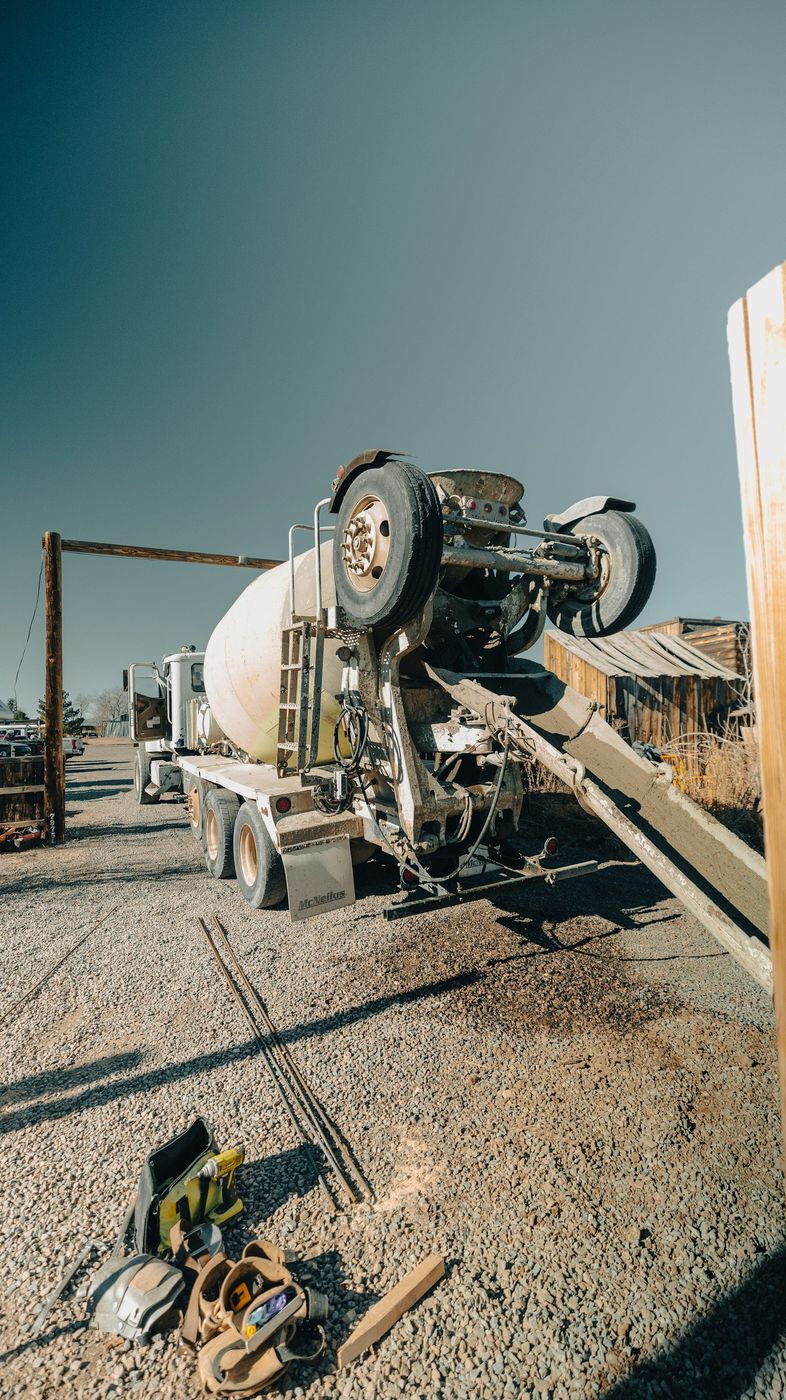
These lots were laid out for one sedan and a tight garage. Fitting a fifth wheel on one is its own kind of problem.
Englewood was platted for one car and a garage you could barely close the door on. Nobody drew a spot for a thirty-four-foot fifth wheel. So when a rig joins the family, the question is never which corner of the property would be ideal. It's which corner is even possible.
That makes this a different job than dropping a pad on a half-acre new build. Side yards here are narrow and fenced. Landscaping has had years to fill in. Plenty of Northwest Englewood garages sit at the back of the lot off the alley, and the strip along either side of the house is where every sprinkler line, downspout extension, and forgotten utility run seems to end up. We build pads that work on lots like this. Most of the thinking happens well before the concrete.
Three spots come up over and over. The side yard between house and fence, which is the tightest and needs the most gate and grade work. The back of the lot behind a detached garage, reached off the alley, which is often the easiest concrete to place and the hardest trailer to steer into. And the extension alongside an existing driveway, which parks the rig out front where some folks want it and some very much don't.
Pick the spot by how the rig gets there, not by which patch of lawn you'd miss least. A pad you can only reach by threading thirty feet of trailer past a gas meter in one shot is a pad that goes unused. We walk the approach and mark the turn first. Maneuvering room decides the layout more than the parking space does.
| In the way | How it shows up here | What we do with it | After the pour |
|---|---|---|---|
| A run of fence | Chain link or cedar sitting where a truck, a buggy, or the rig itself has to pass | Panels come out, posts pulled when there's no other line | Reset after the pour, new posts where the old ones were rotten |
| Sprinkler heads and laterals | Zones added piecemeal over the years, run shallow, no map anywhere | Probe and flag, then cap and reroute whatever crosses the footprint | Reconnected clear of the slab before we leave |
| An old gravel parking area | Rock with years of soil worked through it, never compacted | Stripped out. Pouring over it only hides the problem | Clean rock screened and folded into the new base |
| A low spot that ponds | Ground nobody graded, now where spring melt collects | Cut and fill, then pitch the slab so water crosses it | Grade rebuilt on all four edges so runoff reaches daylight |
A trailer doesn't load a slab the way a car does. Weight arrives through a few small contact patches, sits in exactly the same places for months, and comes back to those same places every season. Tandem axles put two sets of tires within a couple feet of each other, which is a concentrated line, not a spread load. Then you unhitch and the nose transfers onto jack feet the size of dinner plates. So we pour six inches with bar on chairs, not four with mesh. Mesh belongs under a garden shed.
The apron is the piece people forget and the piece that fails first. Where the pad meets the street or the alley, the tires are turning under load on the least supported concrete in the whole job, and that transition takes more abuse than anything behind it. We thicken it, tie steel through it, and build the base under it deeper than the base under the pad itself.
Season: straightforward from April into late October, and fall is the smart play if the rig winters elsewhere. Nobody wants to shuffle thirty feet of aluminum around a job site. Summer pours go in early, ahead of the storms. Cold pours run on warm water and blankets, though frozen subgrade under a slab this heavy is a no.
That's usually enough for a real conversation about whether it fits and what it takes. (303) 569-4046.
Still unsure about something?
Call the crew at (303) 569-4046 and we will talk it through.

Get a free, no-obligation estimate from a crew that knows Colorado soil, Colorado weather, and how to finish concrete that lasts.
Accessibility
Adjust the site to fit how you read and browse. Your choices are saved on this device.