
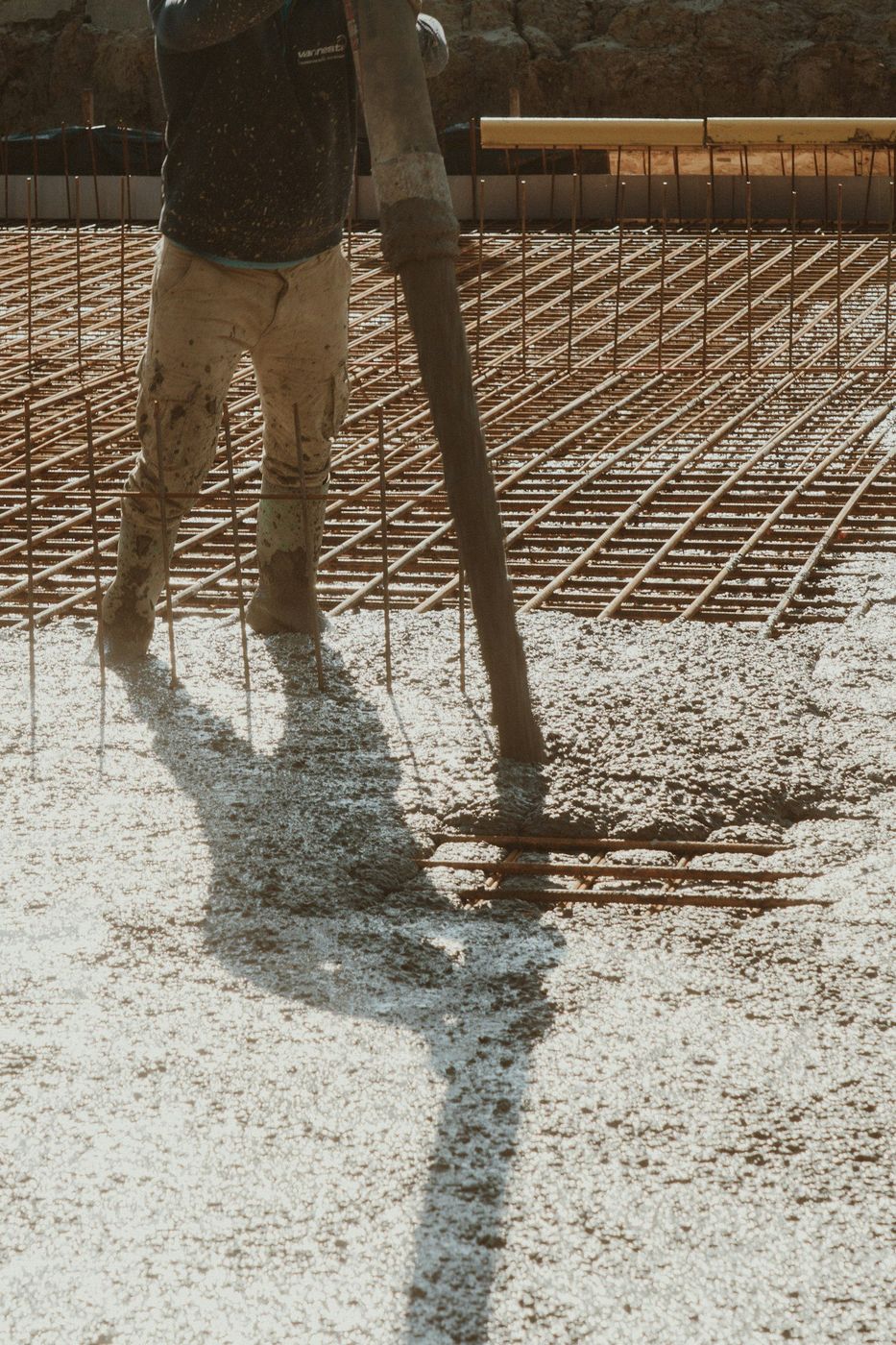
By January the north face of your building is running a season behind the south face, and the concrete keeps score.
Englewood buildings sit close to their concrete. Older commercial property was built right out to the walk, and the medical and office space that came later tucked its flatwork into a narrow strip between the building face and the parking. Either way, half of that concrete spends winter in a shadow. A slab on the sunny face dries by mid-morning most of the season. The same slab on the cold face stays damp, refreezes after dark, and does it again four nights out of five from December into March.
We pour walks, entry aprons, service pads, and enclosure approaches for managers and business owners across town, from the mature blocks around Broadway Estates out to frontage bordering Cherry Hills Vista. The mix spec barely moves job to job. What moves is where the joints land, how hard we pitch the surface, and which panels we tell you to fund first.
Walk the property at ten on a January morning and draw an imaginary line where the sun stops. Nearly every panel you're unhappy with sits on the cold side of it. That isn't bad luck. A surface that thaws by day and locks up again at night is running a pump. Meltwater soaks into the top sliver of the slab, freezes, expands, and lifts a paper-thin flake off the top. Repeat that forty times a winter and a broom finish turns to sandpaper, then to loose grit.
The grit is the real trouble. It packs into the joints. A packed joint can't move, so when the panel wants to expand in July it has nowhere to go and it cracks where it feels like cracking instead of where we cut it. That's the sequence behind most of the ugly random cracks on shaded commercial walks around here. Sunny frontage cycles too, just faster and shallower, and it dries between storms. It fades before it fails.
| Where the flatwork sits | What winter does there | What changes on the rebuild |
|---|---|---|
| South and west frontage, open sky above it | Thaws daily, dries between storms, ages from sun and shoe traffic | Normal section, extra care with curing so the surface never dusts out |
| North face, tight against the building wall | Damp for weeks, cycles every night, scales at the surface first | Firmer pitch away from the wall, sealed sooner, zero chemical the first winter |
| Under a canopy or covered entry | Never sees sun, never fully dries, gets swept rather than shoveled | Air-entrained mix regardless of the cover, joints set where the drip line lands |
| Shaded service lane between two buildings | Plow piles sit there into April on concrete nobody inspects | Heavier section and a grade that pushes meltwater out instead of holding it |
| Right below a downspout or roof drain | Concentrated water, an ice ridge by February, a hollow base by spring | Wider splash area, rebuilt base, and the water routed past the concrete entirely |
Joints take the beating twice. Once from water sitting in them, once from the shovel or plow blade that catches the lip. An edge already soft from scaling chips the first time steel crosses it, and after that the chip works as a funnel. Water in, freeze, notch widens, and by the third winter there's a ragged trench catching wheels and heels.
So we do two things. We cut joints at a depth that actually controls the crack instead of decorating the surface, and we lay out panels so joints don't sit where the plow turns. Then we ask you to keep magnesium chloride off the new work through its first winter. Sand for traction instead. It's messier in the spring and it saves the surface. And tell your snow contractor where the new work is. Most of the blade damage we come back to repair was done by somebody who had no idea the panels were four months old.
Send photos of your worst frontage and we'll tell you what's surface wear and what's base failure. Free estimates, (303) 569-4046.
April through October is easy. Inside that stretch we like the shoulders best: late spring and early fall, when daytime highs are moderate and the slab isn't losing water faster than the crew can finish it. Midsummer means early starts, wet burlap or curing compound the moment we're done, and a hard eye on the afternoon sky, because a July cell can undo forty minutes of finishing in ninety seconds.
Winter isn't off the table, it's just a different job. We don't place on frozen ground, period. If we're pouring cold we heat the mix water, run a chloride-free accelerator, blanket the slab, and leave it covered longer than anybody wants. Cold work costs more in labor and protection and it opens later. Sometimes that math still wins, because an entrance failing in December can't wait for May.
If your budget cycle lets you pick, walk the property with us in late winter and pour in April. The scope reads clearer after a hard freeze. Everything weak has already spoken up.
Still unsure about something?
Call the crew at (303) 569-4046 and we will talk it through.
Get a free, no-obligation estimate from a crew that knows Colorado soil, Colorado weather, and how to finish concrete that lasts.
Accessibility
Adjust the site to fit how you read and browse. Your choices are saved on this device.