
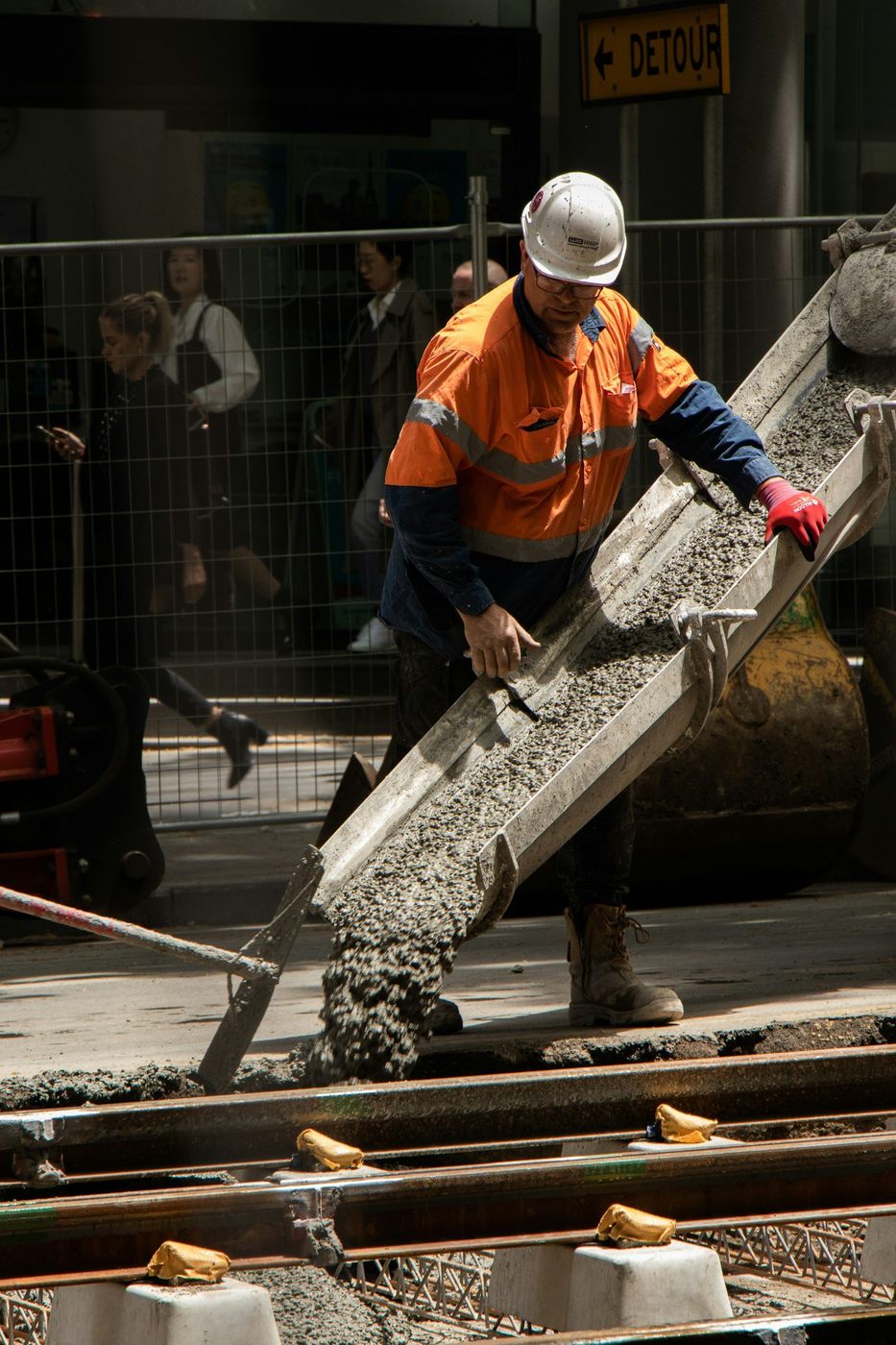
Built around how you'll actually run it: pump on, skimmer reachable, water clear, sleeves dry.
A pond is a machine you happen to enjoy looking at. Something is always running: a pump pushing water, a skimmer pulling leaves off the surface, a bottom drain doing quiet work you never see. The concrete is the part nobody thinks about, right up until it becomes the only thing they think about, which is the week the level starts dropping and nobody can say why.
So we build basins around the jobs you'll actually do. Where you stand to empty the skimmer. Whether the valves are in one box or scattered across the yard. How you reach the middle without wading. Watertight is the baseline. Easy to run is what makes people keep the thing instead of filling it in four years later.
Weekly is small. Empty the skimmer basket, net whatever blew in, glance at the level, rinse a filter pad. Ten minutes on a Saturday. Monthly you pull the pump strainer and look at it. Twice a year you do the real work: a spring startup with a partial clean, and a fall shutdown where you net the surface and cut plants back before they drop into the water and rot all winter.
Denver adds a few wrinkles. Our air is dry, so evaporation runs faster than people expect and topping off is routine rather than a symptom. Wind loads the surface with debris from three yards over, and hail arrives without much warning, leaving grit in every joint. Most of the basins we build sit in the deeper back yards of Park Hill, University Hills, and Wash Park, where there's room to hold a pond well away from the house. And winter is long enough that the surface freezes solid across the top, which is fine for the concrete and fine for fish as long as gas exchange keeps happening through a de-icer or an aerator.
Concrete holds water when the details do. We reinforce walls and floor as one structure, place continuously where the shape allows, and where a cold joint is unavoidable we key it and run a waterstop through it. Every pipe that passes through a wall gets a proper sleeve and a collar, because penetrations leak far more often than concrete does. Then the shell gets a full wet cure, hoses and burlap, a solid week of it. Fast curing means shrinkage cracks, and shrinkage cracks in a vessel mean a slow leak you'll chase for years.
Bare cured concrete holds water on its own when it's built this way. Plenty of owners still want a coating for color or for extra insurance, and that's a fine choice. What isn't fine is relying on a coating to fix a shell that was placed badly. A paint-on product bridges a hairline. It does nothing about a joint that was never detailed.
| Season | What you're doing | What the concrete needs from you |
|---|---|---|
| Early spring | Restart the pump, clear winter debris, check the level | Walk the outside of the wall for a damp patch or a stain. That's your annual leak check. |
| Late spring | Plants go in, water warms, the filter runs full time | Reseal any joint sealant that lifted over winter, before algae season buries it. |
| Summer | Skimmer baskets, top-off, watching the afternoon storms | Keep muddy runoff out of the basin. Silt is what plugs a bottom drain. |
| Hail season | Covering tender plants, clearing debris after a cell moves through | Rinse the coping. Grit left in a joint grinds at it every time somebody steps there. |
| Fall | Netting the surface, cutting plants back, a real filter cleaning | Clear the overflow so a heavy storm can't push water over the wrong edge. |
| Winter | De-icer or aerator running, pump shut down or kept moving | Never chip ice off the shell. Melt an opening and leave the concrete alone. |
Tell us how you want to use it. Fish, plants, moving water, or all three. Shape and plumbing follow from that answer, not the other way around.
Almost every leaking pond I have been called to look at was leaking at a pipe, a fitting, or a joint somebody poured cold and hoped about. The concrete itself is rarely the problem. Get the penetrations right and the rest of it is just a bowl.From the crew lead on these jobs
Still unsure about something?
Call the crew at (303) 569-4046 and we will talk it through.

Get a free, no-obligation estimate from a crew that knows Colorado soil, Colorado weather, and how to finish concrete that lasts.
Accessibility
Adjust the site to fit how you read and browse. Your choices are saved on this device.