
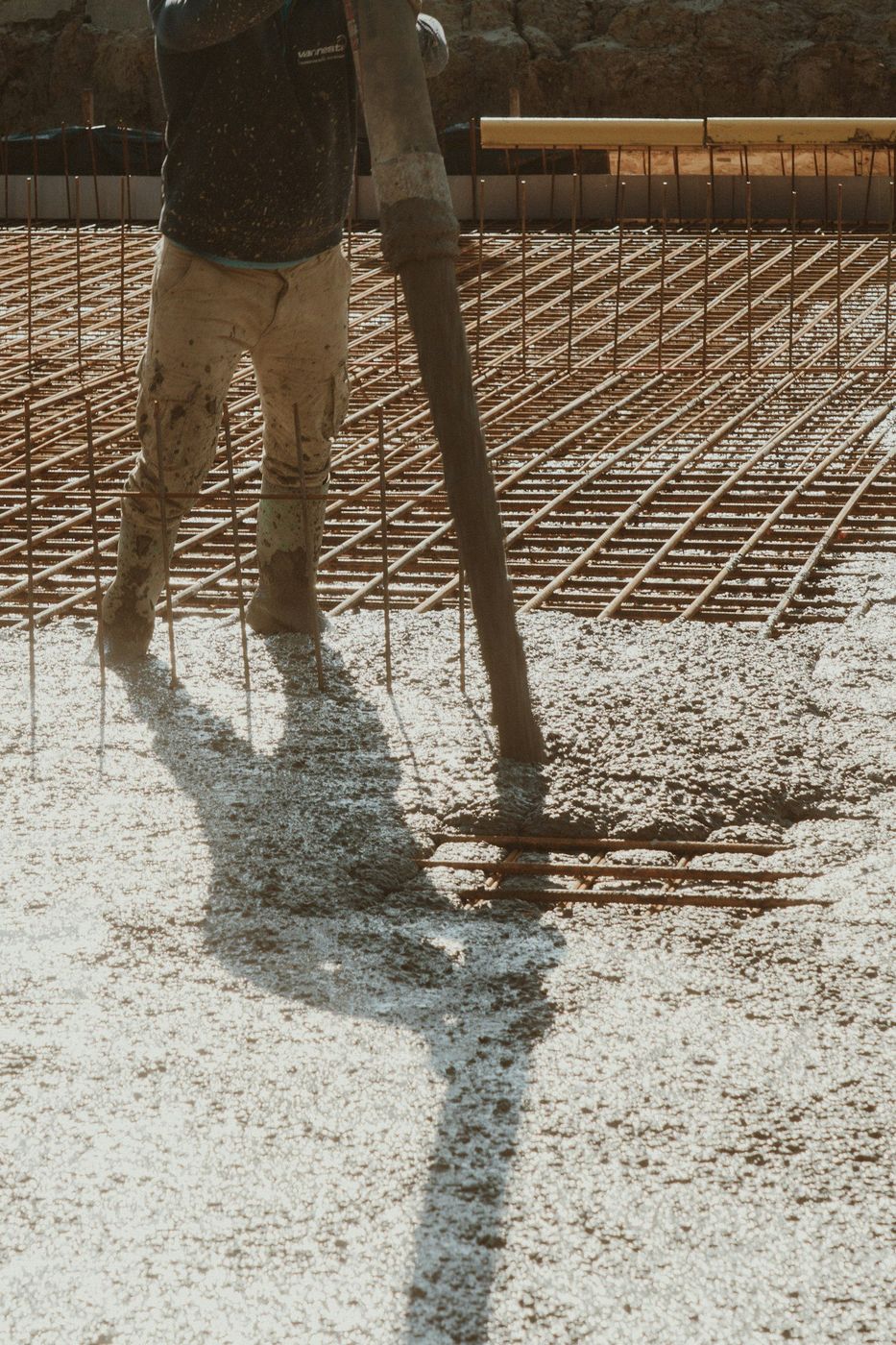
Sidewalks fail from the bottom up, and the water that does it usually comes from your yard, not the sky.
People call us about a sidewalk and describe the concrete. How wide the crack is, which corner dropped, whether the surface has gone sandy. All useful, and almost none of it is why the panel failed. Concrete is strong stuff. Four inches of it carries every pedestrian, stroller, and wheelbarrow that will ever cross it, for generations, provided the material underneath holds still.
That is the part we get hired to fix. In Southglenn and Walnut Hills we pull panels placed straight onto native soil with no aggregate under them at all, which was normal practice once. Around Willow Creek we more often find base that was there but got contaminated with fines until it stopped draining. Two problems, one shared symptom, and neither one is solved by a thicker slab.
First condition: nothing. Slab straight on clay that has been changing volume every wet spring and dry August for forty years while the panel rode along on top. Second condition: base present but choked. Road base went down, fines migrated into it from below, and now that layer holds water instead of moving it along. Compacted mud is not a drainage course. Third condition, the one that surprises homeowners: a void. Open air under the slab where soil washed out along a path water found years ago.
Each calls for a different response. Missing base means excavating below the old slab bottom and building the layer nobody built. Contaminated base comes out entirely. A void means we go find the water source first, because filling a hole without closing the tap gets you a new hole.
| Approach | What it means for the tree | What it means for the walk | When we choose it |
|---|---|---|---|
| Prune the roots, then repour | Some risk, depending on root size and how close to the trunk we cut | Buys years if the pruning is done right and a barrier goes in | Small to medium roots, healthy tree worth keeping |
| Thicken and span the slab over the roots | Untouched. Nothing gets cut | Heavier panel, more steel, and future growth can still lift it | Large structural roots we are not willing to sever |
| Shift the alignment around the tree | Untouched, with room to keep growing | Costs more and changes how the front of the property reads | Mature tree worth protecting and space to swing the run |
| Grind the raised lip | Untouched | Removes the hazard, changes nothing underneath | A stopgap while you plan the real repair, not a repair itself |
Rain is the least of it. A public walk sits at the low edge of a graded lot, so it collects whatever the yard sends downhill, and an established neighborhood sends plenty. Irrigation runs three times a week for six months. Sprinkler heads overspray onto concrete and the runoff dives into the joint. Downspouts discharge onto lawn ten feet uphill. None of it is dramatic, and all of it adds up to a subgrade that spends the growing season damp.
Then November. Damp soil freezes, expands, and pushes up on whatever sits above it, relaxes during a warm week in January, and does it again in February. That cycle is why one panel in a run of twelve stands an inch high while the rest never budged. So drainage correction gets its own line on our quotes, whether that means extending a downspout or regrading a strip of lawn.
We'll dig a test hole at the bad spot and tell you what is actually down there before you spend a dollar on concrete.
Sidewalk work lives and dies by the subgrade, so the calendar matters more than on a patio. Our best stretch runs late May into October, when the ground has dried out and a plate compactor gets real density instead of pumping wet soil around. April jobs happen, though we often over excavate and haul in more aggregate than we would in August, and that shows up in the price.
Late fall is quietly excellent: cool air, dry dirt, and a finishing window that stays open long enough to broom carefully. Winter panel replacement happens too, usually when a lifted section has become a liability nobody wants to carry until spring. It takes warm mix water, an accelerator without chloride in it, and blankets. The rule we do not bend: subgrade thawed all the way through.
Still unsure about something?
Call the crew at (303) 569-4046 and we will talk it through.
Get a free, no-obligation estimate from a crew that knows Colorado soil, Colorado weather, and how to finish concrete that lasts.
Accessibility
Adjust the site to fit how you read and browse. Your choices are saved on this device.