
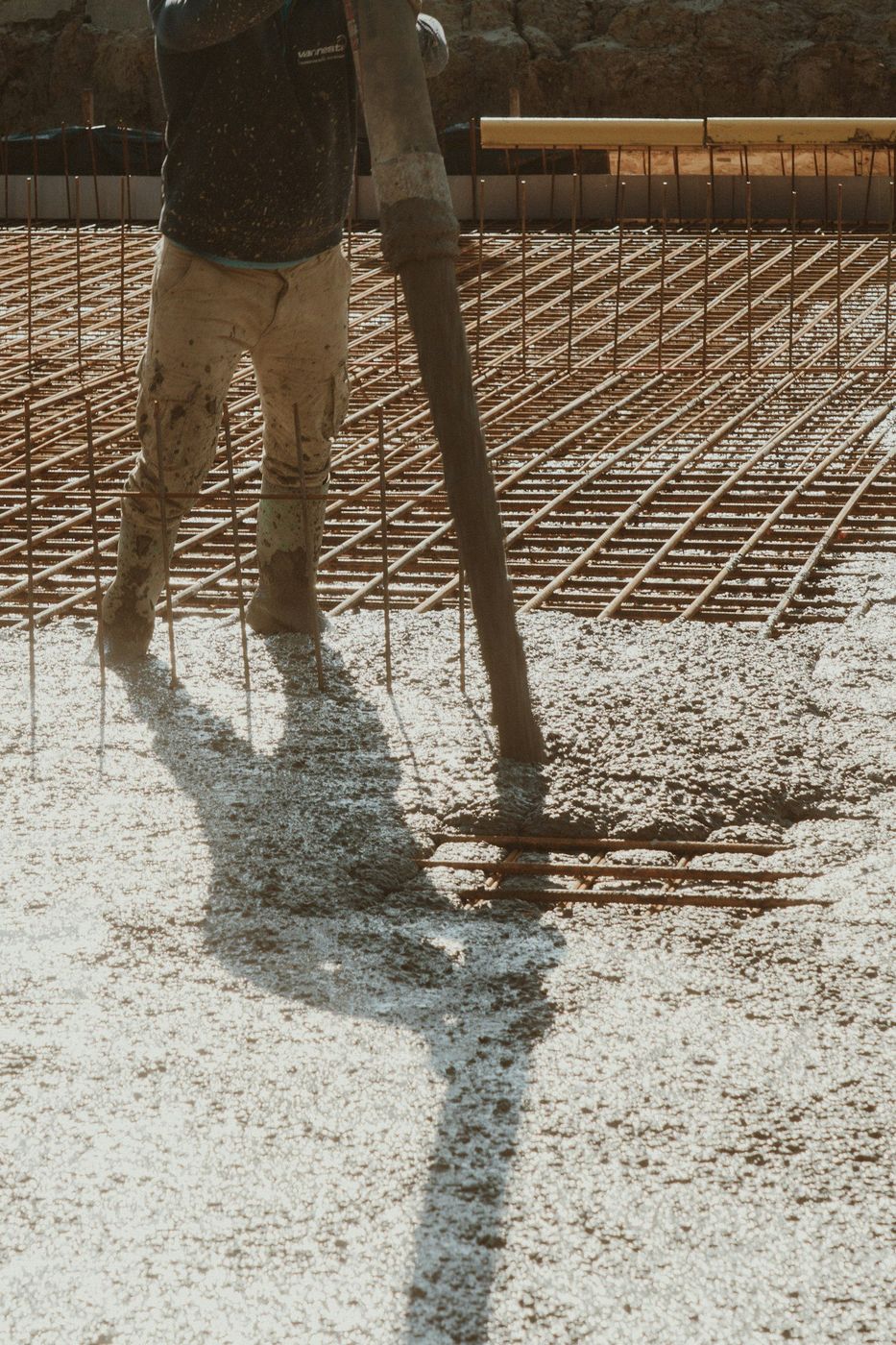
A new wearing surface bonded onto a slab that still has good bones underneath.
An overlay is a thin layer of engineered cement placed over concrete you already have. Done on the right slab it buys you a fresh surface, a color you picked, and a texture that isn't builder-grade broom, for a fraction of what demolition and a new pour would run. Done on the wrong slab it's money you set on fire, because a bonded topping is only ever as stable as whatever it's bonded to.
So the value question comes first, before anybody talks about patterns. We spend the first visit figuring out whether the concrete under your feet is worth saving. In Founders Village that answer is sometimes no. In Crystal Valley and Cobblestone Ranch, where slabs are younger and the base was built to modern spec, it's usually yes, and an overlay is the best return on the dollar in decorative concrete.
Cement doesn't stick to cured cement by wishing. We mechanically profile the existing surface first, usually with a diamond grinder or a shot blaster, until the smooth troweled skin and every trace of sealer is gone and the concrete has an open, sandpapery texture. Then a bonding slurry goes down and the topping goes into it wet on wet. Miss that sequence and the overlay releases in sheets a year or two later, usually in spring after water has spent a winter finding the seam.
Thickness matters just as much. Microtoppings run a fraction of an inch and are strictly cosmetic; they follow every ripple below. Stampable systems go on around a quarter to three-eighths of an inch and carry real texture. Anything much past that stops behaving like a topping and starts behaving like a very thin slab, which means it needs its own steel and its own joints. And no, a thick pile of overlay mix won't fix a grade problem.
| Cost driver | Why it matters | How we hold it down |
|---|---|---|
| Surface prep hours | Old sealer, paint, and thinset take longer to remove than the topping takes to place | We test-grind a small area first so the prep estimate isn't a guess |
| Crack and joint repair | Every existing crack has to be treated before it telegraphs through the new surface | Rout and fill the ones that matter, and honor the rest as pattern lines |
| System thickness | A stampable topping uses several times the material of a skim coat | Match the system to the actual use, not to the fanciest sample board |
| Color and pattern complexity | Multiple releases, hand-cut borders, and accent bands are all labor | Pick one strong pattern and let the color do the rest |
| Access to the work | Hauling mix through a house or over a fence adds a crew member and hours | Stage material as close as the yard allows and schedule around your gate |
We'll come look, sound the slab, and tell you straight. No charge, and no upsell to a topping that won't last.
Toppings are thin, which makes them fussier about temperature than a regular pour. The material needs the slab surface, not just the air, holding above about fifty degrees while it sets and for a good while after. In Castle Rock that means a practical season of roughly May through the first half of October outdoors. Early spring will fool you: seventy degrees at noon means nothing if the concrete came out of a twenty-eight degree night still cold in the middle.
Summer brings the opposite problem. Dry air and strong sun at 6,224 feet pull water out of a thin topping faster than it can hydrate, which leaves it weak and crazed. So we tent shade over the work, dampen the substrate first, and start early enough to finish before the afternoon builds. Storms end an overlay day instantly. Rain on fresh topping pits it and streaks the color.
Interior overlays run year round. Basement floors, sunrooms, and garage slabs in The Meadows keep us busy while the outdoor board is quiet.
The real case for an overlay isn't just the day-one savings. You skip demolition. No jackhammers, no dumpster in the drive, no ruined grass, no month of waiting before you can park. Most of ours go from bare slab to sealed surface inside a week.
The case against one is shorter. If the slab is moving, the topping moves with it, and you've paid for a pretty surface on a failing base. We'd rather lose the job than sell you that.
Still unsure about something?
Call the crew at (303) 569-4046 and we will talk it through.
Get a free, no-obligation estimate from a crew that knows Colorado soil, Colorado weather, and how to finish concrete that lasts.
Accessibility
Adjust the site to fit how you read and browse. Your choices are saved on this device.