
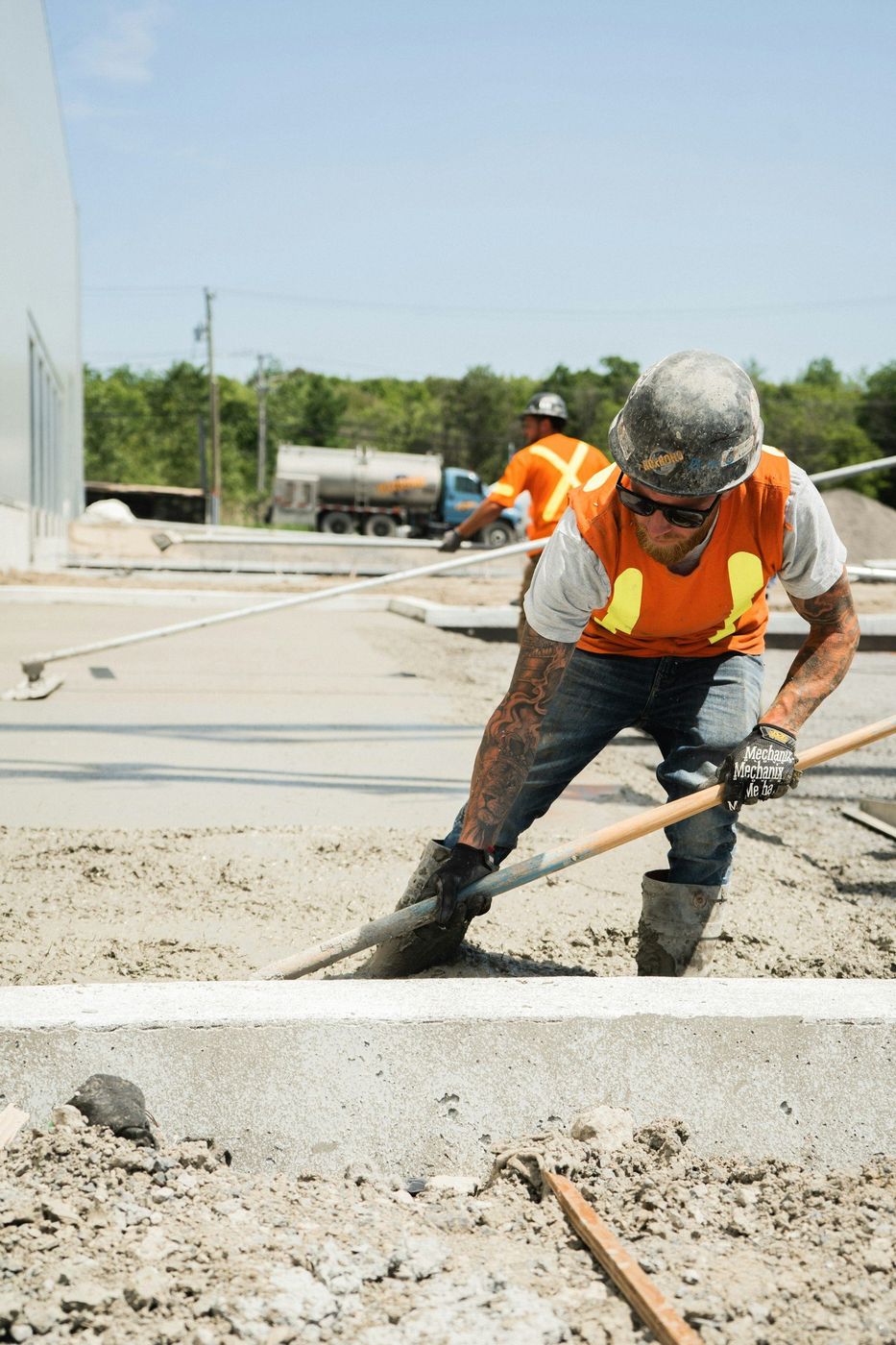
Approach slabs, leveler pits, and drive-in aprons poured in one shift so receiving opens the next morning.
Dock concrete gets abused in a way nothing else on a property does. A loaded trailer backs in, the tandems stop hard on the apron, the landing gear drops two steel pads onto four inches of slab, and a forklift runs the leveler across the same six feet of edge four hundred times a week. Every one of those is a point load, and point loads are what break slabs that were poured like driveways.
Castle Pines runs residential, so dock work here is usually a service bay behind a commercial building, a receiving apron at an amenity or maintenance facility, or a rebuild of an approach slab that started sinking away from the wall. Whatever the size, the pour is the easy part. The hard part is getting the receiving door back open on schedule, and that's what our pour-day plan is built around.
Demo is loud and it's first. Saw cuts at the panel lines, breaker on the old approach, and everything loaded straight into a truck so we're not storing rubble in your yard. Once the old slab is gone we can finally see what we're dealing with, and at a dock it's almost always the same thing: base washed out in a fan shape spreading away from the building, because the old slab tipped back and fed water into the joint for years.
Grade and base take the rest of that first day. Soft material comes out, structural fill goes in, compacted in lifts up to the elevation the finished slab needs. Dowels get drilled and epoxied into the dock wall so the approach and the structure move together. Bar goes on chairs, tied, tighter at the trailer positions.
Pour day starts early. First truck before the sun is fully up, because concrete placed into a cool morning gives finishers room to work the surface instead of chasing a set. Placement runs from the building outward. Screed, bull float, wait, then edge and joint. Broom finish across the traffic direction for grip when it ices.
Joints get sawed the same day, timed by how the surface is hardening rather than by the clock. Cure protection goes on, barricades stay up. Two working days plus the cure, on a single bay.
| Time | What's happening | What you need from your side |
|---|---|---|
| Before sunrise | Crew stages, forms checked, steel inspected, grade re-shot | Gate open and the dock door blocked off |
| Early morning | First mix trucks arrive, placement starts at the dock wall | Nobody parked on the truck route |
| Mid-morning | Screeding and bull floating, elevations verified against the leveler pit | Keep foot traffic clear of the pour |
| Midday | Surface bleeds and sets, crew edges and preps for finishing | Quiet period, nothing needed |
| Afternoon | Broom finish applied, curing compound or wet cure started | Confirm nobody needs the door tomorrow |
| Evening | Control joints sawed once the surface will hold a blade | Site access for the saw crew after hours |
| Next morning | Forms stripped, cure protection checked, area swept | Barricades stay up until we say otherwise |
Tell us the window. We'll build the sequence backward from your Monday morning delivery and tell you honestly if it fits.
Plenty of dock pours can't happen during business hours. We run them at night with light towers, a night finishing crew, and a saw crew on call, and the surface is walkable before your first shift shows up. Night work costs more and it's usually cheaper than losing a receiving day, so we price both versions and let you decide with real numbers instead of a guess.
The comfortable pouring stretch here runs from about mid-April to late October. September is our favorite month for dock work because the nights cool off enough to slow the set without threatening a freeze, which gives a crew room to finish a tight, dense surface. Summer means storm watching. Rain landing on an apron during finishing works water into the top layer and you get a soft, dusty surface that fails right where the forklift wheels track.
Winter pours are real and we do them, with heated mix water, a non-chloride accelerator, and insulated blankets left down until the concrete has enough strength to survive being uncovered. Frozen subgrade stops us cold, every time, no matter whose schedule is on the line. And for that first winter, no deicing chemicals anywhere near the new apron. Sand and a shovel. Tell the snow contractor before the first storm, not after.
Still unsure about something?
Call the crew at (303) 569-4046 and we will talk it through.

Get a free, no-obligation estimate from a crew that knows Colorado soil, Colorado weather, and how to finish concrete that lasts.
Accessibility
Adjust the site to fit how you read and browse. Your choices are saved on this device.