
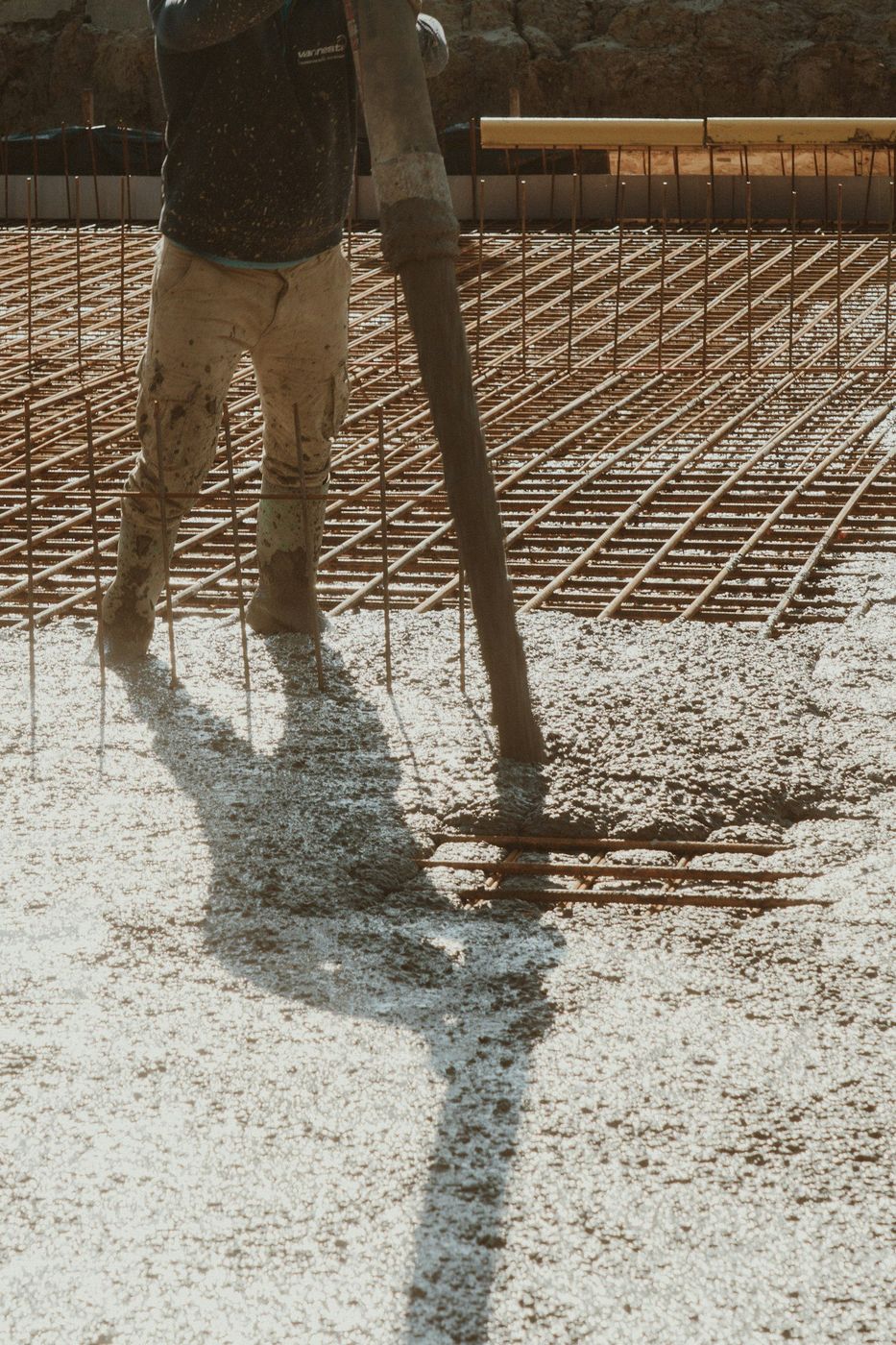
A filled spa is a concentrated load sitting in one place forever. The pad has to be built like it knows that.
A spa pad looks like the simplest thing we pour. Small rectangle, no pattern, done before lunch. That's exactly why it gets underbuilt. People price it like a shed pad and then set hundreds of gallons of water, a cabinet, and four adults on top, all of that weight pressing through a few contact points instead of spreading out the way a driveway load does.
So when homeowners ask what a hot tub pad should cost, we turn the question around and talk about what it should be worth. The concrete is a small line item next to the spa itself. What you're buying is a surface that stays flat under a load that never moves, drains its surroundings, and has the electrical path already sleeved so nobody cuts your new slab open two weeks later.
Spread the weight of a car over four tires across a whole driveway and you've got a manageable situation. A spa is the opposite. The cabinet base rests on a footprint of a few square feet, that load never lifts off, and it presses in the same spots through every freeze and every thaw for as long as you own the thing. Concrete handles compression beautifully. What it doesn't handle is one corner losing support while the other three keep theirs.
Which is why we go thicker than the four inches you'd pour for a car, put a real steel grid in, and spend more time on what's underneath than on what's on top. Compacted road base in lifts, checked as we go. On the cut-and-fill lots common through BellaMesa and the newer filings, that step is not optional, because half the pad can sit on undisturbed ground while the other half sits on engineered fill, and those two behave differently over ten years.
Flat matters just as much as strong. A shell that sits on a surface with a twist in it carries stress it was never designed to carry, and that shows up as a cabinet that won't close square or a leak at a fitting. We screed, then check the diagonals with a laser, and we aim to hold the whole pad flat within about an eighth of an inch.
Spas need power run to a disconnect, and the wire has to get from the house to the tub somehow. Decide that before the pour, not after. We sleeve conduit under or through the pad, stub it where your electrician wants it, and cap it so nothing fills with mud during construction. Ten minutes of coordination on form day.
Skip it and your options get ugly: saw a channel through a slab you just paid for, or run surface conduit across a patio you chose for how it looks. Neither is what you had in mind. We'll happily talk to your electrician directly, and we always suggest confirming what your jurisdiction and your HOA want to see before anything is buried.
Tell us the model footprint and the date. We'll work backward and make sure the concrete is ready before the truck shows up.
| Driver | Why it costs what it costs | Where you can save |
|---|---|---|
| Getting a truck or buggy to the spot | Backyards on these slopes often need wheelbarrows, a pump, or a buggy route through gates | Pick a location the crew can reach if the view works either way |
| Base correction on a graded pad | Cut-and-fill lots need deeper excavation and more compaction before anything gets poured | Nothing to trim here. This is the part that decides whether the pad stays flat |
| Thickness and steel | Point loads justify more concrete and a tied grid instead of mesh | Also not the place. It's a small share of the total and the whole reason the pad works |
| Retaining or a step-down edge | A pad cut into a hillside may need a low wall or a thickened edge to hold grade | Siting the spa on flatter ground removes the need entirely |
| Finish and surround | Broom is standard; a stamped or exposed apron around the spa adds labor | Keep the pad plain and spend the decorative money on the walkway instead |
Still unsure about something?
Call the crew at (303) 569-4046 and we will talk it through.
Get a free, no-obligation estimate from a crew that knows Colorado soil, Colorado weather, and how to finish concrete that lasts.
Accessibility
Adjust the site to fit how you read and browse. Your choices are saved on this device.