Six weeks of casting can hinge on what the wind does between nine and noon on one Tuesday.
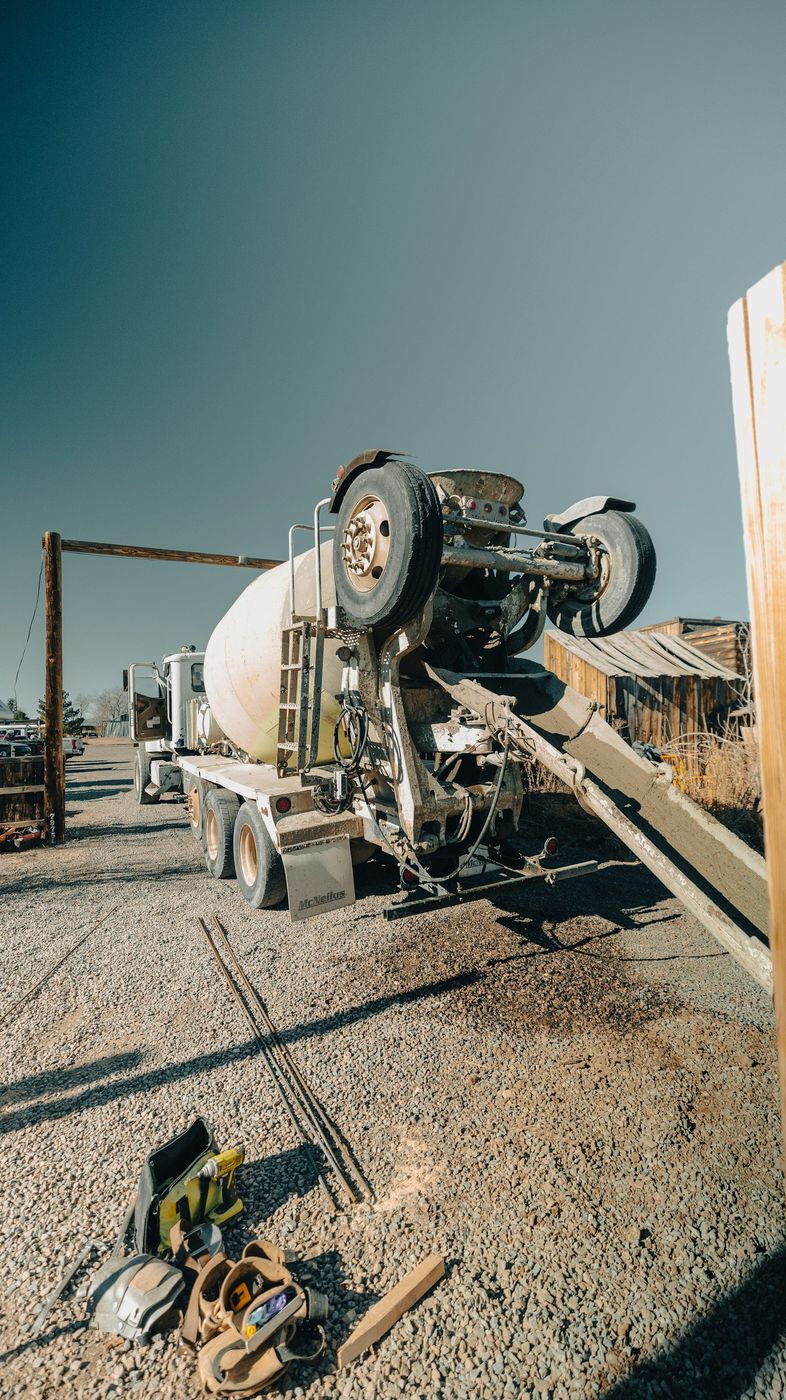
The crane is booked for Tuesday morning. It's Monday at four, the panels have been curing for a week and change, cylinders are at the lab, and the updated forecast has gusts building by early afternoon. Now a whole project schedule turns on a judgment call: pick early and get as many panels standing as possible before the air gets rough, or eat a day and rebook a machine that isn't sitting idle waiting for you.
That's tilt-up on the Front Range in one picture. The method is fast and it's economical when there's enough wall to justify the setup, which is why it keeps showing up on the service buildings, storage facilities, and shops that follow rooftop growth in areas like Murphy Creek and Tollgate Crossing. But the weather has a vote at every stage, and planning around that is most of the craft.
Panels get cast face down on a slab, usually the building's own floor, and that surface has to be flatter and cleaner than any floor normally needs to be, since every ripple in it becomes a permanent feature of a wall people look at for decades. Over it goes bond breaker, a chemical layer whose only job is making sure the panel releases instead of welding itself down.
Bond breaker is where weather starts interfering. It wants a dry slab and a window to set up. A surprise cell can wash it thin or leave it patchy, and a spot where it failed announces itself on crane day with a panel that won't break free cleanly. We apply on the right side of the forecast, protect it, and reapply rather than gamble on a lift.
Then the casting. Forms and blockouts get set, reinforcement and lifting inserts go in exactly where the panel engineer specified, and embeds for steel connections land to tolerances that matter later. High sun and dry air pull moisture out of a fresh panel fast, so curing gets protection promptly. A panel that surface-dries too quickly crazes, and that face is also your finished exterior.
| Condition | What it does to the work | How we handle it |
|---|---|---|
| Sustained wind and gusts | A panel is a giant sail hanging from a hook, and wind limits govern the pick | Lift early in the day, watch the forecast hourly, and stop when the limit says stop |
| Hot, dry, high-UV afternoon | Fresh panel surfaces lose water fast and can craze or dust | Start early, use evaporation retarders and prompt curing, shade where practical |
| Overnight hard freeze during casting | Strength gain slows and a panel that freezes young never recovers it | Heated mix water, non-chloride accelerator, blankets on the panels, and testing before anything gets picked |
| Rain on a prepared casting bed | Bond breaker gets thinned or washed and panels stick during the lift | Protect the bed, then inspect and reapply rather than trusting a marginal coat |
| Snow or ice on cured panels | Weight and slick surfaces near rigging make a lift genuinely unsafe | Clear and dry the panel and the working area before rigging goes on |
| Afternoon thunderstorm during a cast | Water beaten into a fresh face shows up later as scaling and dusting | Cast in the morning, keep protection staged, cover the moment it starts |
Give us the footprint, the wall height, and your target opening date. We'll tell you honestly whether this method pays here.
If the calendar is yours to set, cast from late spring into early fall and lift in the morning. Long daylight, workable ground for a crane, strength gain without help, decent odds of a calm window. Early fall may be the best of it: cool nights treat curing well and the daily storm pattern has backed off.
Winter tilt-up is real and we build in it. The additions are predictable: heated water, chloride-free accelerators, blankets on every panel, sometimes enclosures and temporary heat, plus more testing, because you can't assume the strength curve you'd get in July. Frozen ground under a crane isn't automatically a problem. Thawing ground during a lift certainly is, so we look hard at bearing and mats before the machine sets up.
What we won't do is pick a panel that hasn't hit its number, or rig one in wind outside limits because a schedule is tight. Panels are heavy, awkward, and unforgiving. The whole economic case for this method rests on crane day being boring, and boring is what we're selling.
Good crane day looks like nothing happened. Panels go up, braces go in, everybody eats lunch on time. All the drama got handled three weeks earlier on the casting slab.What our crew lead tells homeowners
Still unsure about something?
Call the crew at (303) 569-4046 and we will talk it through.
Get a free, no-obligation estimate from a crew that knows Colorado soil, Colorado weather, and how to finish concrete that lasts.
Accessibility
Adjust the site to fit how you read and browse. Your choices are saved on this device.