
The ramp is rarely the expensive part. What it connects to usually is.
Owners ask what a ramp costs and we answer with a question about what else is broken. That sounds like dodging. It is not. A ramp is a short piece of concrete carrying a strict tolerance, and the concrete itself is a small line on the invoice. What moves the number is everything the ramp has to connect to: the walk above it, the gutter pan below it, the stall it serves, the drainage that made the ramp the low point in the first place, and whether the work can happen while your doors are open.
So think about ramp money by route, not by ramp. An accessible route is a chain, and a chain that breaks anywhere has failed. We price the links that are actually broken, tell you which ones break next, and let you set the order.
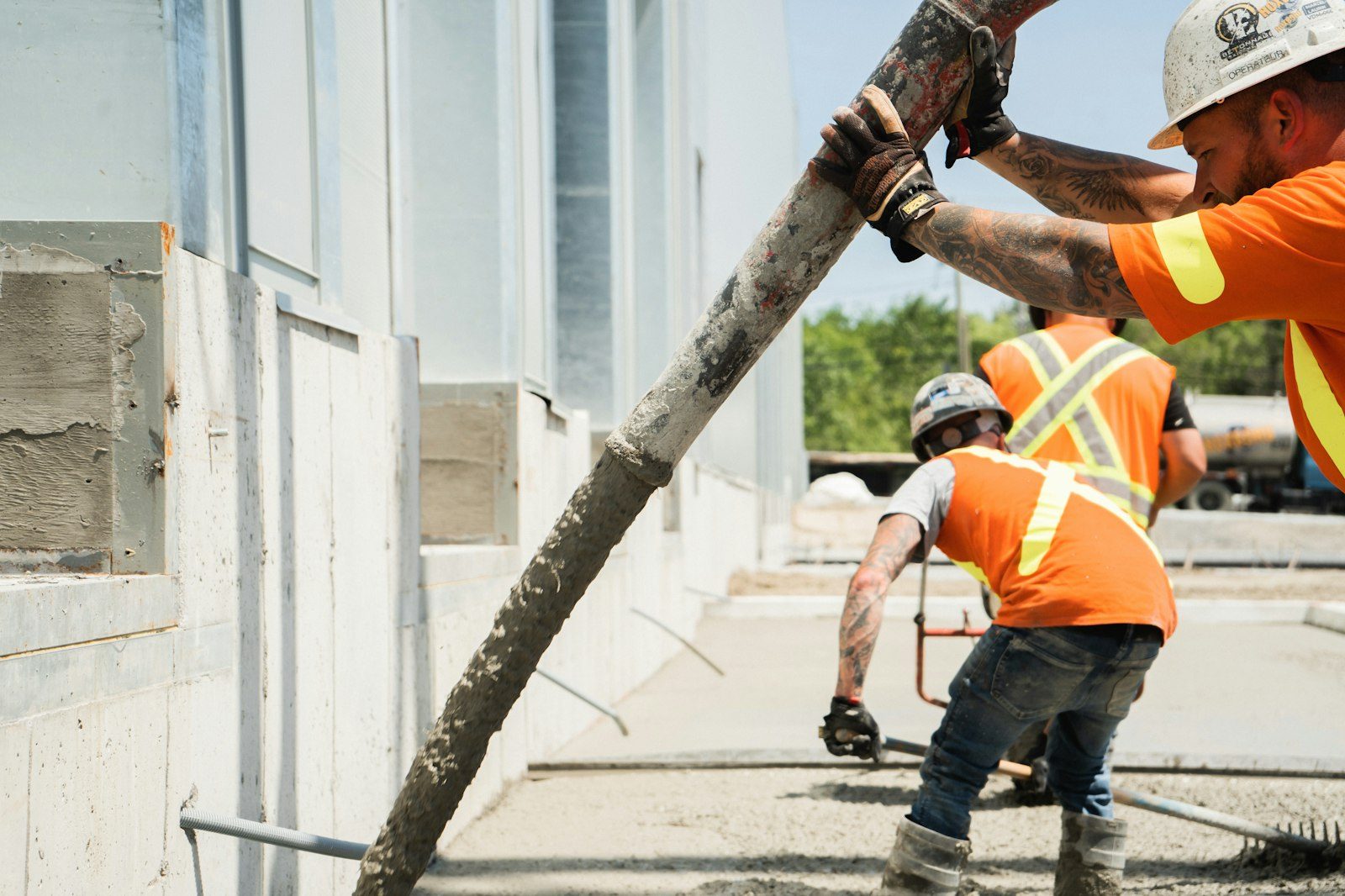
The pour itself is a few yards of concrete and a morning of work. Everything expensive sits around it. Demo runs bigger than people expect, because you cannot rebuild a ramp without touching the walk it lands on and the pan it drains to. Grade correction comes next, and that is where a small job turns into a real one, since a ramp at a correct slope inside a landing that still collects meltwater has solved half a problem.
Other costs are fixed no matter how small the ramp is. Warning panels have to be set flush and square while the surface is workable. Handrails need footings, not surface anchors. Utility conflicts turn up under old entrances constantly: irrigation, conduit, a pull box nobody documented.
The last driver is access. A ramp at the only front door of an occupied building costs more than the same ramp at a side entrance, because the schedule bends around your hours and sometimes moves to nights. That is not padding. It is a different job.
| Cost driver | What pushes it up | What the spend buys |
|---|---|---|
| How much of the route comes out | A ramp that measures fine between a heaved walk and a settled pan | A route that passes end to end instead of one compliant island |
| Grade correction and drainage | A landing that collects meltwater, or a downspout aimed at the ramp | A ramp that is not the iciest thirty feet on the property in February |
| Detectable warning panels | Cast-in panels set flush and square while the surface is still workable | Panels that stay put instead of lifting at a corner in year three |
| Handrails and their footings | A run tall enough to require rails, with posts set in concrete | Rails that do not loosen the first time somebody leans hard on one |
| What is buried underneath | Irrigation, conduit, or a pull box sitting inside the new footprint | No change order on day two and no severed line |
| When we are allowed to work | Night or weekend placement so an entrance stays usable | Tenants who never lose the front door during business hours |
Send photos of the ramp, the landing, and ten feet of walk on either side. We will tell you which links are failing before anyone quotes anything.
Ramps on the shaded side of a building have a harder life than the ones facing south, and it is not close. A shaded ramp holds snow longer, gets more freeze and thaw cycles per storm, and receives more deicer because staff keep treating it. That chemistry attacks paste, and the first thing to go is the transition where the ramp meets the pan.
Older commercial frontage around Sterling Hills, Murphy Creek, and Tollgate Crossing gives us most of the full rebuilds, since those entrances were built to earlier expectations and the ground has had decades to move. Newer retail serving Southshore, Saddle Rock, and Tallyn's Reach fails differently: geometry correct on opening day, then one corner of the landing settles a degree and a half and quietly takes the cross slope out of range.
Spring through mid fall is the comfortable window, and September is the sweet spot. Winter ramp work happens with heated water, accelerator, and blankets when a deadline is real. We just will not place on frozen ground to hit a date.
Still unsure about something?
Call the crew at (303) 569-4046 and we will talk it through.
Get a free, no-obligation estimate from a crew that knows Colorado soil, Colorado weather, and how to finish concrete that lasts.
Accessibility
Adjust the site to fit how you read and browse. Your choices are saved on this device.