
Reinforced, waterproofed basins, and a straight method for finding out where an old one is losing its water.
A pond tells on itself long before the fish do. The waterfall sounds different because the pump is pulling air. A dark wet band shows in the mulch along one side with bone-dry soil everywhere else. The water sits an inch below the stone it used to touch, and a chalky ring marks the old line. And you're dragging the hose out more often than last year.
Every one of those is visible from a lawn chair, and each points somewhere specific. We build basins on the bigger lots around Southshore and Tallyn's Reach and we get called to leaks on older water gardens through Sterling Hills and Murphy Creek. Those calls follow one pattern. The owner assumes the shell failed. The shell is almost always fine.
Start with the rate. A pond easing down all summer with no wet spot anywhere is usually just evaporating, and at this elevation the number surprises people. One that drops several inches over a weekend is losing it somewhere findable.
Then the height where it stops. Water leaves through the hole, and once the surface falls below the hole, the loss quits. If the level settles at the same line and holds, that line is your answer: usually a plumbing penetration, a skimmer faceplate, or a crack right there.
Then the ground. Walk the perimeter barefoot after a hot day. Soft, cool, dark soil on one side and firm ground elsewhere means water is leaving at the rim, not through the floor. Edge losses are the most common failure we find and the cheapest to fix.
Last, whether it only drops while the feature runs. Shut the pump down a day and measure. Level holds off and falls on? Basin's fine, stream course isn't.
| What you can see | Most likely source | What we do |
|---|---|---|
| Falls, then stops at one height and holds | Something at that elevation: a penetration, a skimmer face, a crack | Staged drawdown finds it. We repair the point, not the shell. |
| Wet soil on one side, dry everywhere else | Wicking at the rim where an edge detail stops short | Carry the edge above the water line and reset the stone |
| Only drops while the waterfall runs | The stream course or spill wall, not the basin | Test with the pump off a day, then seal the course |
| Slow steady loss, no wet ground | Evaporation, which our wind does efficiently | Compare against an open bucket. Often nothing is wrong. |
| Chalky band above the water line | The level has been low long enough to leave scale | Confirms a real leak rather than one hot week |
| Fine map cracking on a dry wall | Shrinkage in the top of the paste | Cosmetic on a sound shell. Not a leak path. |
| A crack you can slip a card into | Movement, or a shell built without continuous steel | Route and seal, then deal with why the soil moved |
Mark the level tonight and text us a photo tomorrow. That one measurement narrows it down more than an hour of speculation.
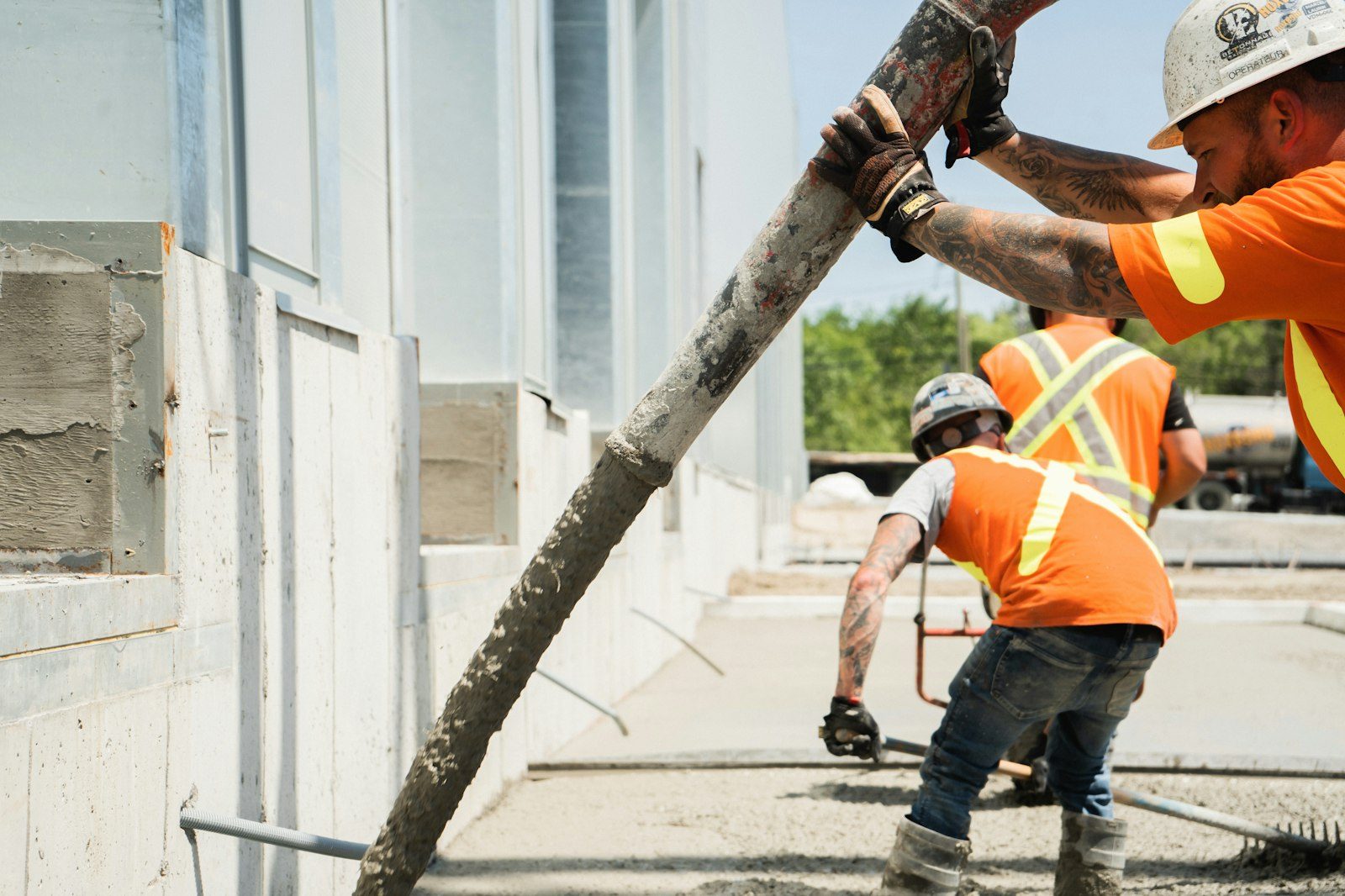
Every other slab on your property may pass a little water. A basin may not, and that rewrites the recipe. Tighter water-to-cement ratio than flatwork, usually a crystalline admixture that keeps reacting and closing hairlines for the life of the structure, and a placement plan with no cold joint. Where one is unavoidable, a waterstop goes in it.
Steel runs continuous. Tied across the floor, bent up into the walls, lapped at every corner, held on chairs so concrete wraps each bar. A crack here isn't cosmetic, so we control it with reinforcement and joint placement rather than patch it later. The floor falls to a drain, because a basin you can't empty is a basin you can't clean.
Curing is where amateurs lose the job. A watertight shell has to stay wet while it gains strength, and our air dries a surface in an afternoon, so we keep it damp a full week before any coating goes on. Winter is the design load: depth enough that water stays liquid below the ice cap, upper walls leaned so a sheet lifts instead of wedging, drainable backfill so soaked soil can't push in. Build season runs April into October.
Owners want us to start with the concrete. We start with a marker and a bucket. Two days of measuring costs nothing, and it has saved people from relining a shell that never leaked a drop when the real culprit was a rock set half an inch proud of the waterline.Straight from the crew
Still unsure about something?
Call the crew at (303) 569-4046 and we will talk it through.

Get a free, no-obligation estimate from a crew that knows Colorado soil, Colorado weather, and how to finish concrete that lasts.
Accessibility
Adjust the site to fit how you read and browse. Your choices are saved on this device.