
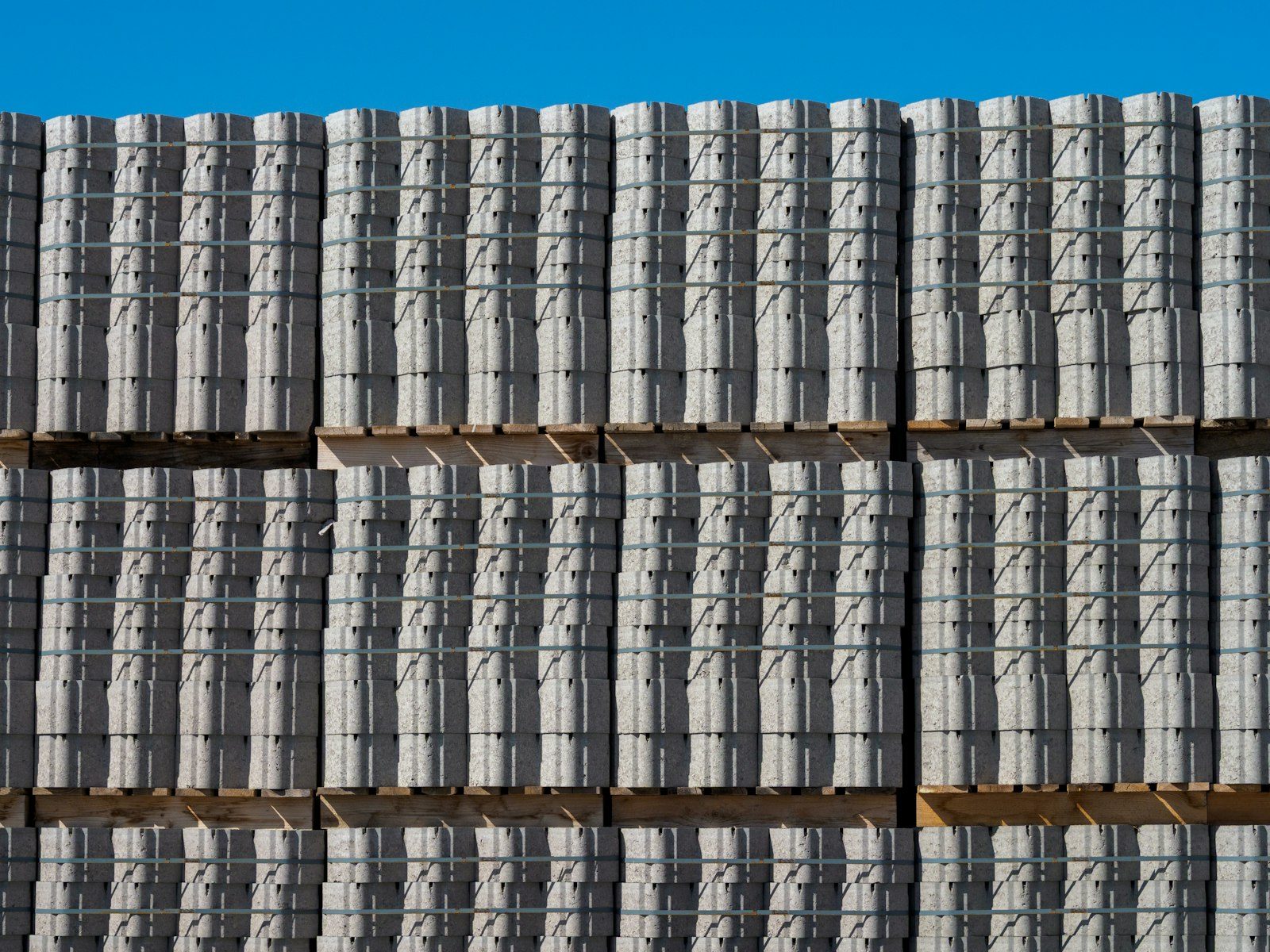
A wall's price doesn't climb foot by foot. It steps, and there are only about five places where it steps.
People expect wall pricing to work like carpet. So many square feet, so much money, twice the wall costs twice as much. It doesn't behave that way at all. A wall gets a little more expensive as it gets longer and then, at certain points, it gets a lot more expensive all at once. Cross one of those lines and the whole design changes underneath you.
Knowing where those lines fall saves real money, because some of them you can design around and some you can't. We build poured walls all over Arvada, from the terraced back yards on the graded lots out at Leyden Rock and Candelas to the short garden walls people want in the older flat yards near Olde Town. Same trade, wildly different numbers, and the reason is almost always on this page.
Soil pressure doesn't increase with height in a straight line. It builds faster than that, so a wall half again as tall isn't half again as strong, it's a different structure. Bigger footing, more steel, sometimes a heel extending back under the retained dirt so the weight of the soil helps hold the wall in place. That's the first threshold and the one that surprises people most.
Water is right behind it. Saturated ground weighs substantially more than dry ground and pushes harder, so a wall that can't shed water has to be designed for the worst day it will ever see. Which is why the drainage behind a wall isn't a nicety we tack on. It's the cheapest way we know to reduce what the concrete has to fight, and it's the first thing a low bid quietly removes.
| The threshold | Why the number steps here | Whether you can design around it |
|---|---|---|
| Retained height crossing into engineered territory | Stamped design, larger footing, more steel, and inspection time | Sometimes. Two shorter walls up the slope can stay under it |
| Something loaded sitting above the wall | A drive, a shed, or a parked trailer is weight the wall has to carry | Yes, if you can move the load back from the top of the wall |
| Water arriving from uphill or from below | Drainage stops being a pipe and becomes its own excavation | Often. Intercept it upslope before it ever reaches the wall |
| No machine access to the work | Hand digging and wheelbarrow time replace equipment hours | Sometimes. Working from the high side or pulling a fence panel helps |
| An existing wall that has to come out first | Demolition, hauling, and whatever the old wall was covering up | No. Budget it honestly, because this is where surprises live |
Send photos and rough heights. We'll tell you where the money goes before anybody measures anything. (303) 569-4046.
This is the single best cost conversation to have early, and it's the one most people never get offered. Splitting a slope into two lower walls with a planted bench between them can drop both walls below the height where the design gets heavy, and it usually looks better besides. It costs more in length and in the terrace work between them, so it isn't automatically cheaper. But often enough it is, and where it isn't, it still buys you a yard you'll actually use.
The version that doesn't work is stacking two walls so close together that the upper one is loading the lower one. That's not two walls, that's one tall wall pretending. There's a spacing where the trick stops working, and our engineer sets it off the height and the slope rather than off what fits the landscape drawing.
Late summer into fall is prime time. The ground is firm enough to hold an excavation, the trench stays open safely, and there's daylight left to get the backfill placed in lifts and the grade finished before winter. Spring is the hardest season for wall work: saturated ground slumps, machines rut a soft yard, and everything takes longer.
Winter walls happen. Cold-weather mix, blankets, no placement against frozen bearing, and slower form stripping. The hangup usually isn't the pour, it's the excavation and the backfill. Frozen soil won't compact behind a wall, and poorly compacted backfill is how you get a settled terrace above a perfectly good wall. If the ground is locked up, we'd rather push to a thaw window than hand you that outcome.
One more thing about spring around here. The week that finds every weak wall in town is the one right after a heavy wet snow melts into ground that's still frozen underneath. The water has nowhere to go but sideways, and it pushes on whatever's in front of it. If your wall has ever bulged, that's the week it did it.
Still unsure about something?
Call the crew at (303) 569-4046 and we will talk it through.
Get a free, no-obligation estimate from a crew that knows Colorado soil, Colorado weather, and how to finish concrete that lasts.
Accessibility
Adjust the site to fit how you read and browse. Your choices are saved on this device.